
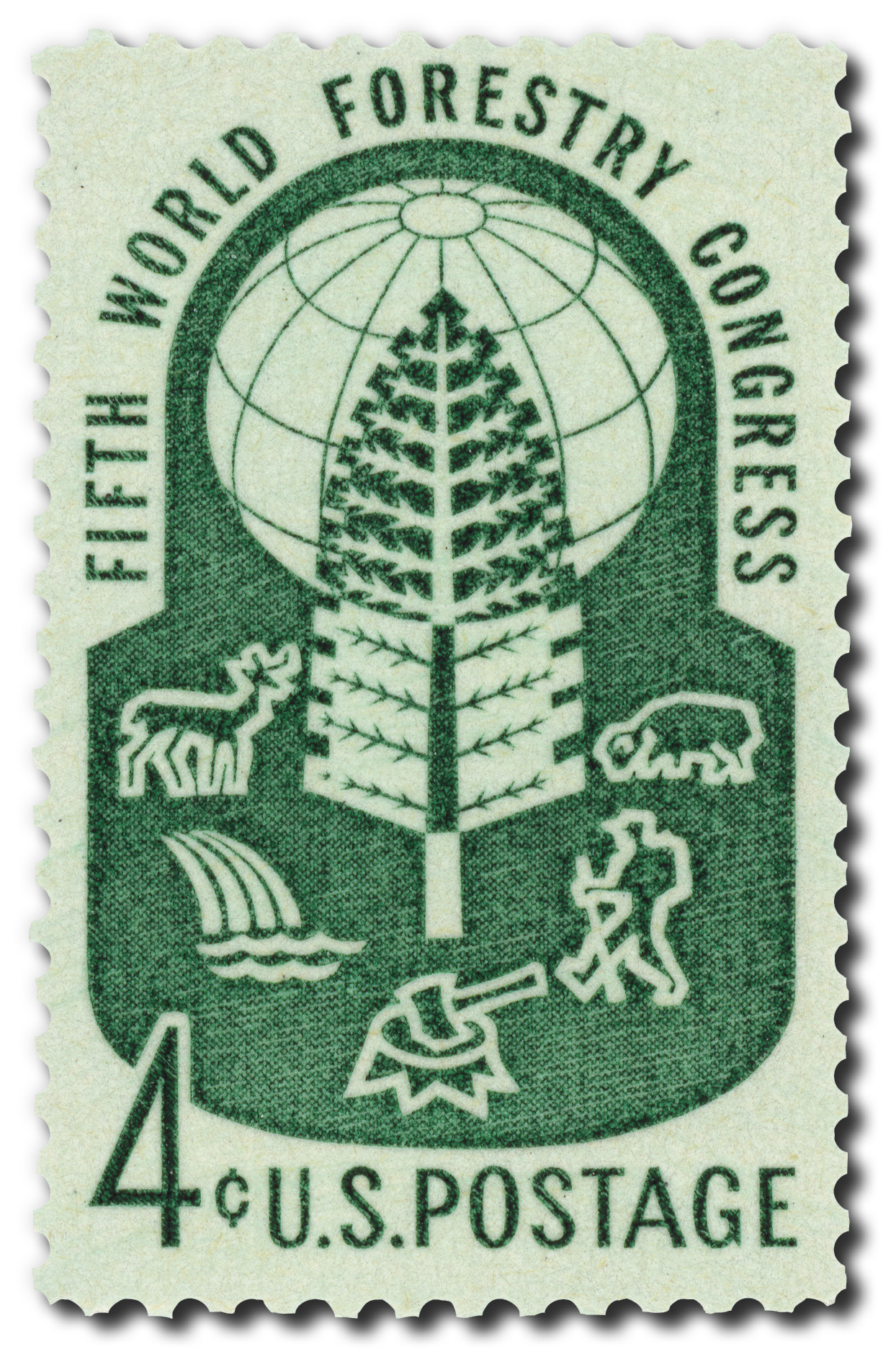
On August 29, 1960, the Fifth World Forestry Congress opened in Seattle, Washington. Nearly 2,000 participants gathered to consider how forests could supply timber while also protecting water, wildlife, grazing land, and places for outdoor recreation.
The World Forestry Congress is one of the largest international meetings devoted to forests and forestry. It brings together foresters, scientists, government officials, conservationists, educators, business representatives, and community groups. Participants exchange research and discuss forest management, public policy, conservation, and the production of forest products. The congress does not pass binding international laws. Instead, its findings can guide governments and forestry organizations.
The first congress met in Rome, Italy, in 1926 at the International Institute of Agriculture. Delegates called for greater international cooperation on forestry. The second congress, held in Budapest in 1936, proposed an international center for forestry research and information. That center was created in Berlin in 1939, but its work was disrupted by World War II.

In 1946, the International Institute of Agriculture and the forestry center were absorbed by the United Nations’ new Food and Agriculture Organization, or FAO. The third World Forestry Congress met in Helsinki, Finland, in 1949. It examined the quantity and quality of the world’s timber supplies and helped shape principles for national forest policies. The fourth congress met in Dehra Dun, India, in 1954. Its discussions emphasized forest conservation, tropical forestry, soil protection, and the connection between forests and economic development.
Seattle was a fitting location for the Fifth World Forestry Congress. Washington had long depended on its immense stands of Douglas fir, western hemlock, cedar, and other commercially valuable trees. Seattle was also home to the University of Washington’s forestry program and was close to major national forests, sawmills, ports, and wood-products industries.

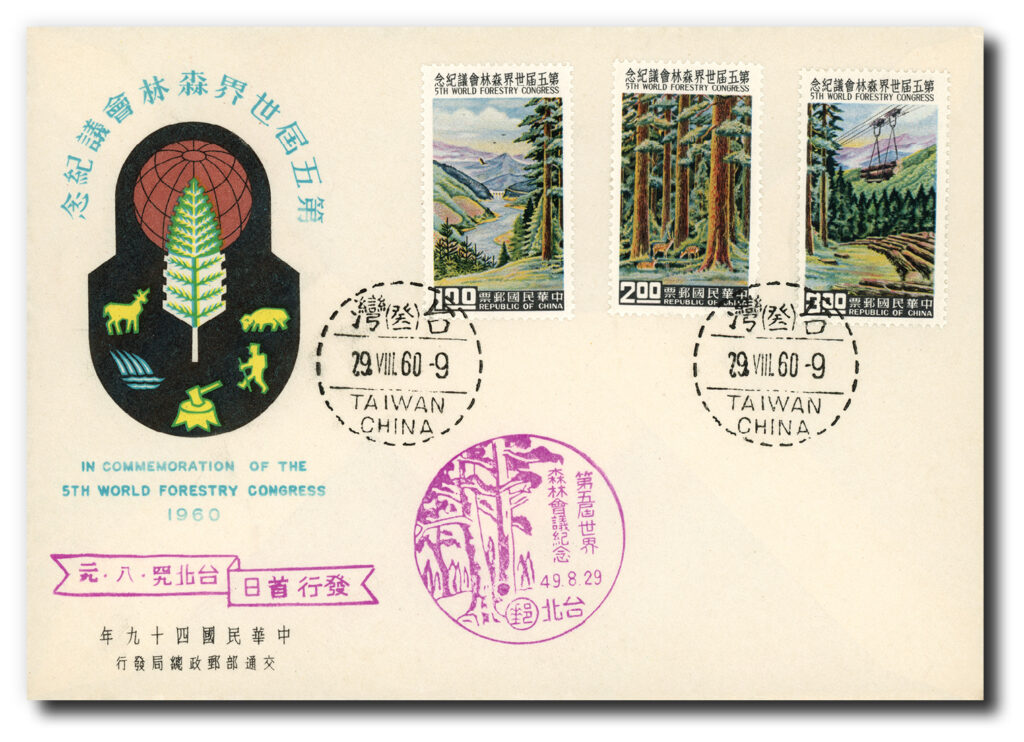
The congress met at the University of Washington from August 29 through September 10, 1960. Records list 1,970 participants representing 65 countries. The meeting was the first World Forestry Congress held in the United States. A four-cent commemorative stamp issued on its opening day pictured a globe and a tree, representing international cooperation in forestry.
The central theme was “Multiple Use of Forest and Associated Lands.” Congress organizers defined multiple use as managing forests to conserve the land while producing five major benefits: wood, water, forage, recreation, and wildlife. The goal was to provide the greatest long-term benefit to the largest number of people.

This approach required difficult choices. Logging could provide lumber and employment, but poorly planned cutting might damage wildlife habitat or allow soil to wash into streams. Livestock grazing could make productive use of forestland, but too many animals could harm young trees and watersheds. Roads could support logging and recreation while also dividing habitats and increasing erosion.
Participants therefore warned that multiple use was not a simple solution for every forest. One use might need to take priority in a particular area. Other activities could be allowed only when they did not damage that primary purpose. The congress encouraged foresters to base those decisions on local conditions rather than apply one plan everywhere.

Technical sessions covered forest fires, diseases, insects, logging methods, forest economics, education, watersheds, wildlife, recreation, tropical forests, and wood products. Researchers also discussed tree genetics and selective breeding. These programs sought trees with useful traits, including faster growth and resistance to insects or disease.
Later congresses addressed changing international concerns. “Forests for People” was the theme in Jakarta in 1978. Subsequent meetings examined sustainable development, climate change, biodiversity, forest restoration, and the needs of communities that depend directly on forests. The 15th congress, held in Seoul, South Korea, in May 2022, attracted more than 15,000 in-person and online participants from over 160 countries. Its Seoul Forest Declaration called for healthier forests, restoration of damaged land, and wider use of sustainably produced wood. Peru is scheduled to host the 16th congress in 2027.
Washington’s economy has changed greatly since the Seattle gathering, but forests remain important. Forest products, including lumber, pulp, paper, doors, and building materials, form the state’s third-largest manufacturing sector. Washington is also a leader in aerospace, software and information technology, agriculture and food processing, maritime industries, clean energy, tourism, life sciences, and global trade. Its 39,500 farms produce about 300 crops, while its ports connect those products and manufactured goods with overseas markets. That combination of natural resources, industry, and international commerce continues to make Washington an appropriate setting for discussions about how land can serve many purposes.
| FREE printable This Day in History album pages Download a PDF of today’s article. Get a binder or other supplies to create your This Day in History album. |
Discover what else happened on This Day in History.
Thanks Mystic. Timely article given the destruction going on at the present in the Amazon Rain Forest. Unfortunately the president of Brazil is looking at possible short term use of resources at the expense of long term negative ramifications.
At this time, the temperate forests in northern Canada are being clear cut to be chopped up for toilet paper, paper towels, and facial tissue (ie. “Kleenex”). There are sustainable substitutes.
Sorry, Conrad, The substitutes are not close to being as sustainable as well managed temperate forest land. Please dispense with the propaganda.
All I can say to that is that you are uninformed.