
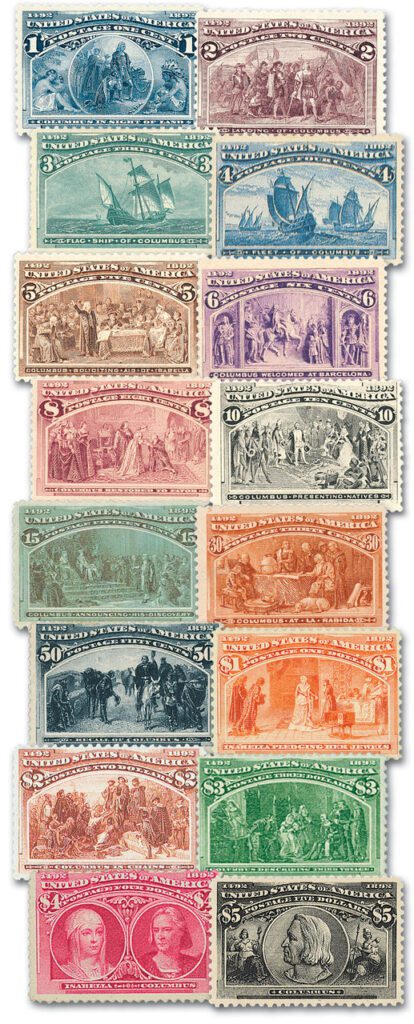
On August 3, 1492, Christopher Columbus sailed from southern Spain in search of a westward route to the valuable trading centers of Asia. The voyage did not lead to China as he expected, but carried three small ships across an ocean far wider than his calculations suggested.
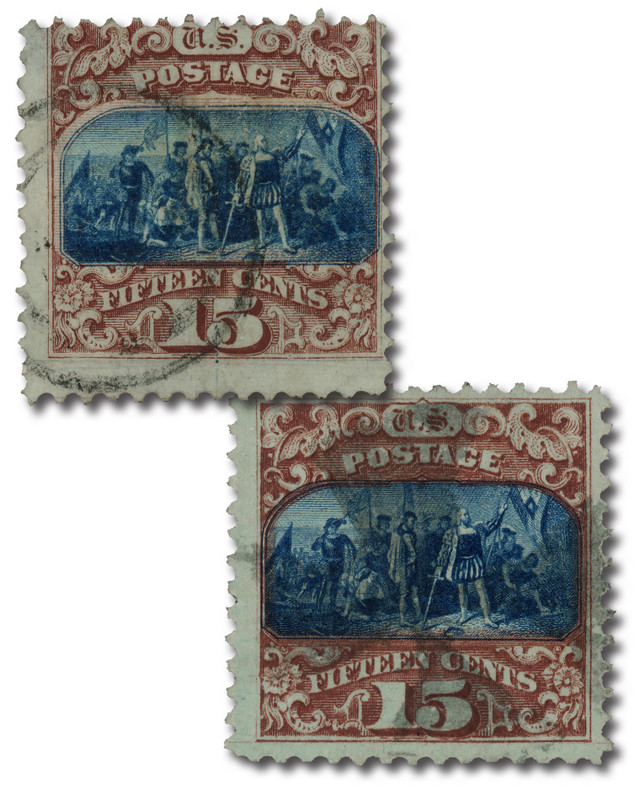
Columbus was a Genoese mariner with years of experience in the Mediterranean and Atlantic. European merchants valued Asian pepper, cinnamon, silk, gold, and other luxury goods. Portuguese navigators were exploring a route around Africa, but Columbus argued that Asia could be reached more quickly by sailing west. Contrary to a familiar legend, educated Europeans already knew Earth was round. Columbus’s mistake was greatly underestimating its size and the distance between Europe and Asia.
Columbus first offered his plan to King John II of Portugal, whose advisers rejected it. He then sought support from Ferdinand of Aragon and Isabella of Castile. The Spanish monarchs hesitated while completing their long war against Granada, the last Muslim-ruled kingdom on the Iberian Peninsula. Granada surrendered in January 1492. On April 17, the monarchs approved the Capitulations of Santa Fe, which promised Columbus titles, authority over lands he might claim, and a share of future profits.
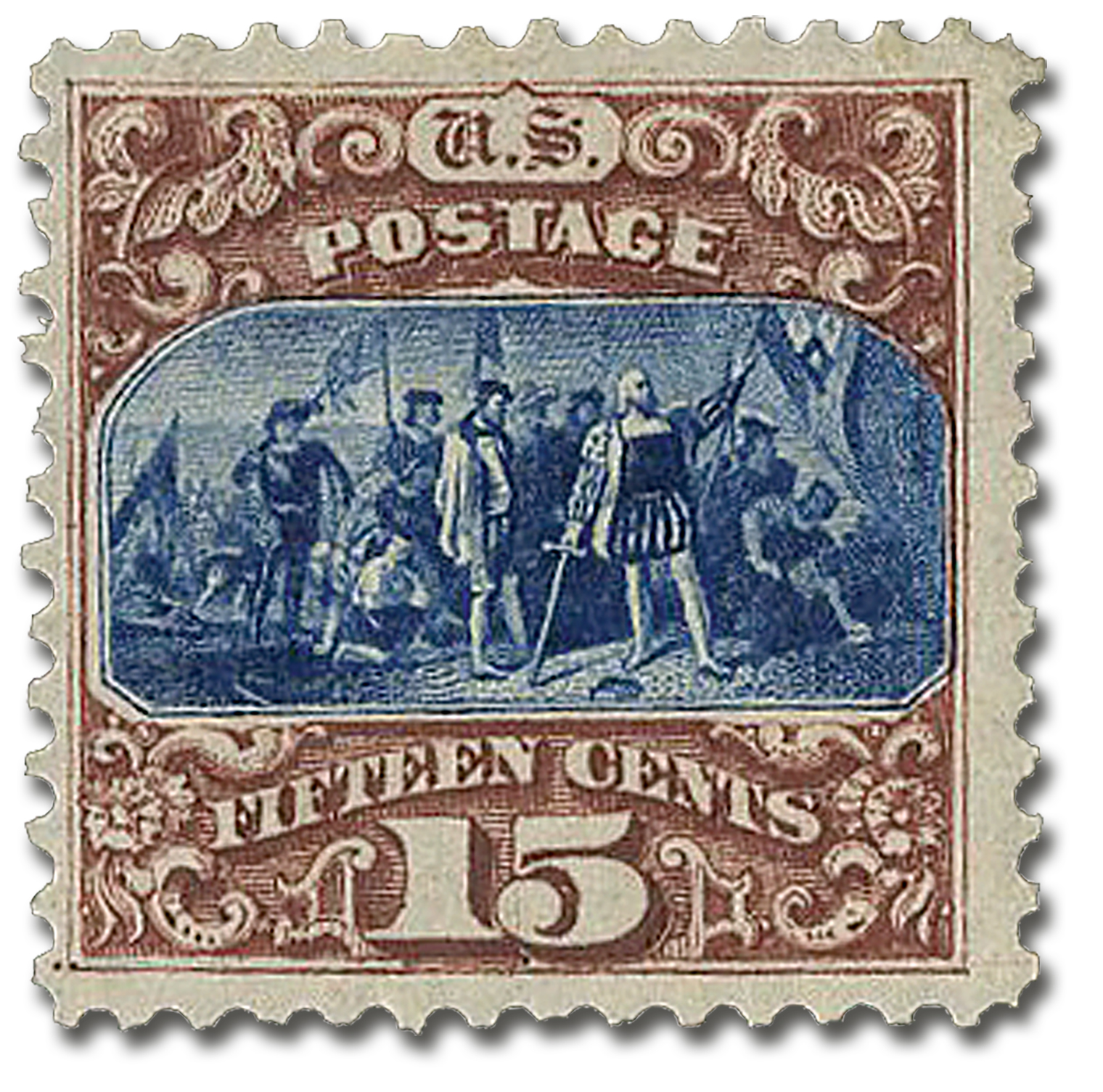
Columbus assembled his expedition at Palos de la Frontera. His flagship, the Santa María, was a larger cargo vessel. The Pinta and Niña were smaller caravels, which were faster and easier to maneuver. The Niña was formally named the Santa Clara. Martín Alonso Pinzón commanded the Pinta, while his brother Vicente Yáñez Pinzón commanded the Niña. Roughly 90 officers and sailors joined the expedition.
The fleet left Palos before sunrise on August 3. Within days, the Pinta developed rudder trouble. The ships stopped in the Canary Islands for repairs and supplies. Workers also changed the arrangement of the Niña’s sails to make the vessel better suited for sailing west. On September 6, the expedition departed La Gomera and entered the open Atlantic.
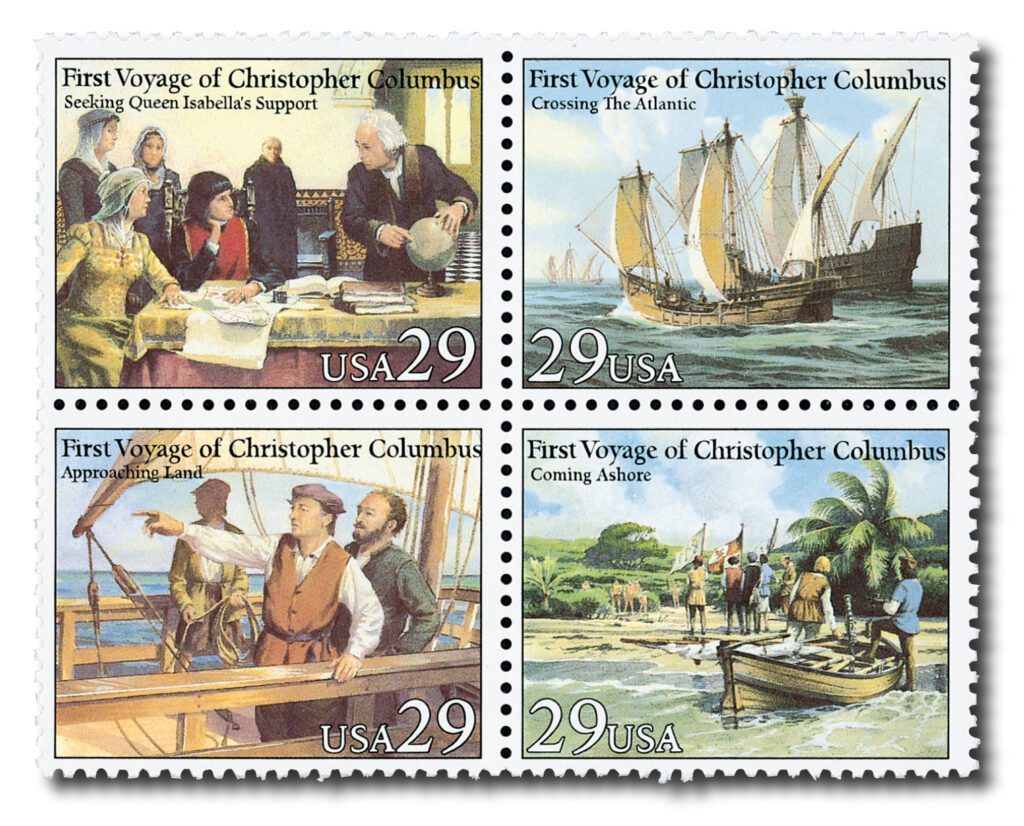
Columbus used the northeast trade winds to carry the fleet westward. The sailors crossed long stretches of unfamiliar water and passed through the floating seaweed of the Sargasso Sea. As the weeks passed without land, the crews became increasingly uneasy. Columbus’s surviving journal records complaints and arguments, although later stories of a full-scale mutiny appear exaggerated. Birds, branches, and pieces of carved wood eventually suggested that land was nearby.
At about 2 a.m. on October 12, Rodrigo de Triana, a lookout aboard the Pinta, sighted land. The ships had reached an island in the Bahamas called Guanahani by its Lucayan Taíno inhabitants. Columbus renamed it San Salvador and claimed it for Spain, believing he had reached islands near Asia. Historians still debate which modern island was Guanahani.
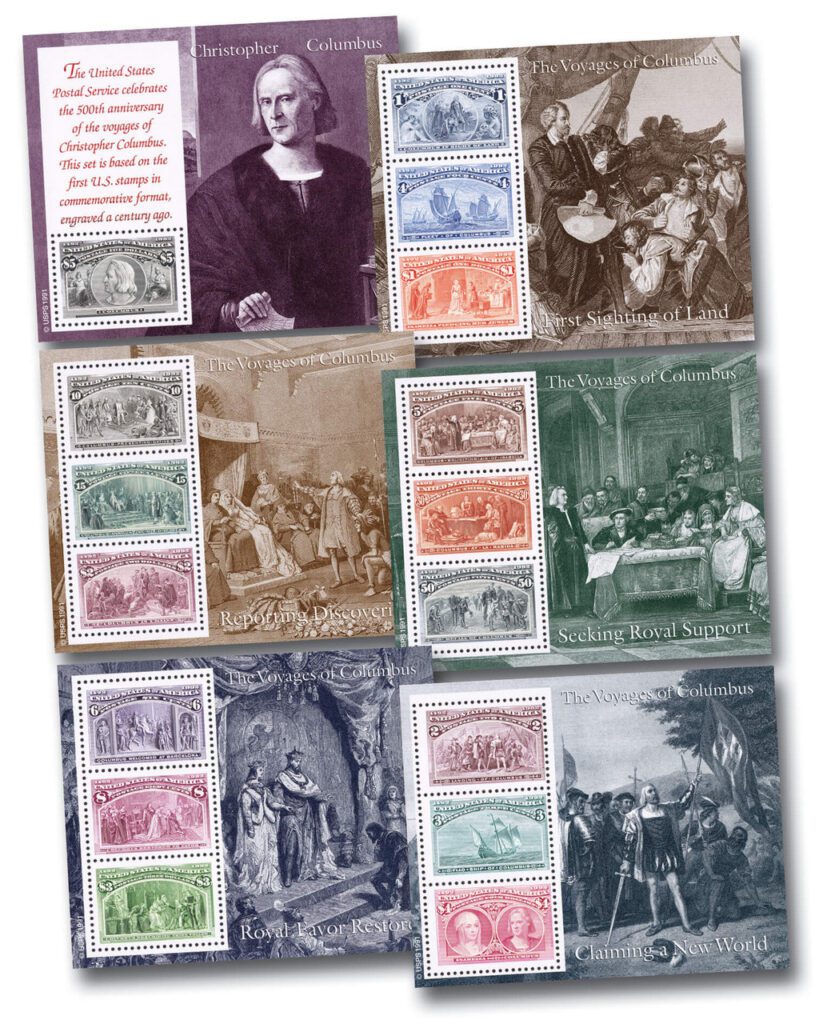
The expedition continued to Cuba and Hispaniola. On Christmas night, the Santa María ran aground off Hispaniola. Its timbers were used to build a small settlement called La Navidad, where 39 men remained. Columbus sailed for Europe in January and reached Palos on March 15, 1493, carrying reports of new lands, small amounts of gold, unfamiliar plants and animals, and several Indigenous captives.
Columbus never reached Asia, nor was he the first person or first European to reach the Americas. His voyage did begin sustained contact between Europe and the Caribbean. It led to further exploration and trade, but also conquest, forced labor, disease, and profound disruption for the Indigenous peoples already living there.
Click here for lots more Columbus stamps, including individual Columbians, different conditions and varieties, proofs, First Day Covers, joint issues, coins, and more!
| FREE printable This Day in History album pages Download a PDF of today’s article. Get a binder or other supplies to create your This Day in History album. |
Discover what else happened on This Day in History.
Great history stories tied with US stamps. Keep them coming.
I heard that the Queen of Spain was a big Ray Charles fan and when Chis said he was going to America the queen gave him ships to go there and find Ray Charles and bring him back to Spain to play for the queen. She had all his records but couldn’t play them because the record player hadn’t been invented yet. -ref: Flip Wilson
What a great reference to Flip Wilson’s classic comedy! Very funny.
Hi,
This is a really good series…it occurs to me you might think out of the box and see if it could be applied as an aid to classroom history lessons…which might inspire interests in stamps, as well. Not sure how you’d do it, but a way to recirculate cancelled stamps, perhaps…and gain a tax credit as well…if it works, just send me an upside down Jenny…thanks Tom Baldwin
I must share, I too enjoy reading “This Day in History”. Today’s, regarding famous
Christopher Columbus, was most enlightening to me. I did not begin to know just what a difference his expeditions made. Nothing like gold and riches to help out his nation.
So, going forward, am I going to learn something new every day? No doubt about it!
I am enjoying very much these on-line stories and This Day in History.
I love the engraving on these stamps and the fact that they were produced from the original printing dies. Beautiful.
The spelling is: the Niña, Pinta, and Santa MarÃa.
Thanks for sending “This day in history.” I think that it is a great idea.
He and his officers and crewmen had to be courageous and bold to make this trip. They were like the astronauts of today in that pioneering spirit. It was interesting that other countries such as Italy and Spain co-issued similar issues. The Spanish set was the lowest in cost.
Since I specialize in US stamps as well as help out at our largest stamp shop with the US section.
I bought all the different sets of these stamps.
Very nice !
As an 82 year old Korean War Veteran and a stamp collector
since age twelve, and as a History Major, I’m enjoying A Day In
History with joy and I have gotten my grand daughters to watch
also…..their comments are on the wild side….keep up the great work !!!!
Sam
Cuban historians believe that Columbus arrived in Cuba at waht is today the port of Gibara. Thank you Mr Tom Baldwin for your comment. I have read similar comments regarding “This Day in History” as an aid in classroom history lessons. I also find it very interesting that the writer of the article mentioned that Columbus was not the first. The Vikings are believed to have arrived and visited what is known as Martha’s Vineyard about four hundred years before-1000 AD. And ask any Irish school child. They will tell you that one of their historical figures, a monk who lived in the 7th or 8th century did reach what is today northeastern Northamerica or Southeastern Canada, before 1000 AD. Finally, there is possible evidence to suggest that the Phonecians may have reached and settled a site in what is the State of Maine, sometime around 2000 to 2500 BCA, perhaps earlier.