
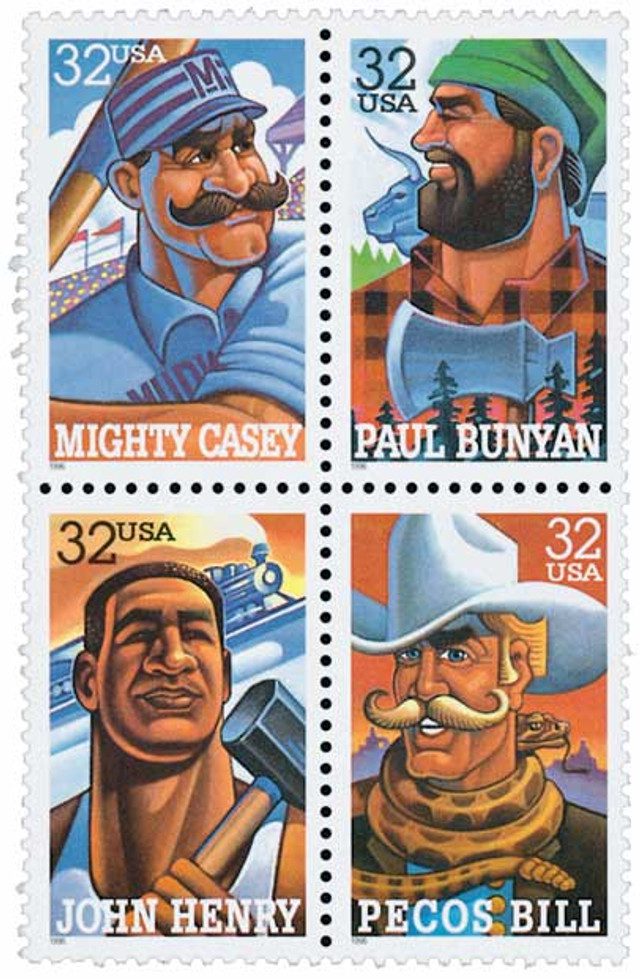
On July 11, 1996, the USPS issued four stamps honoring larger-than-life American Folk Heroes. The colorful set celebrated a mighty baseball slugger, a giant lumberjack, a legendary steel driver, and the wildest cowboy in the West.
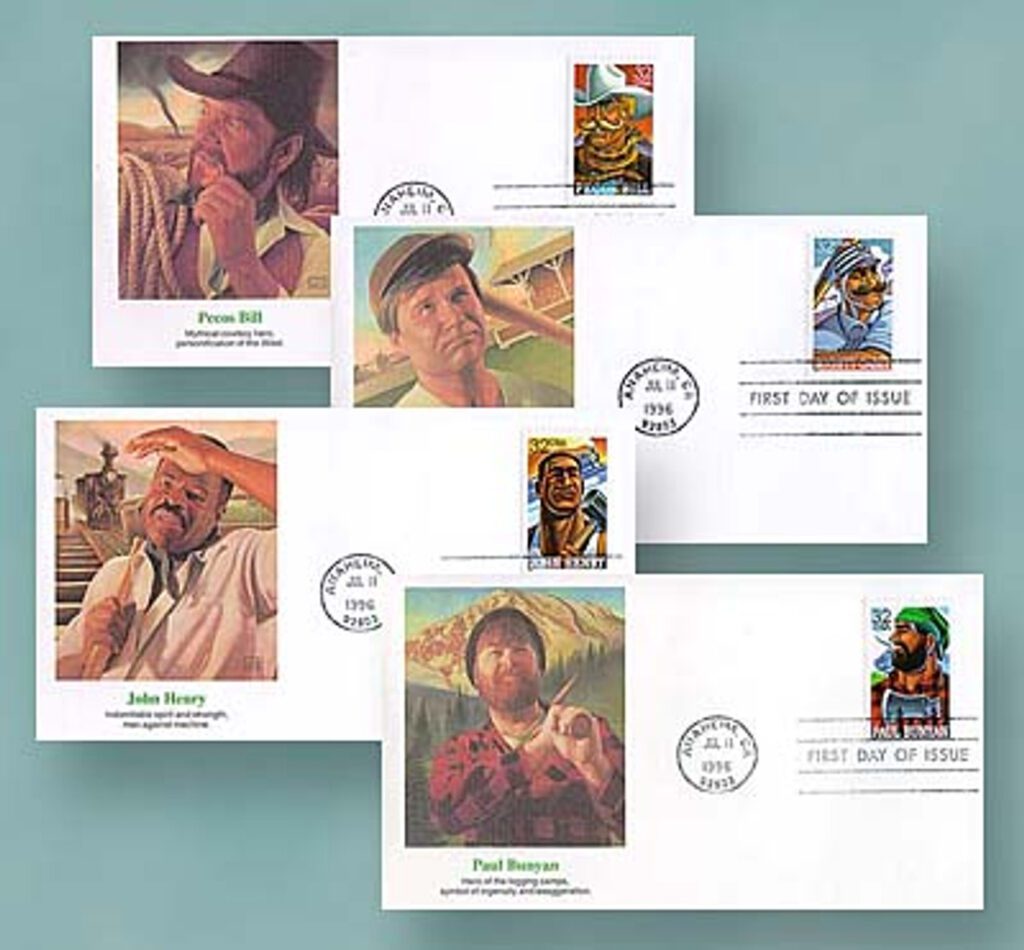
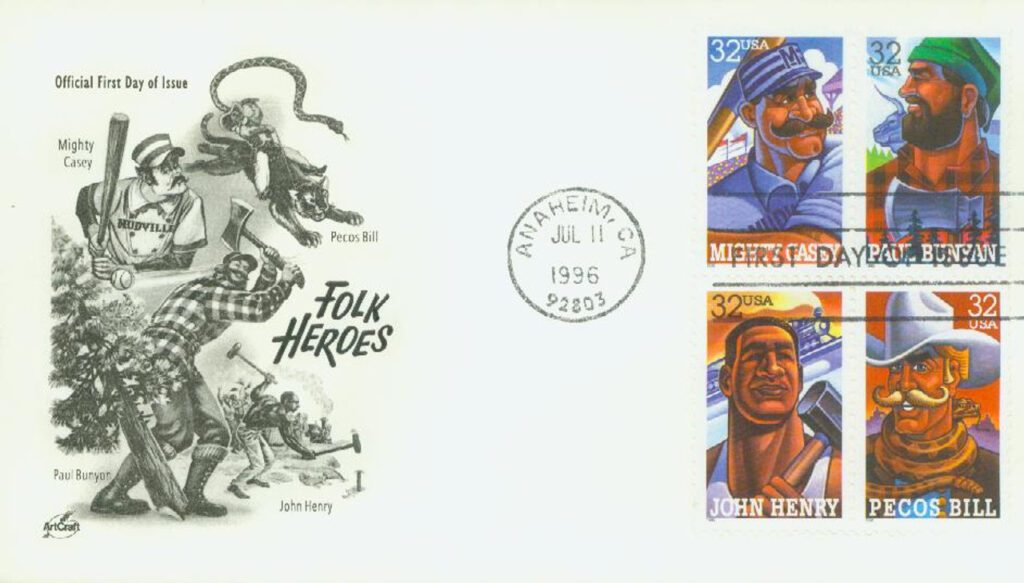
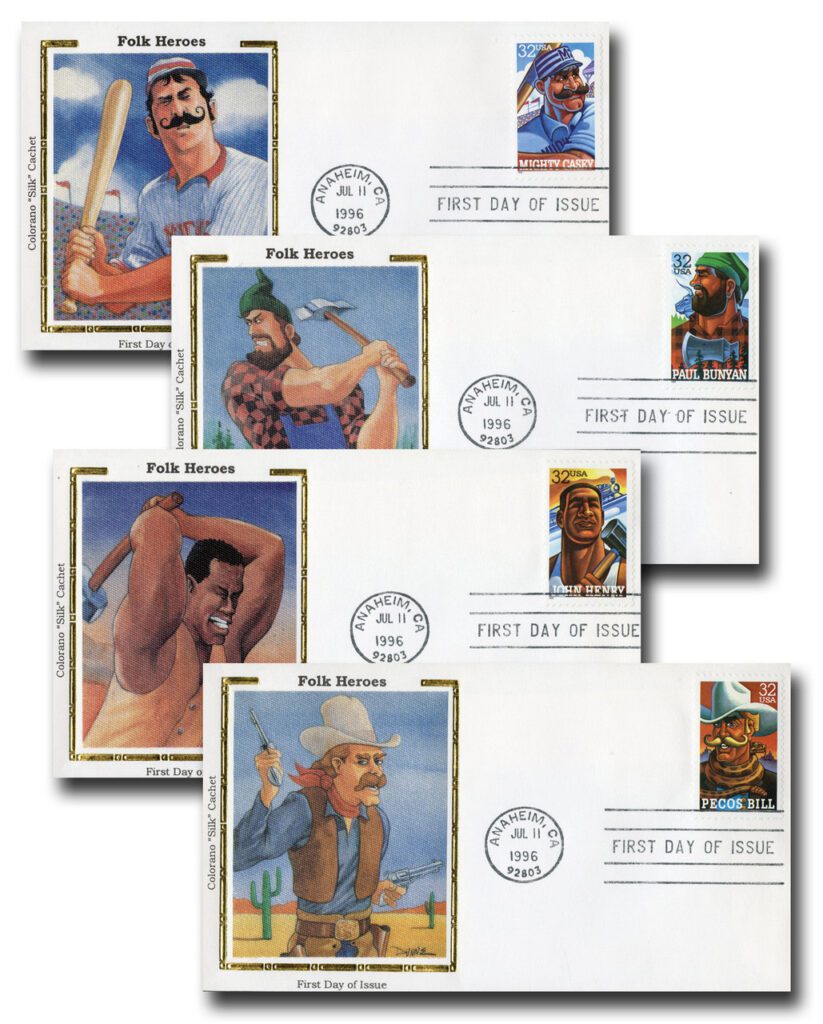
The four 32¢ commemorative stamps pictured Mighty Casey, Paul Bunyan, John Henry, and Pecos Bill. Together, they formed a se-tenant block, meaning the four different designs were printed side by side. The stamps paid the first-class letter rate and were issued at the Postage Stamp Mega Event in Anaheim, California.
Commercial illustrator David LaFleur of Derby, Kansas, created the artwork under the direction of USPS art director Richard Sheaff. LaFleur had previously illustrated the widely used Flag Over Porch definitive stamps. His Folk Heroes portraits blended cartoon art with the bold style of vintage advertising posters and New Deal-era murals.
LaFleur gave each hero a thick neck, strong jaw, and exaggerated physical power. “They are very macho—that’s the way I see them,” he explained. To avoid copying familiar depictions, he read unillustrated versions of the stories and developed his own interpretations.
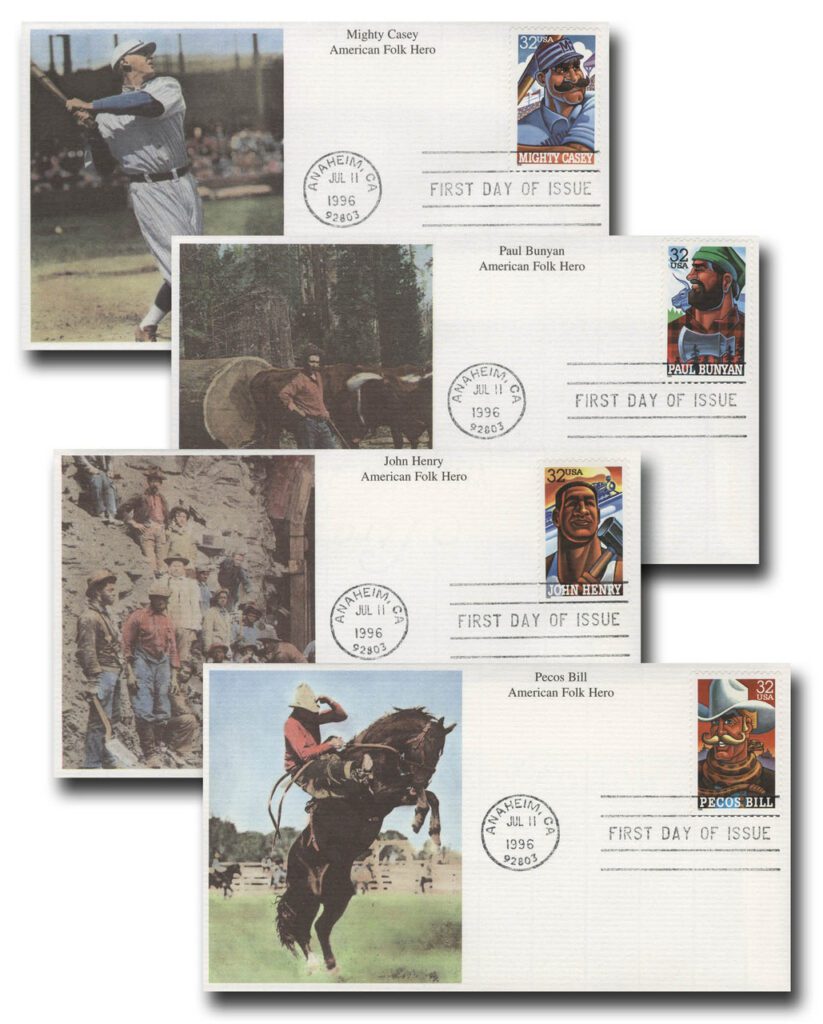
The USPS originally asked LaFleur to illustrate six characters. Johnny Appleseed and Rip Van Winkle were considered along with the four selected heroes, but the Postal Service reduced the final issue to four stamps. Ashton-Potter printed the stamps by offset lithography in panes of 20.
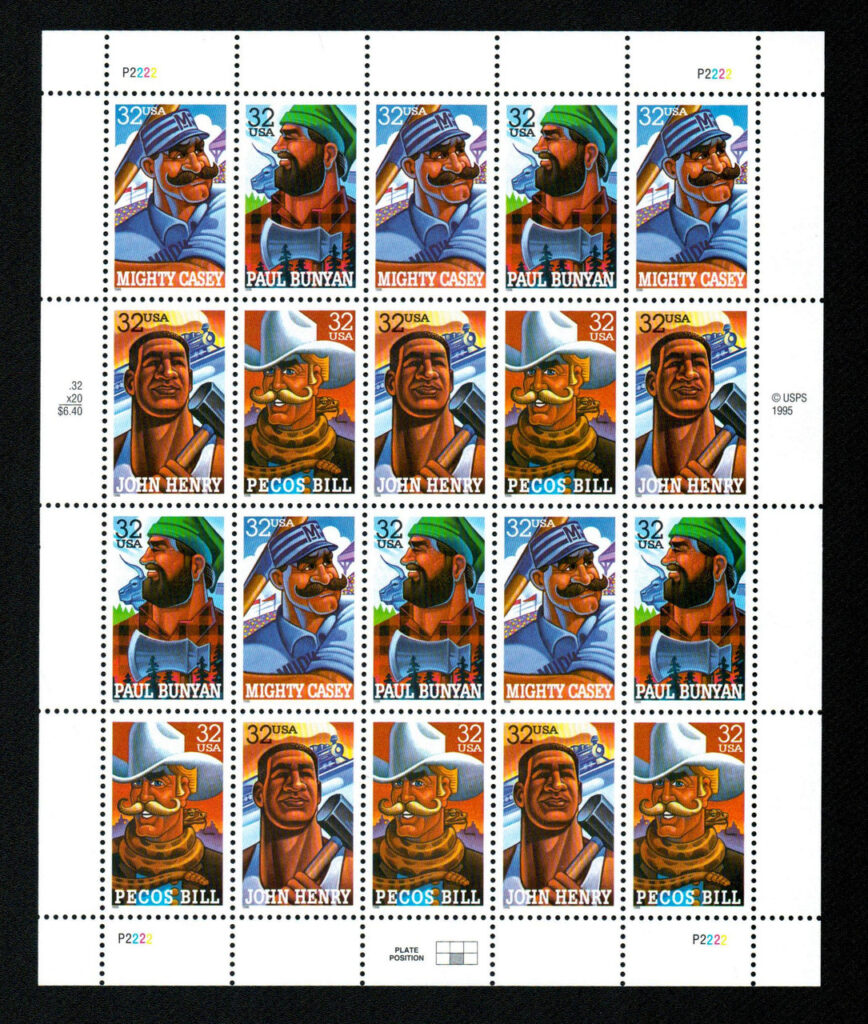
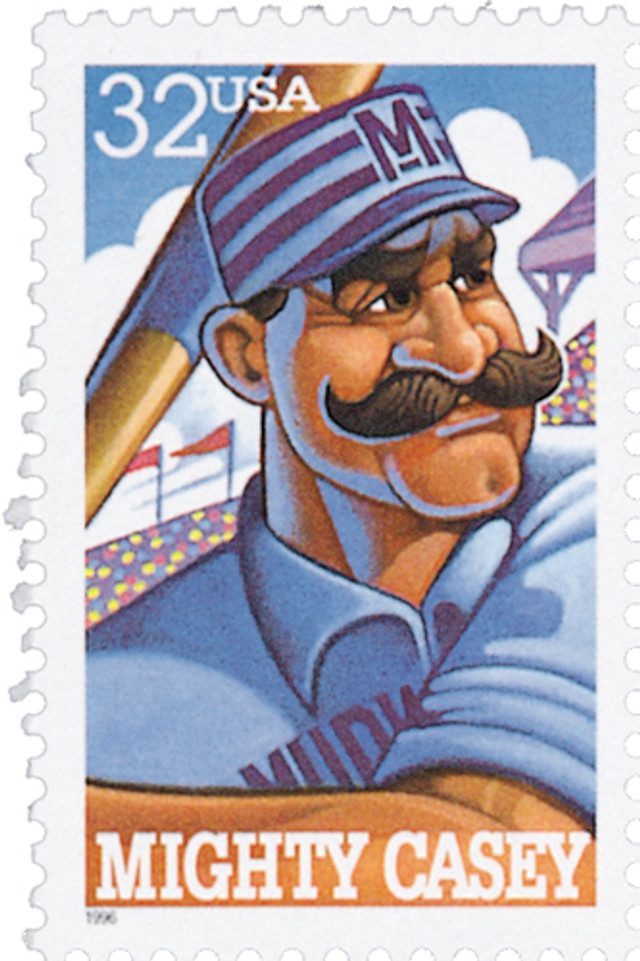
Mighty Casey – Baseball Hero
Mighty Casey comes from Ernest Lawrence Thayer’s comic poem “Casey at the Bat.” It first appeared in the San Francisco Examiner on June 3, 1888, under Thayer’s pen name, “Phin.”
Mudville trails by two runs with two outs in the final inning. Two unlikely hitters reach base, bringing the powerful and confident Casey to the plate. He watches two strikes pass before swinging mightily at the third pitch—and missing.
The poem’s famous ending, with “no joy in Mudville,” became part of American popular culture. Actor DeWolf Hopper helped make it famous by performing it thousands of times onstage. Sportswriter Grantland Rice later gave Casey a happier outcome in his 1907 poem “Casey’s Revenge.”
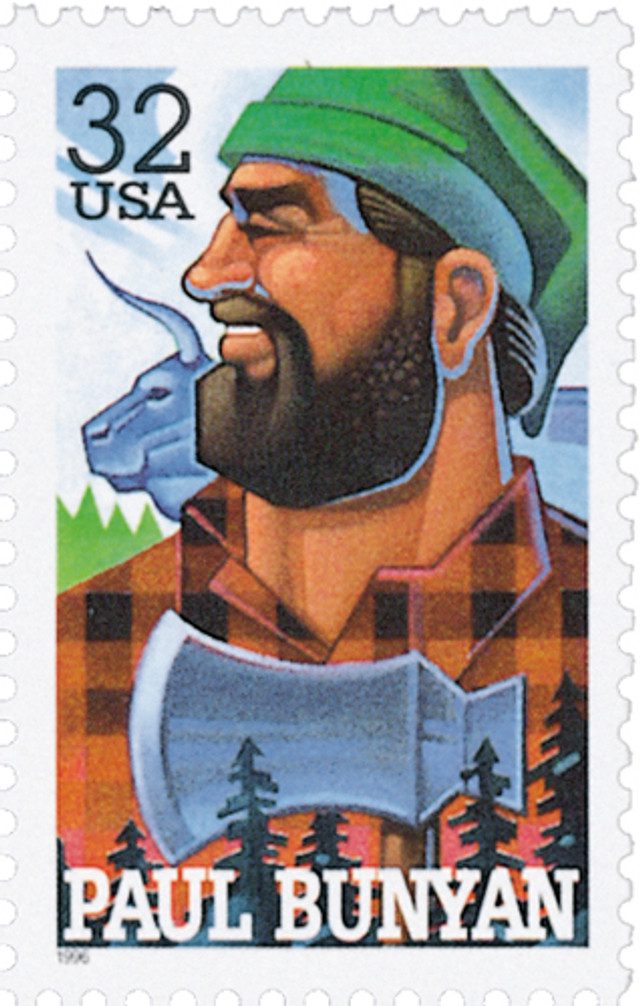
Paul Bunyan – Hero of the Lumberjacks
Stories about the gigantic lumberjack Paul Bunyan developed among workers in North American logging camps. Lumberjacks shared humorous tales during long evenings after exhausting days of cutting and hauling timber.
One of the earliest known printed references appeared in a Minnesota newspaper in 1904. Reporter James MacGillivray published additional tales in 1910. Beginning in 1914, William B. Laughead used Bunyan in advertising for the Red River Lumber Company and helped create the familiar image of the giant woodsman and Babe, his Blue Ox.
Later stories credited the pair with digging the Great Lakes, carving rivers, and shaping mountains with their enormous tools and footsteps.
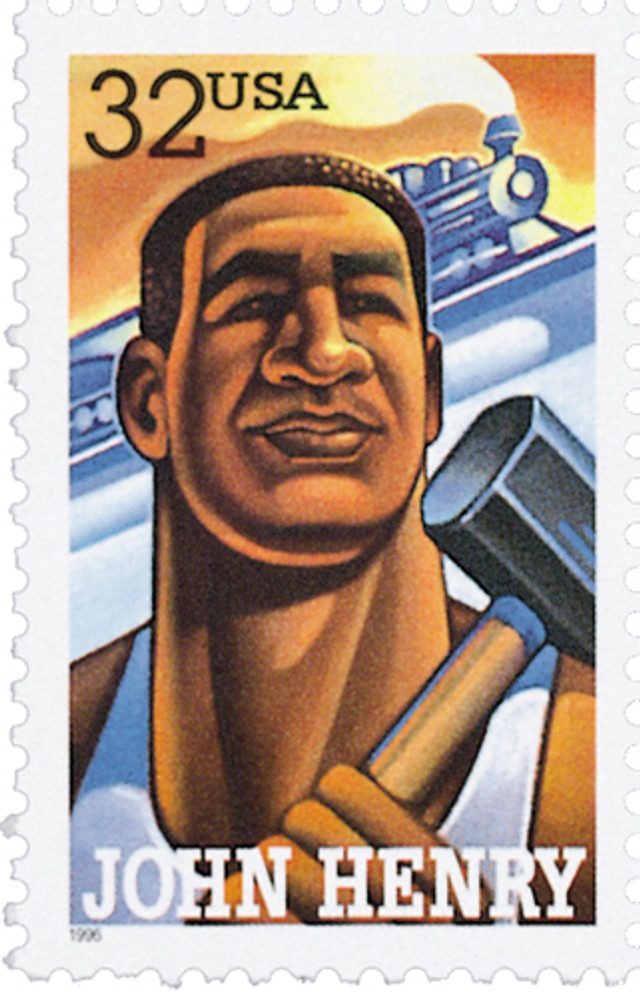
John Henry – Hero of Railroad Men
John Henry may have been based on a real African American steel driver, although historians still debate his identity and where his famous contest occurred. The best-known version places him at the Chesapeake and Ohio Railway’s Great Bend Tunnel in West Virginia.
Steel drivers swung heavy hammers against drills held by other workers. Their dangerous labor opened tunnels through mountains. In the legend, John Henry races a steam-powered drill to prove that a skilled worker can outperform a machine.
He wins the contest but collapses and dies with his hammer in his hand. Songs about John Henry spread among railroad crews and became a powerful story about strength, pride, industrial change, and the human cost of railroad construction.
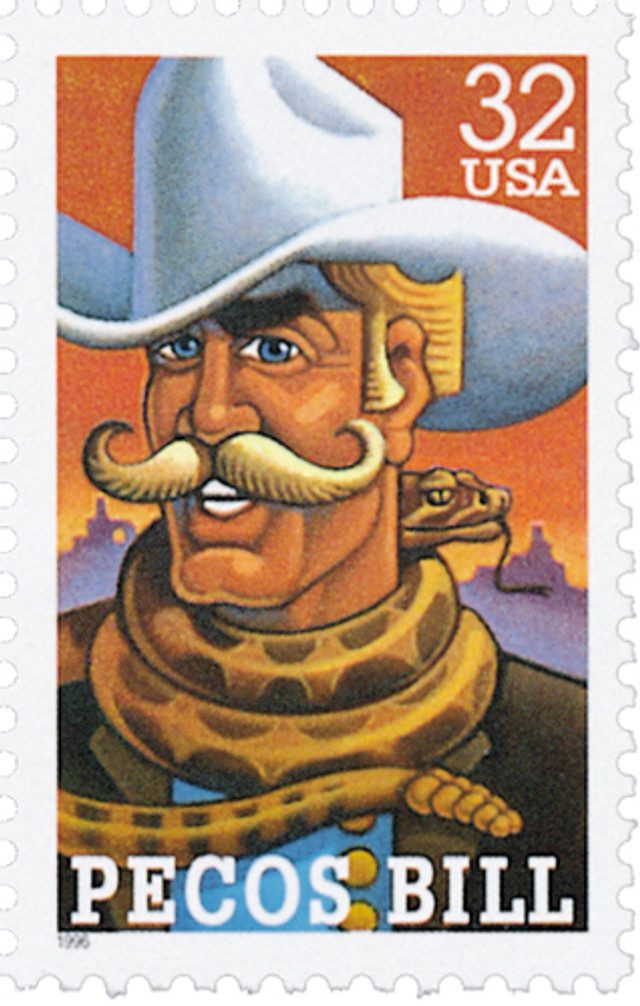
Pecos Bill – Cowboy Hero
Pecos Bill was a later addition to American folklore. Writer Edward “Tex” O’Reilly popularized him in The Century Magazine in 1923, claiming that the stories came from old cowboy traditions. Folklore scholars later concluded that O’Reilly probably created much of the character himself.
According to the tales, Bill was lost near the Pecos River as a baby and raised by coyotes. He grew into a cowboy who could rope a tornado, ride a cyclone, wrestle wild animals, and dig the Rio Grande.
Though their adventures were imaginary, the four Folk Heroes reflected real parts of American life: baseball, logging, railroad building, and ranching. LaFleur’s bold portraits brought those exaggerated stories together in one memorable stamp issue.
| FREE printable This Day in History album pages Download a PDF of today’s article. Get a binder or other supplies to create your This Day in History album. |
Discover what else happened on This Day in History.
I really like this. I’m buying a few ieeues.
I really like this. I’m buying a few issues. Sorry about the previous spelling.
Thank you for making me aware of the background for all the stamps that you pick to highlight. I find the stories behind the stamps each day to be very interesting. Today’s stamps make the characters portrayed in them really come alive. So good!
I grew up reading those stories. Thank you for bringing back memories.