

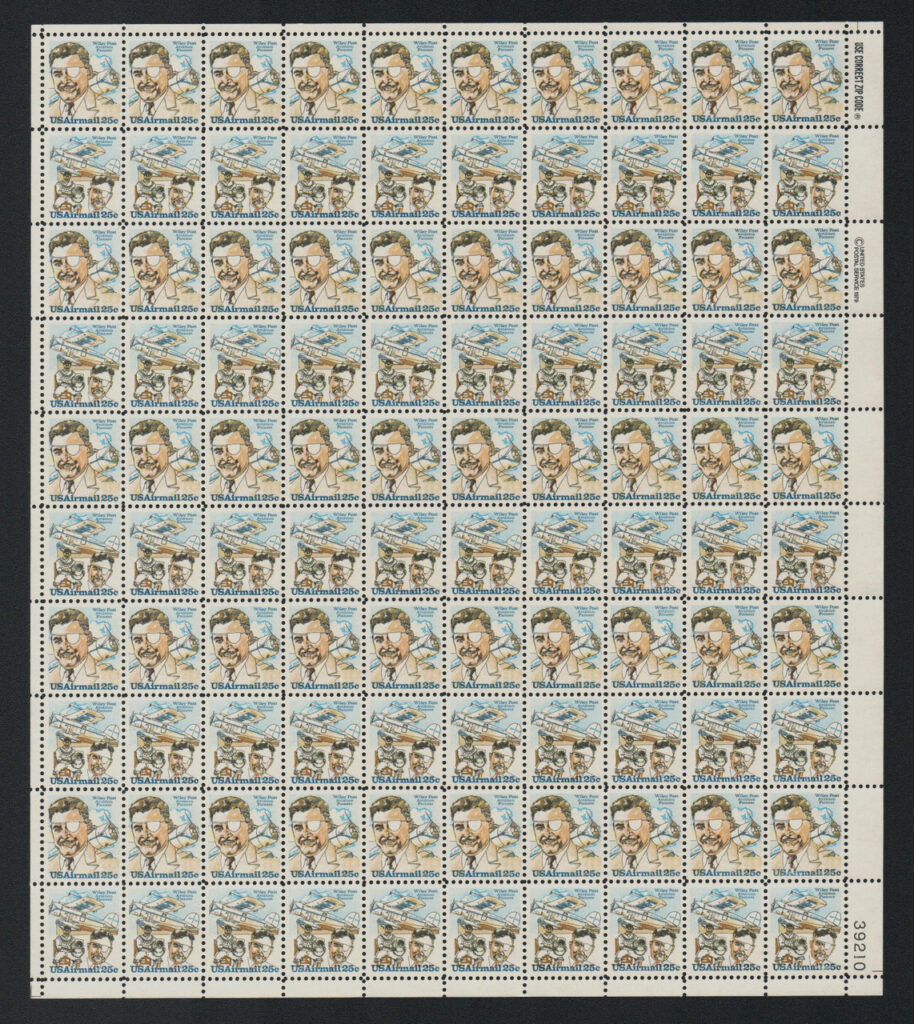
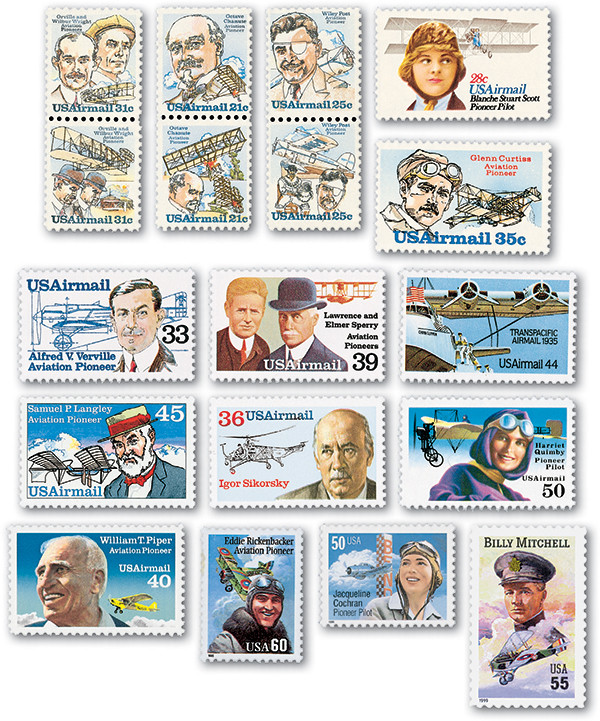
On July 22, 1933, Wiley Post completed the first solo flight around the world, returning to New York after nearly eight days in the air and at remote stops. He also broke his own speed record while testing navigation equipment that pointed toward the future of long-distance aviation.
Post had been drawn to flight since 1913, when he saw a Curtiss “pusher” airplane at a county fair in Lawton, Oklahoma. He later worked in the oil fields and joined a flying circus as a parachute jumper. After learning to fly, he became the personal pilot of Oklahoma oilman F. C. Hall. Hall owned a Lockheed Vega named Winnie Mae after his daughter.
The sleek, high-wing monoplane gave Post the aircraft he needed to pursue aviation records. In 1930, he flew it to victory in the National Air Race Derby from Los Angeles to Chicago. The next year, Post and Australian navigator Harold Gatty aimed for a larger prize: the fastest flight around the world.
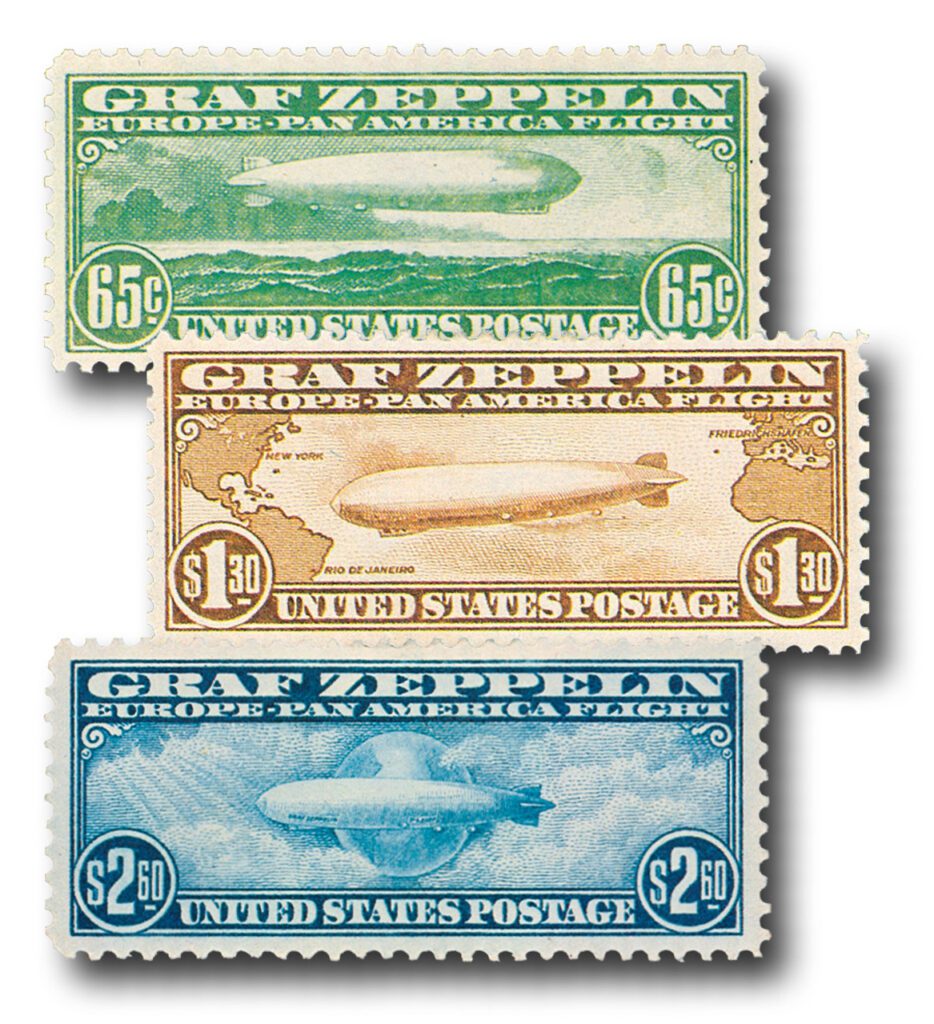
Post and Gatty left Roosevelt Field, New York, on June 23, 1931. Their route carried them through Newfoundland, England, Germany, the Soviet Union, Alaska, Canada, and Cleveland. They returned on July 1 after covering 15,474 miles in 8 days, 15 hours, and 51 minutes. The flight cut more than 11 days from the record set by the German airship Graf Zeppelin in 1929.
Post decided that his next attempt would be made without a navigator. Flying alone meant controlling the airplane, studying instruments, plotting his route, managing fuel, and enduring long periods with little sleep. Post was an experienced pilot, but he was not a trained navigator. His plan depended on both his endurance and several new pieces of equipment.
To prepare the Winnie Mae, Post had its engine overhauled and installed two experimental devices. A Sperry automatic pilot, nicknamed “Mechanical Mike,” could hold the aircraft on course while Post checked maps or instruments. An Army radio compass could detect signals from radio transmitters and show their direction. Both devices were still in the final stages of development.
Post took off from Floyd Bennett Field in Brooklyn on July 15, 1933. His first leg was a nonstop flight of about 26 hours to Berlin, despite poor weather over the Atlantic. Mechanical problems soon complicated the trip. The automatic pilot required repairs in Moscow, Novosibirsk, and Irkutsk. Even with those delays, Post reached Khabarovsk in eastern Siberia about 10 hours ahead of his 1931 pace.
The flight became especially difficult in Alaska. Post’s radio direction finder failed, leaving him uncertain of his position near dangerous mountain country. He landed at a short airstrip in the isolated mining settlement of Flat. The landing damaged the propeller and right landing gear. Local miners helped repair the airplane, while the propeller was sent to Fairbanks to be straightened.
After reaching Fairbanks, Post flew to Edmonton, Canada. He then began the final nonstop trip of more than 2,000 miles to New York. Fatigue remained a serious danger. He had spent much of the week flying, checking weather, making repairs, and preparing for the next leg with little opportunity for rest.
At 11:50 p.m. on July 22, the Winnie Mae landed at Floyd Bennett Field before an estimated crowd of 50,000 people. Post had covered 15,596 miles in 7 days, 18 hours, and 49 minutes. He had completed the first solo aerial journey around the world and improved his earlier record by about 21 hours.
The flight showed that automatic pilots and radio-direction equipment could reduce a pilot’s workload and make long-distance navigation more practical. Post later turned to high-altitude research. Working with the B. F. Goodrich Company, he helped develop the first practical pressure suit and used the Winnie Mae to explore the upper atmosphere. His 1933 journey was both a test of endurance and a valuable demonstration of developing aviation technology.
| FREE printable This Day in History album pages Download a PDF of today’s article. Get a binder or other supplies to create your This Day in History album. |
Discover what else happened on This Day in History.
A third event that happened on July 22 (1934) was the gunning-down of Public Enemy No.1, John Dillinger, outside the Biograph Theatre in Chicago. His mistress, the “lady in red”, sold him out to FBI agents, and was told to wear a red dress so they could spot him next to her, as he had recently had his features surgically altered, and they were not sure they could recognize him. Interesting article–you may want to save it for next year. jw
An interesting update about another great American citizen … Wiley Post !