
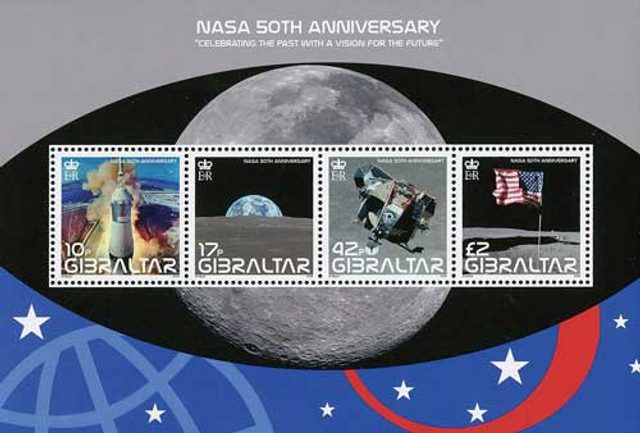
On July 29, 1958, President Dwight D. Eisenhower signed legislation creating the National Aeronautics and Space Administration, or NASA. The new civilian agency was formed during a tense Cold War race that had moved from laboratories and missile ranges into orbit.
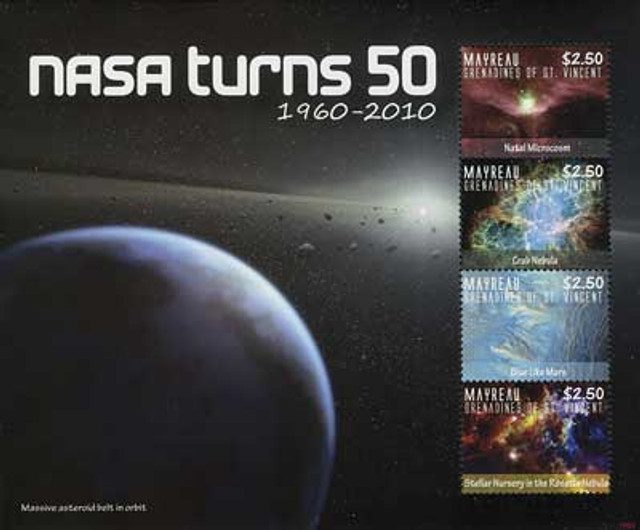

Modern rocketry had taken shape decades earlier. American physicist Robert H. Goddard received patents for multistage and liquid-fueled rockets in 1914. On March 16, 1926, he launched the world’s first successful liquid-fueled rocket from a farm in Auburn, Massachusetts. Fueled by gasoline and liquid oxygen, it flew for 2.5 seconds, but it proved that liquid propulsion could work.
World War II accelerated rocket development. Germany’s V-2 became the first long-range guided ballistic missile and one of the earliest human-made objects to reach space by the US military’s definition. After the war, American researchers tested captured V-2 rockets at White Sands, New Mexico. On October 24, 1946, a camera aboard one photographed Earth from about 65 miles high, producing the first pictures of the planet from space.
The organization that became NASA had much older roots. The National Advisory Committee for Aeronautics, or NACA, was created in 1915 to conduct and coordinate aviation research. Its laboratories helped improve aircraft wings, engines, propellers, and high-speed flight. Eisenhower’s administration did not create NACA after Sputnik; instead, NASA later absorbed it.
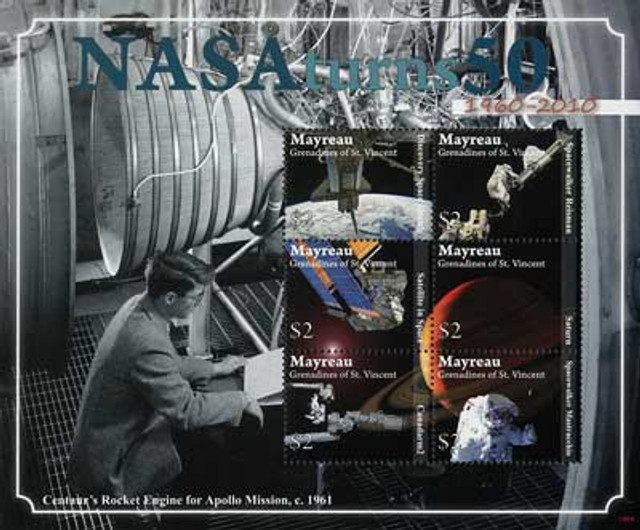
The immediate push for a national space agency came from the Soviet Union. On October 4, 1957, the Soviets launched Sputnik 1, the first artificial satellite to orbit Earth. The achievement alarmed many Americans because the same rocket technology could also deliver nuclear weapons. A publicized US attempt to launch Vanguard TV-3 failed on December 6 when the rocket rose only a few feet and exploded. The United States recovered on January 31, 1958, when Explorer 1 reached orbit and helped discover the Van Allen radiation belts.

Eisenhower wanted a permanent civilian organization to direct nonmilitary space research. Congress approved the National Aeronautics and Space Act, and he signed it on July 29, 1958. NASA opened for business on October 1. It absorbed NACA’s roughly 8,000 employees, three major laboratories, smaller test facilities, and annual budget of about $100 million. Military missile and defense programs remained under the Department of Defense.
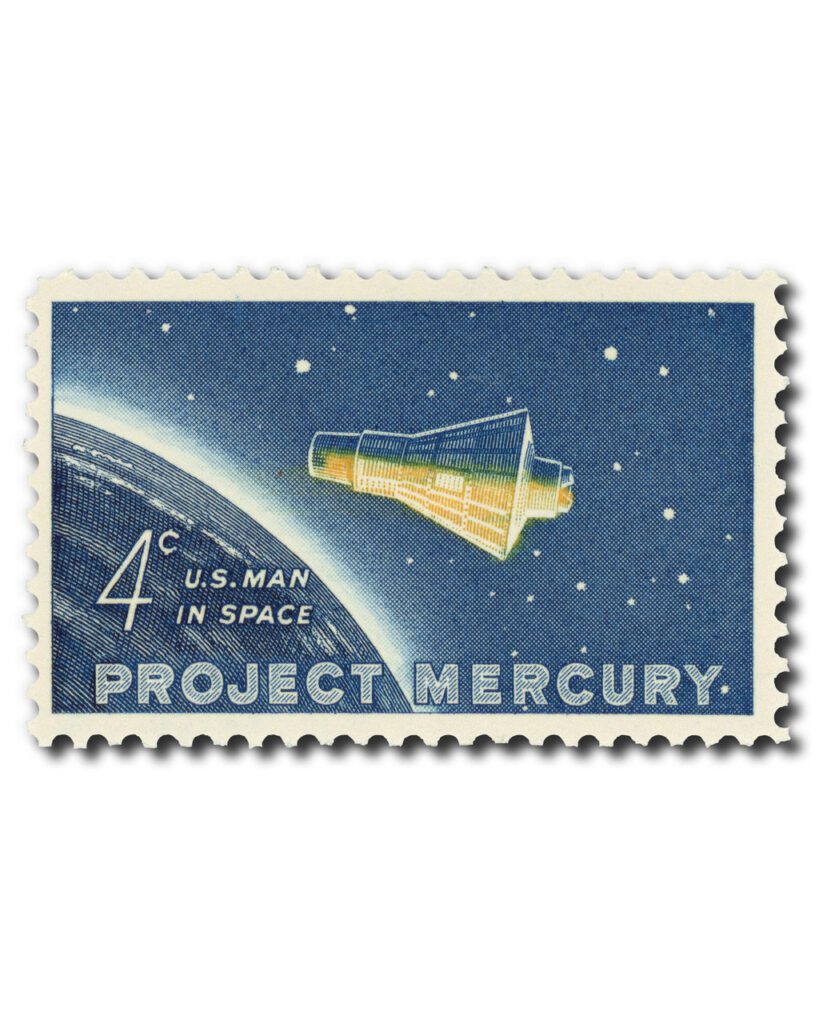
NASA’s first human-spaceflight program was Project Mercury. Its goals were to place a person in Earth orbit, study whether humans could function in space, and recover both astronaut and spacecraft safely. Soviet cosmonaut Yuri Gagarin became the first person in space on April 12, 1961. Alan Shepard followed on May 5 as the first American in space, although his Freedom 7 flight was suborbital. On February 20, 1962, John Glenn became the first American to orbit Earth aboard Friendship 7.
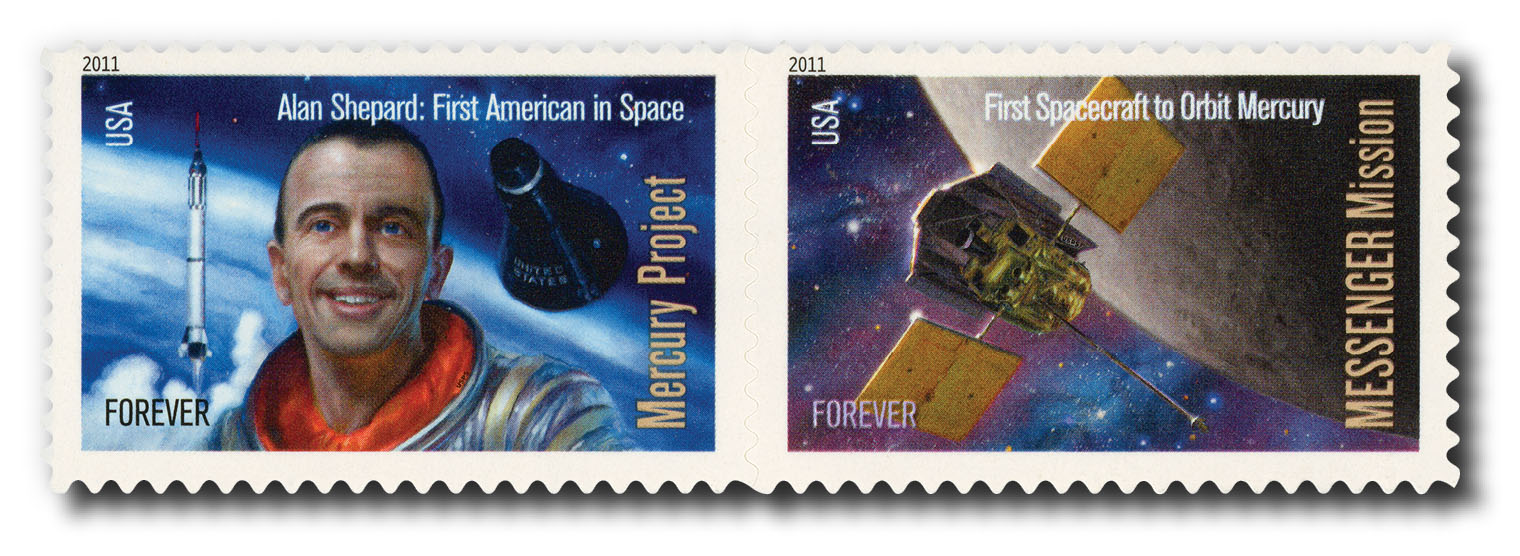
In May 1961, President John F. Kennedy challenged the nation to land a man on the Moon and return him safely before the decade ended. Project Gemini then tested skills Apollo would require, including longer missions, spacewalks, controlled reentry, rendezvous, and docking. Mariner 2 flew past Venus in December 1962 and became the first successful mission to another planet.
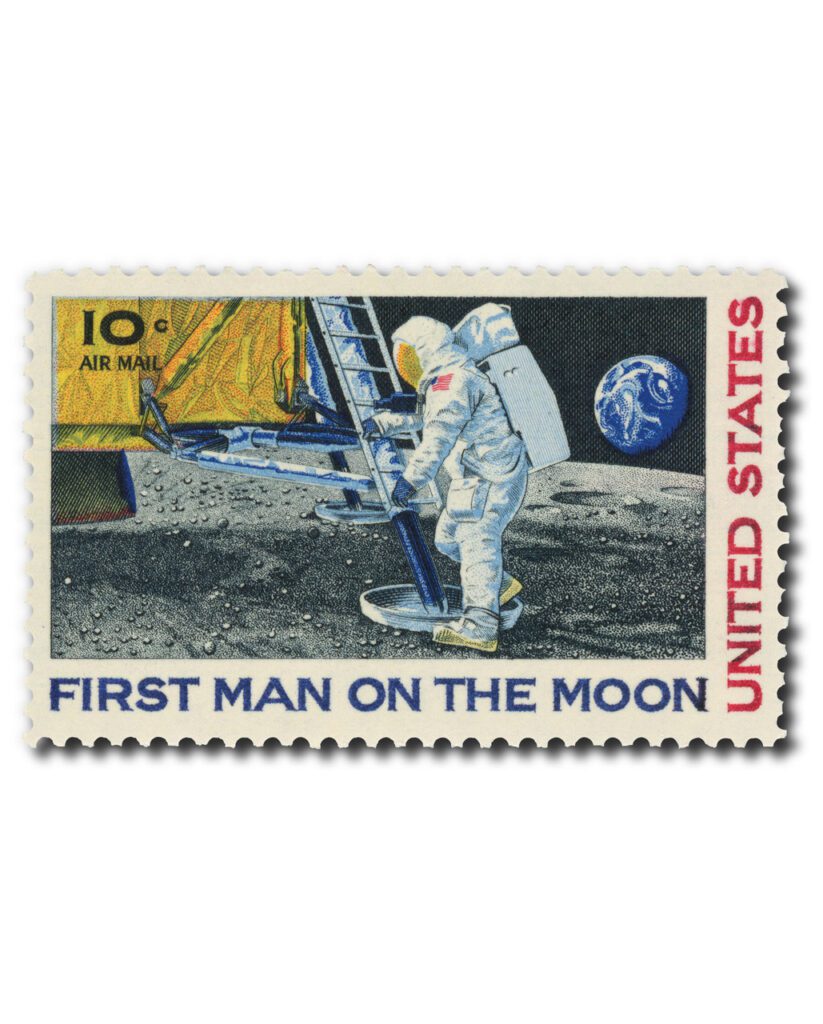
Apollo 8 carried Frank Borman, Jim Lovell, and William Anders around the Moon in December 1968, making them the first humans to orbit it. Apollo 11 completed the landing goal on July 20, 1969. Neil Armstrong and Buzz Aldrin walked on the lunar surface while Michael Collins remained in orbit. NASA estimates that about 650 million people watched Armstrong take his first step.
After Apollo, NASA turned toward longer stays in orbit. Skylab, America’s first space station, hosted three crews in 1973 and supported solar observations, Earth studies, medical research, and experiments in weightlessness. In July 1975, an American Apollo spacecraft docked with a Soviet Soyuz. The Apollo-Soyuz Test Project replaced the symbolism of rivalry with a planned display of cooperation between the two space powers.

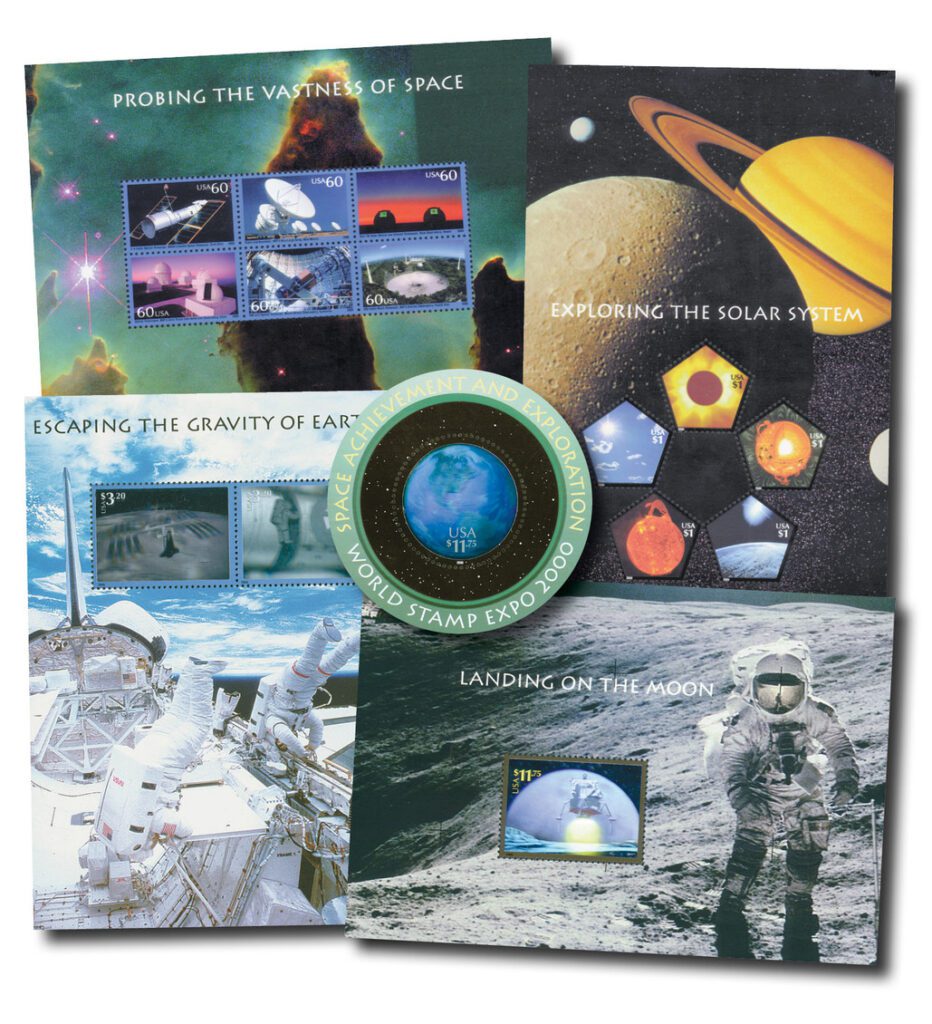
In the decades since Skylab and Apollo-Soyuz, NASA has operated the Space Shuttle, helped build the International Space Station, and sent robotic spacecraft to every planet in the solar system. Its satellites and telescopes have also expanded scientists’ understanding of Earth, the Sun, and the distant universe. Today, NASA works with commercial companies and international partners while developing the Artemis program, which is intended to return astronauts to the Moon and prepare for future human missions to Mars.
Click here for lots more worldwide Space stamps.
| FREE printable This Day in History album pages Download a PDF of today’s article. Get a binder or other supplies to create your This Day in History album. |
Discover what else happened on This Day in History.
Informative and interesting.
1975 stamp Apollo-Soyuz Test Project Scott #1569 and #1570
I was a kid and I remember so vividly when we landed on the moon. I was always fascinated by space travel and how when I was young everyone wanted to be an astronaut. Today that is hardly ever spoken about but it truly takes a remarkable individual to achieve that as a career goal. That is why I love to collect Space stamps! Although I find that many international issues are gratuitous, I especially enjoy collecting the ones from the 50s – 70s.
This is a very interesting article, I started in the Space Program in June , 1961, one month after Allen Sheppard’s first Mercury Flight. I contributed to the Mercury , The Gemini, the Apollo Programs, Skylab, and the Shuttle program. I retired in 1994, I had a very good career. Mike Collins took a vile of 100 miniature carved ivory elephants to the moon on the first mission. I was given one of these very minute elephants after their return, because I had performed a specific task that was instrumental in the success of the mission.
Gerald Shows,
Boerne, Texas
What a waste of taxpayer $ money all this was. Who cares what is going on out there! Too many poor people in OUR COUNTRY to waste earthly resources in outer space.
W Graff, San Francisco
Very informative !Dr Hemant Kulkarni is one of the few who has these stamps in his unique collection Congratulations to him..!!
A new world was opened in the form of NASA on July 29, 1958 !!! Whole world is thankful !!
Would of been really interesting to see the US Stamps discussed in the article that is NASA’s history and contribution to the Country.
In reply to Wm. Graff can only be that there is always one A _ _ _ _ in this country because of his right to freedom of speech given to him by our most wonderful veterans, who gave part or whole for this right.
Thank you Mystic and NASA for this info.
I remember watching the moon landing I was 7 years old. It was a great day for all of America keep up the good work Mystic
My parents met each other while working at NACA in Cleveland, Ohio during WWII. For their 50th anniversary I arranged a visit to NASA at Cleveland, they enjoyed it very much!