
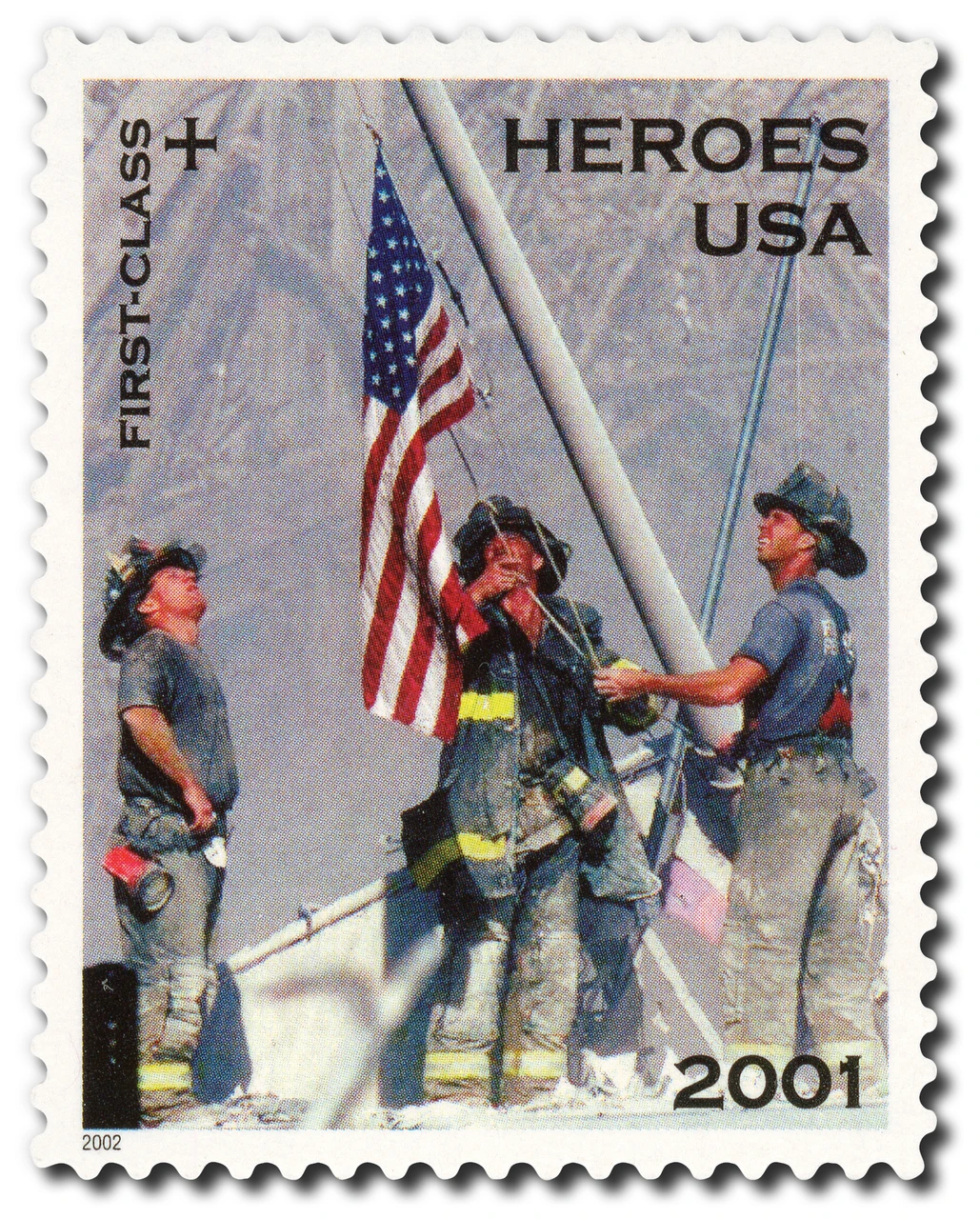
On June 7, 2002, the USPS issued the Heroes of 2001 Semipostal stamp to honor emergency workers who responded to the September 11 attacks. The stamp turned ordinary mail into a small act of support for families who had lost loved ones or whose loved ones had been permanently disabled in the line of duty.
The September 11, 2001, terrorist attacks brought an outpouring of grief and a strong desire to help. Many Americans wanted to support the families of firefighters, police officers, paramedics, and other emergency workers who had rushed toward danger that day. In response, Congress passed the September 11th Heroes Stamp Act of 2001 on November 12, 2001. The law directed the United States Postal Service to issue a special semipostal stamp to raise money for those families.
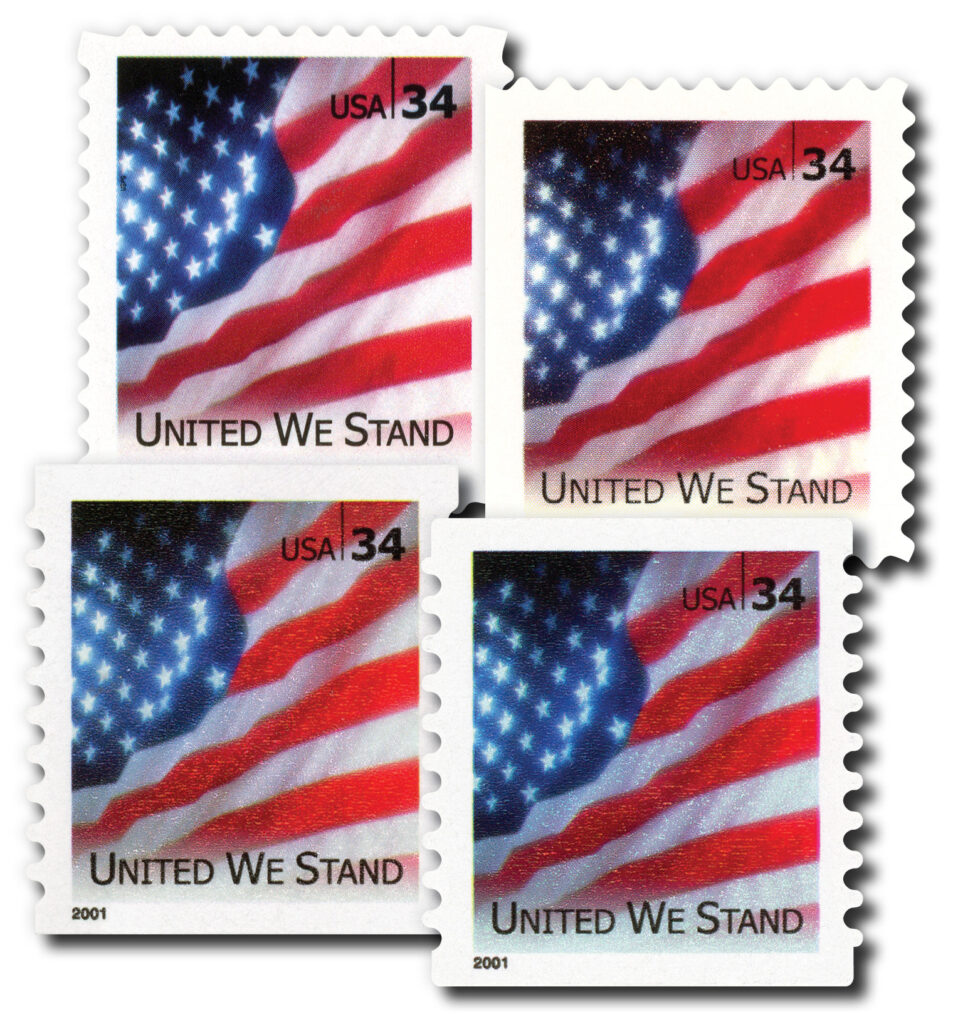
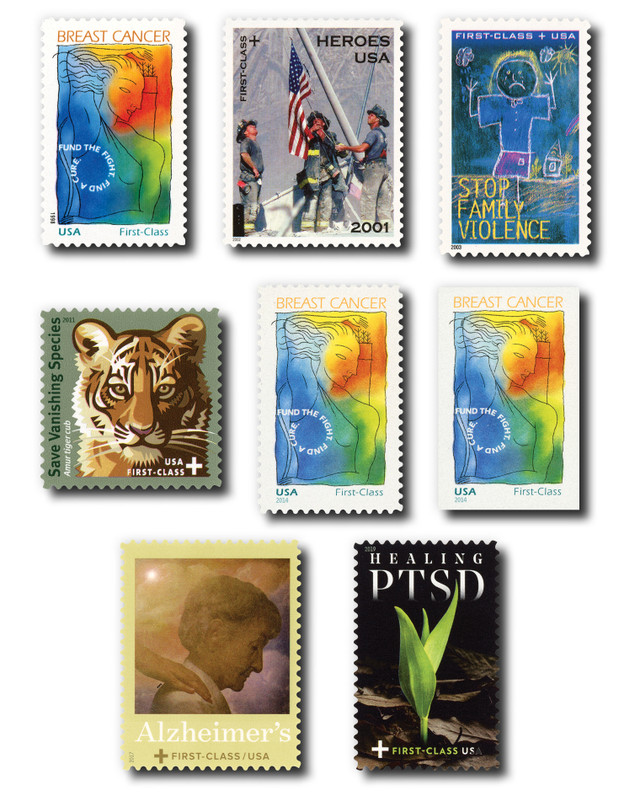
A semipostal stamp is sold for more than the regular First-Class Mail rate. The extra money, after costs, goes to a specific public cause. The Heroes of 2001 stamp was only the second semipostal issued by the USPS, following the Breast Cancer Research stamp of 1998. At the time, the First-Class letter rate was 34¢. The Heroes of 2001 stamp sold for 45¢, with 34¢ covering postage and 11¢ set aside as a surcharge for the relief fund.
The stamp’s design used one of the most recognized photographs taken after the attacks. The image showed three New York City firefighters raising an American flag over the ruins of the World Trade Center. Photographer Thomas E. Franklin of The Record in Bergen County, New Jersey, took the photo late in the afternoon on September 11. It appeared in the newspaper the next day and quickly became a symbol of endurance amid the destruction.
The USPS version did not use a painted or symbolic scene. It used the actual photograph, making the stamp direct and instantly recognizable. Derry Noyes of Washington, DC, designed the stamp. It was nondenominated, meaning it did not show a printed postage value on the face, but it carried the 45¢ value when issued. Ashton Potter printed the stamp, which was produced by lithography and issued in panes of 20.
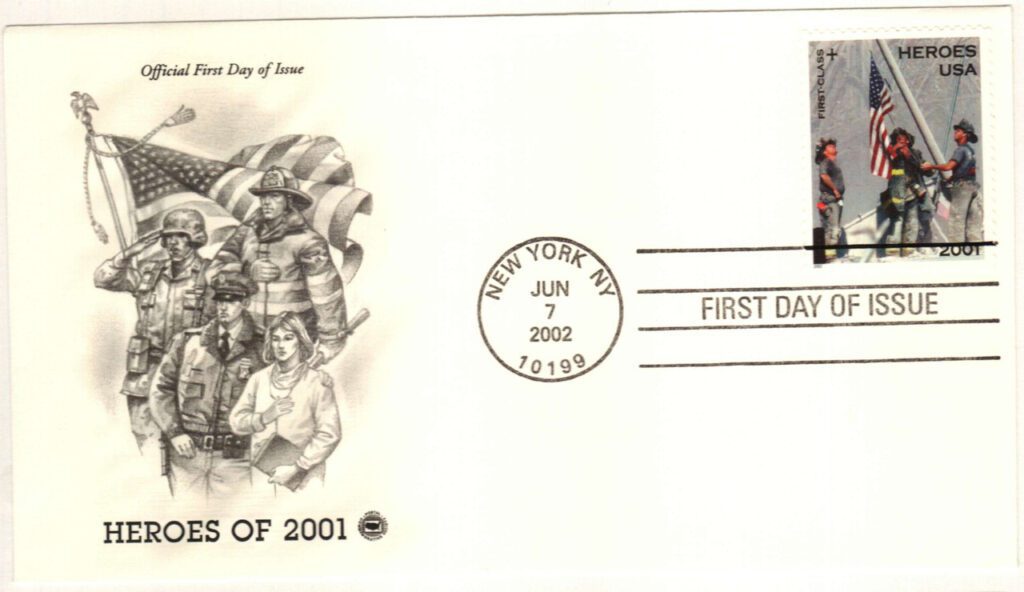
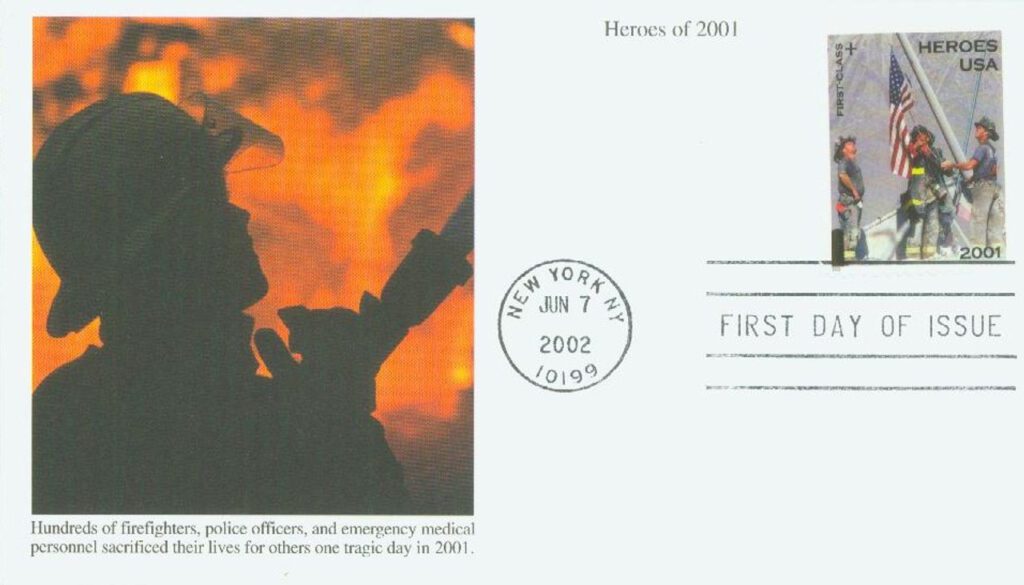
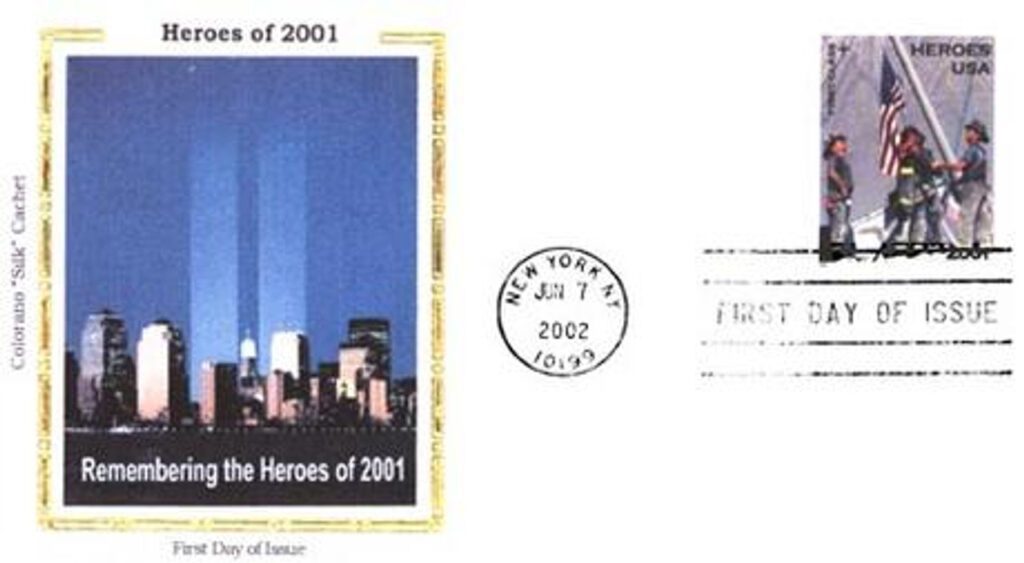
The stamp went on sale nationwide on June 7, 2002. The First Day of Issue ceremony was held on the lawn at Battery Park in New York City, not far from the site of the World Trade Center. The ceremony included a presentation of colors and remarks from public officials, including New York Governor George Pataki, Housing and Urban Development Secretary Mel Martinez, and members of Congress. The location gave the issue a direct connection to the city most deeply affected by the attacks.
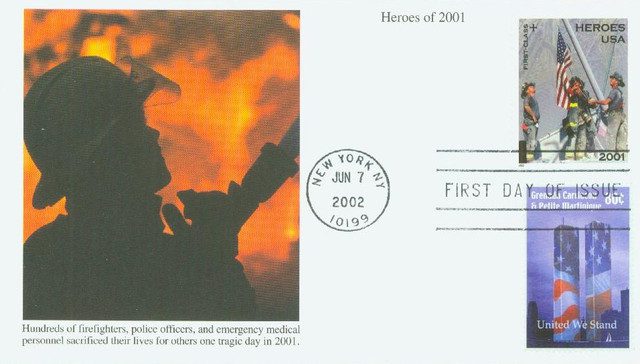
Money raised by the stamp was transferred to the Federal Emergency Management Agency, or FEMA. FEMA was responsible for distributing the funds to eligible families and individuals. The program covered emergency relief personnel who were killed or permanently physically disabled while responding to the September 11 attacks in New York, at the Pentagon, and near Shanksville, Pennsylvania.
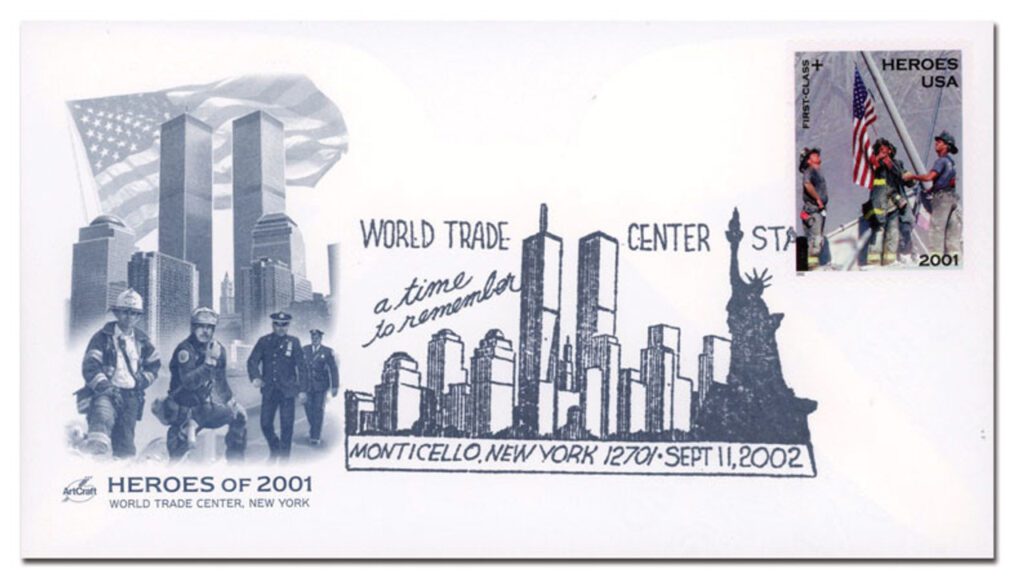
The Heroes of 2001 stamp remained on sale through December 31, 2004. During that time, about 133 million stamps were sold. The stamp raised $10,565,073 for the aid program. About 1,000 people or families were eligible to receive assistance, with each receiving roughly $10,000.
The Heroes of 2001 Semipostal did not erase the losses of September 11, and it was not meant to. Its purpose was practical and focused. It gave Americans a simple way to contribute through something as ordinary as sending a letter. At the same time, it preserved a powerful image of courage, exhaustion, and resolve from one of the most difficult days in American history.
Learn more about Semipostal stamps.
| FREE printable This Day in History album pages Download a PDF of today’s article. Get a binder or other supplies to create your This Day in History album. |
Discover what else happened on This Day in History.
If 133,000,000 we’re sold with 11¢ each going into the fund, that would equal $14,630,000 raised. Where did the difference of $4,064,927 go? Also if 1000 received $10,000 each that would equal $10,000,000. Where did the difference of $565,073 go? But we have to consider the word … about… that costly word, about.
As someone has already pointed out, the math doesn’t add up! My question is, why didn’t they continue selling the stamps longer? Look how long they sold the Breast Cancer semi-postal. I would think that these first responders’ lives and families are just as important.
In your calculator you need to enter ABOUT 10,000 dollars and ABOUT 1,000 recipients
In any fund raiser, there will always be a certain amount not accounted for.
Some if not most, ends in the hands of those that take advantage for their own personal gain.
The Foundation is active. What is your source saying it is closed?