

On August 14, 1935, President Franklin D. Roosevelt signed the Social Security Act into law. Created amid the economic insecurity of the Great Depression, the law established retirement insurance while also providing federal support for unemployment compensation and assistance to vulnerable Americans.
The Social Security Act was a major part of Roosevelt’s Second New Deal. By the early 1930s, the Depression had wiped out jobs, savings, and retirement plans across the country. In 1934, more than half of elderly Americans were estimated to lack enough income to support themselves. Although 30 states had established some form of old-age pension by 1935, benefits and eligibility varied widely.
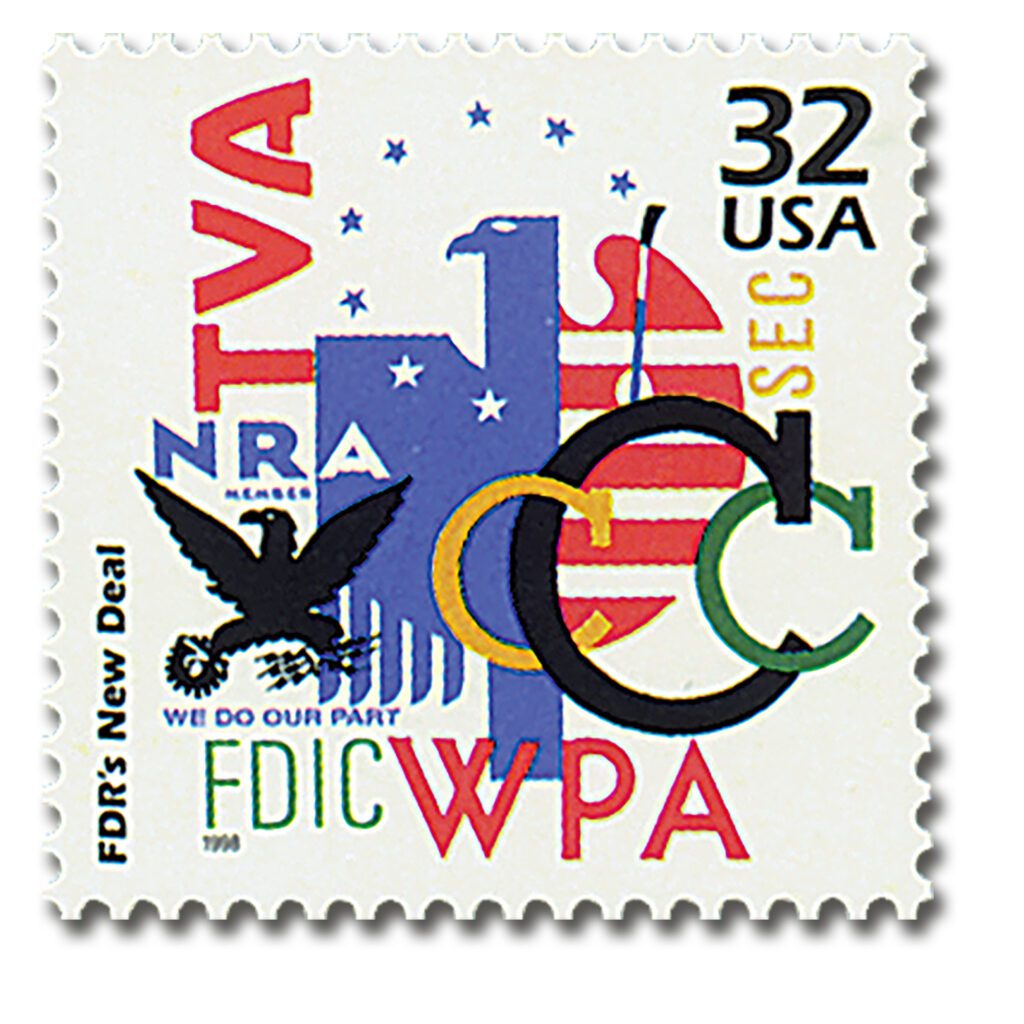
Roosevelt wanted a more permanent system. On June 29, 1934, he created the Committee on Economic Security to develop proposals addressing old age, unemployment, and other causes of poverty. Secretary of Labor Frances Perkins, the first woman to serve in a presidential Cabinet, chaired the committee. It presented its recommendations in January 1935, and Roosevelt sent a Social Security proposal to Congress two days later.
After months of debate, Congress passed the Social Security Act. Roosevelt signed it in the White House Cabinet Room, surrounded by legislators and advisers, with Perkins standing behind him. He acknowledged that the new system could not eliminate every financial risk. Instead, he said it was intended to give Americans “some measure of protection” against losing a job and reaching old age in poverty.

The law was much broader than retirement insurance alone. It created a federal old-age benefits program for covered workers age 65 and older. It also established a federal-state unemployment compensation system and provided federal aid for needy elderly people, dependent children, blind people, maternal and child welfare programs, and public health services.
The retirement system did not cover everyone. Agricultural laborers, domestic workers, many government employees, and several other categories were initially excluded. Only about 60 percent of American workers were covered. Because many Black Americans worked in agriculture and domestic service, these exclusions affected them disproportionately.
Payroll taxes began in 1937. Under the original law, monthly retirement payments were scheduled to begin in 1942, allowing several years for workers to build eligibility. In the meantime, eligible retirees could receive one-time lump-sum payments. Cleveland streetcar motorman Ernest Ackerman received the first Social Security benefit in 1937—just 17 cents after working only one day under the new system.

Congress significantly changed the program in 1939. Monthly retirement benefits were moved forward to January 1940. The amendments also added payments for the spouses and minor children of retired workers and survivor benefits for families of deceased workers.
On January 31, 1940, Ida May Fuller of Ludlow, Vermont, became the first person to receive a recurring monthly Social Security retirement payment. The retired legal secretary’s first check was $22.54. She had paid $24.75 in Social Security taxes during three years of covered employment. Fuller lived to age 100 and ultimately received benefits until her death in 1975.

Social Security continued to expand. Congress established monthly disability insurance benefits in 1956. In 1965, amendments to the Social Security Act created Medicare, providing federal health insurance primarily for older Americans. Congress authorized automatic cost-of-living adjustments in 1972, with the first automatic COLA taking effect in 1975 to help benefits keep pace with inflation.
Roosevelt described the 1935 law as a “cornerstone in a structure” that was not yet complete. The decades that followed proved that description fitting, as Congress repeatedly revised its coverage, benefits, financing, and eligibility rules.
Click here to read the full Social Security Act.
| FREE printable This Day in History album pages Download a PDF of today’s article. Get a binder or other supplies to create your This Day in History album. |
Discover what else happened on This Day in History.
With all it’s supposed faults, If Social Security were terminated tomorrow, then the next day the market would crash. The Social Security programs move money, and that creates revenue. The frauds mentioned are caused by poor (or corrupt) controls by some of the (corrupt?) political figures. Illegal aliens? They spend money and pay taxes. If working, they pay income taxes, and contribute to the SS. Yes, even if they have a fake Social Security number. Plus, they can’t get a TAX REFUND! The revenue keeps adding up with no claims against it. Now we have a bunch of politicians who want to shut down the Social Security program! I could go on and on, but I know that I am “talking to a WALL”!
We’ve got to do something about entitlements. Hard choices are unfortunately coming. I believe we have to finally admit that a person is not necessarily “entitled” to the current group of entitlements (Social Security, Medicare, Obamacare).
Of course, they’re entitled if they paid in.
No, we don’t.
America’s giant Ponzi scheme.
Oh come on Brian, it’s a pay as you go…workers pay in, retirees and the disabled receive stipends. Nobody received benefits that they didn’t contribute to receive.
What a bunch of Bull!
My comment was meant for Briann who doesn’t understand the Social Security system.