

On May 1, 1893, the World’s Columbian Exposition opened in Chicago, Illinois. For six months, it transformed the city into a global showcase of architecture, invention, culture, and ambition, drawing millions of visitors to one of the largest fairs ever held.
The fair was organized to mark the 400th anniversary of Christopher Columbus reaching the Americas in 1492. American leaders wanted a grand international exposition similar to those held in Europe. The 1876 Centennial Exposition in Philadelphia had celebrated the nation’s 100th birthday, but it had struggled financially. Even so, many businessmen believed a larger and better-managed fair could succeed.

Several cities competed to host the event, including New York City, St. Louis, and Washington. Chicago won after local leaders pledged millions of dollars in financial backing. Banker Lyman J. Gage played a key role by rapidly raising subscriptions that helped convince Congress the city could handle the project. President Benjamin Harrison officially selected Chicago in 1890.
The chosen site was Jackson Park and Midway Plaisance along Lake Michigan. Work moved quickly, but the scale of the project caused delays. The fair had originally been expected to open in October 1892. That proved impossible, so Chicago instead held a lavish dedication celebration from October 20 to 22, 1892.
The opening parade on October 20 was enormous by the standards of the time. Estimates placed participation in the tens of thousands, with spectators reportedly exceeding one million. Military units, civic groups, trade organizations, and visiting dignitaries marched through the city. On October 21, dedication ceremonies featured President Harrison, his cabinet, music, speeches, and processions through the unfinished grounds.
Construction continued through the winter. When the gates finally opened on May 1, 1893, visitors entered a spectacle unlike anything most Americans had seen. The exposition covered more than 600 acres and included over 200 major buildings, along with lagoons, bridges, gardens, fountains, and monuments. During its run from May to October, nearly 27.5 million visits were recorded—an astonishing figure in a nation with a population of about 63 million.
The fair’s central court became known as the “White City.” Many of the grand Beaux-Arts style buildings were coated in a white finish that gleamed in the sunlight. At night, electric lights illuminated the grounds, creating a dramatic modern scene for visitors accustomed to gas lamps or dim streets. Architect Daniel Burnham oversaw construction, while landscape architect Frederick Law Olmsted helped shape the grounds.
The fair displayed new technology on a vast scale. Visitors saw electric lighting systems, machinery, transportation exhibits, and industrial tools. The giant Ferris Wheel, designed by George Washington Gale Ferris Jr., debuted as Chicago’s answer to the Eiffel Tower. Rising about 264 feet, it carried thousands of riders each day and became one of the fair’s most talked-about attractions.
The Midway Plaisance offered entertainment and cultural exhibits from around the world. Visitors encountered music, dance, food, crafts, and reconstructed villages. Though some exhibits reflected the stereotypes of the era, the Midway also exposed many Americans to cultures they had never experienced firsthand.
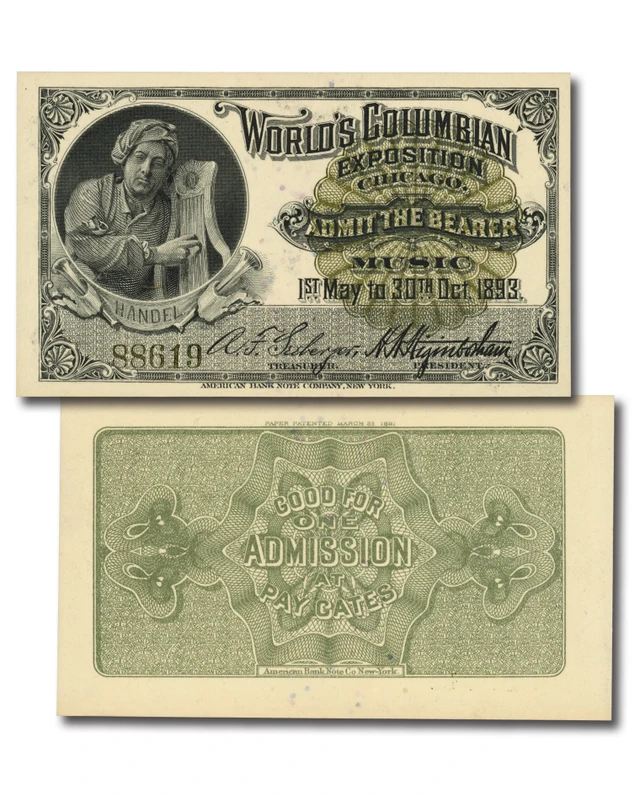
The exposition hosted major congresses on labor, medicine, literature, science, commerce, and social issues. The most famous was the World’s Parliament of Religions, held in September 1893. It brought together representatives of many faiths. Hindu monk Swami Vivekananda became one of the event’s most remembered speakers after addressing the audience as “Sisters and Brothers of America.”
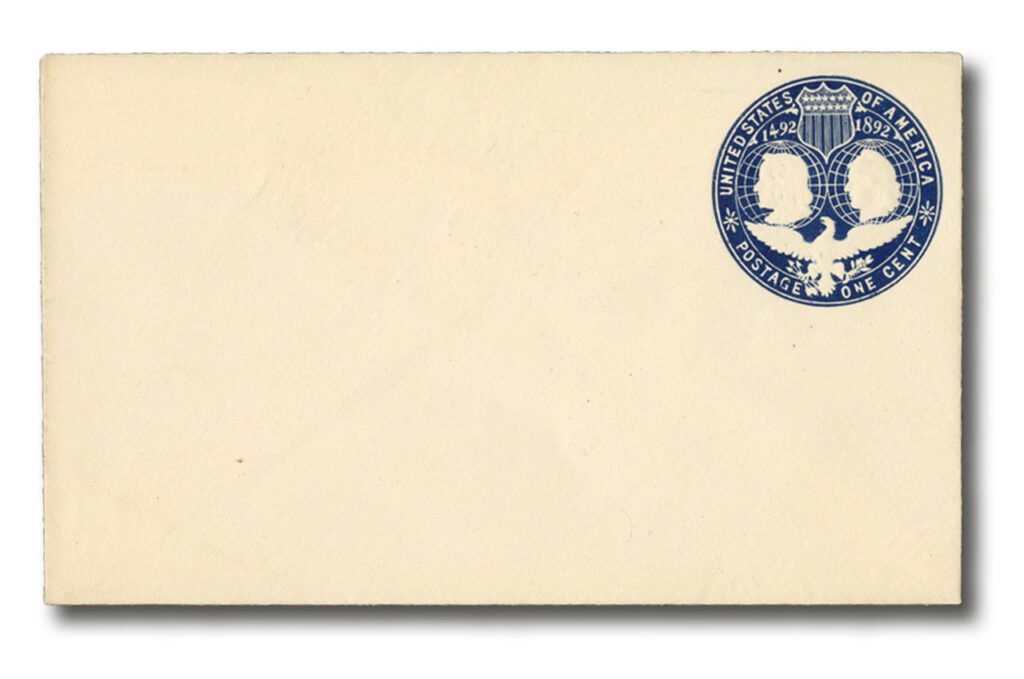
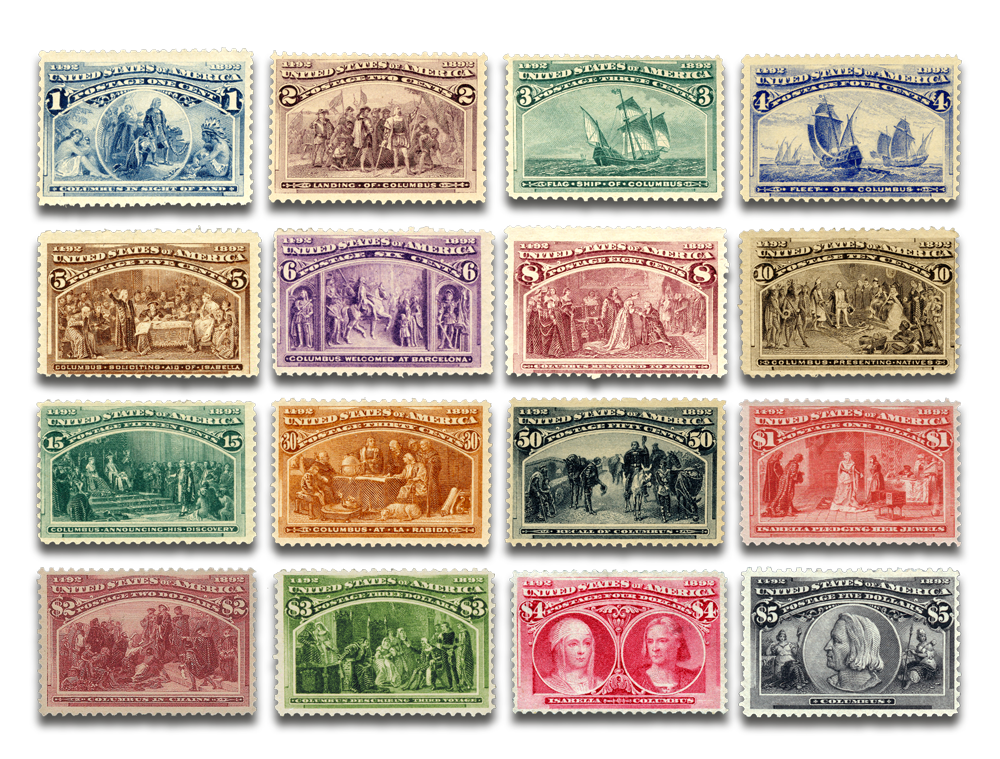
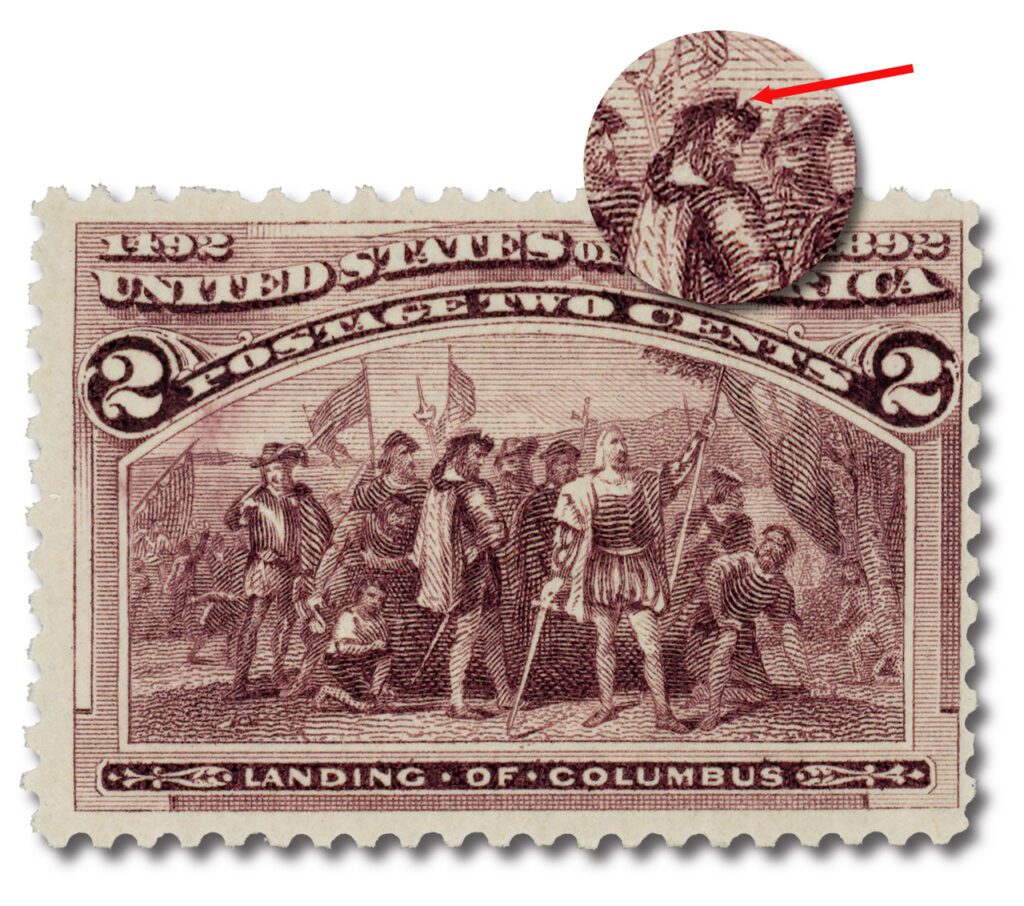
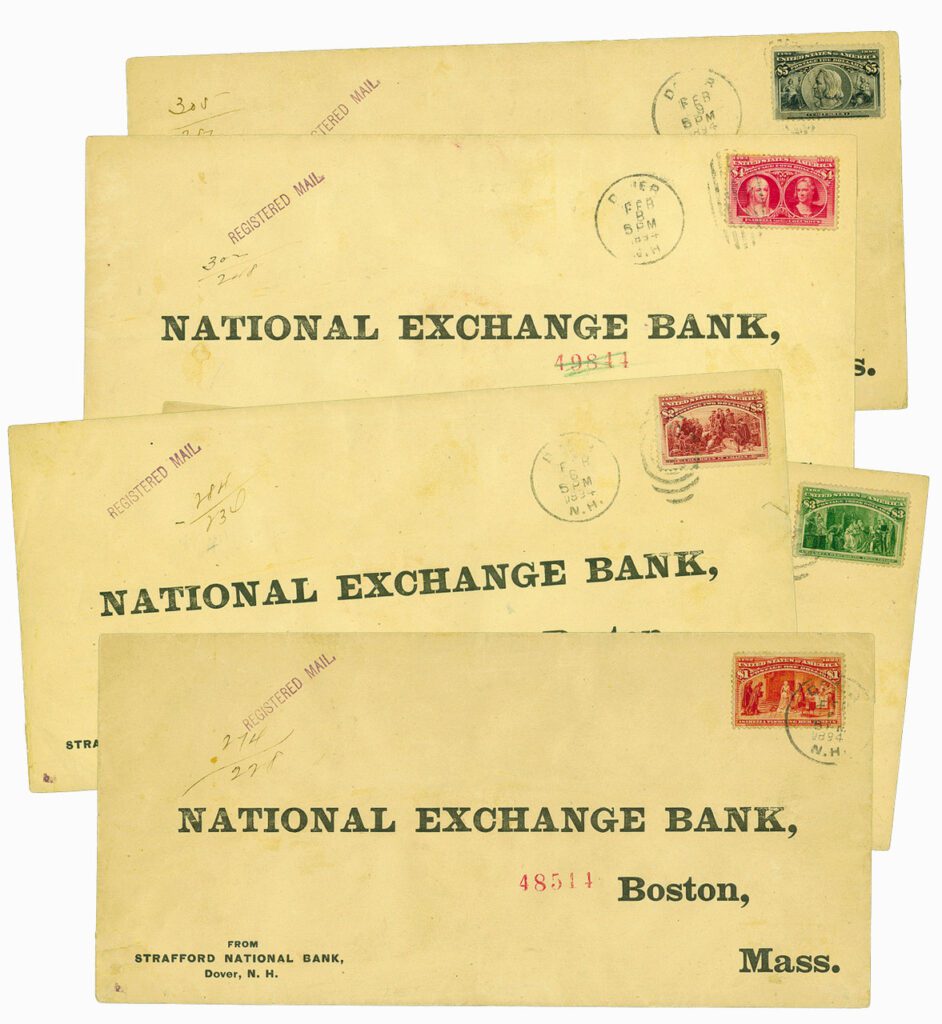
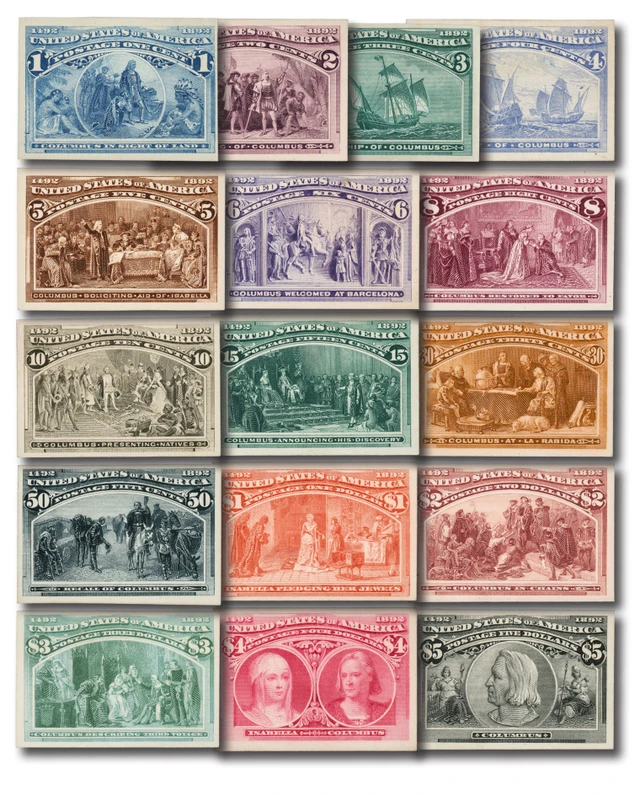
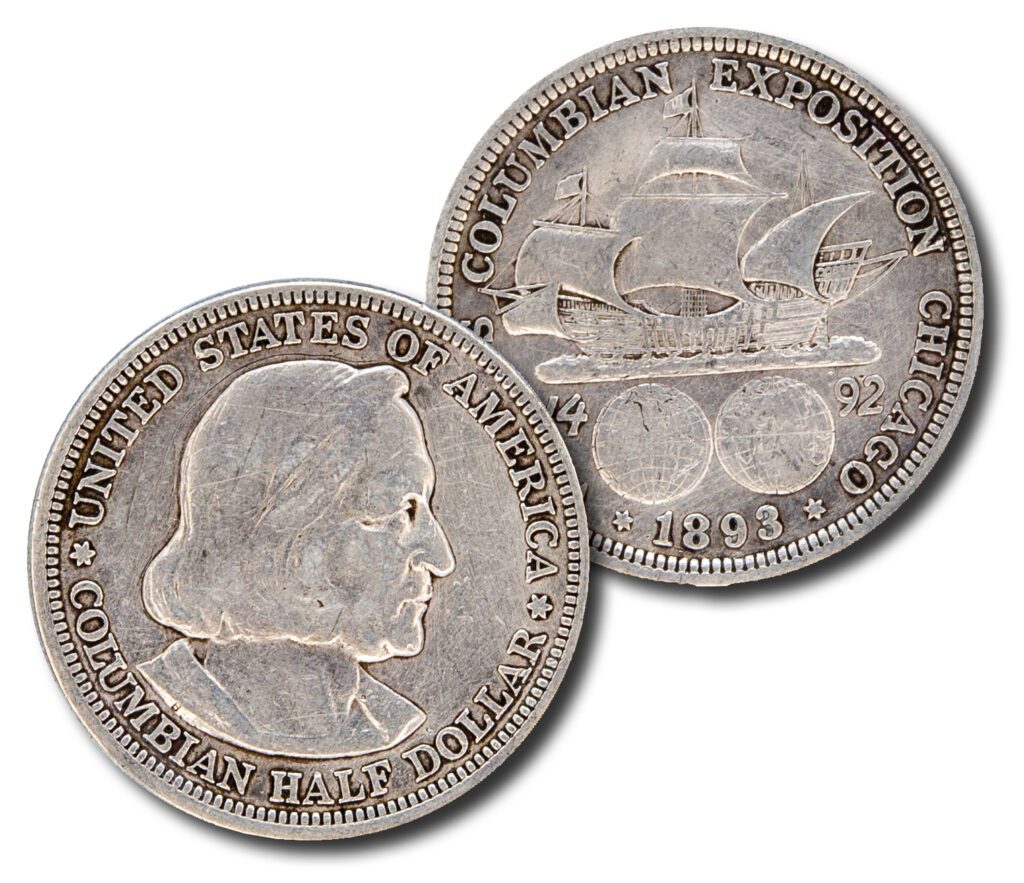
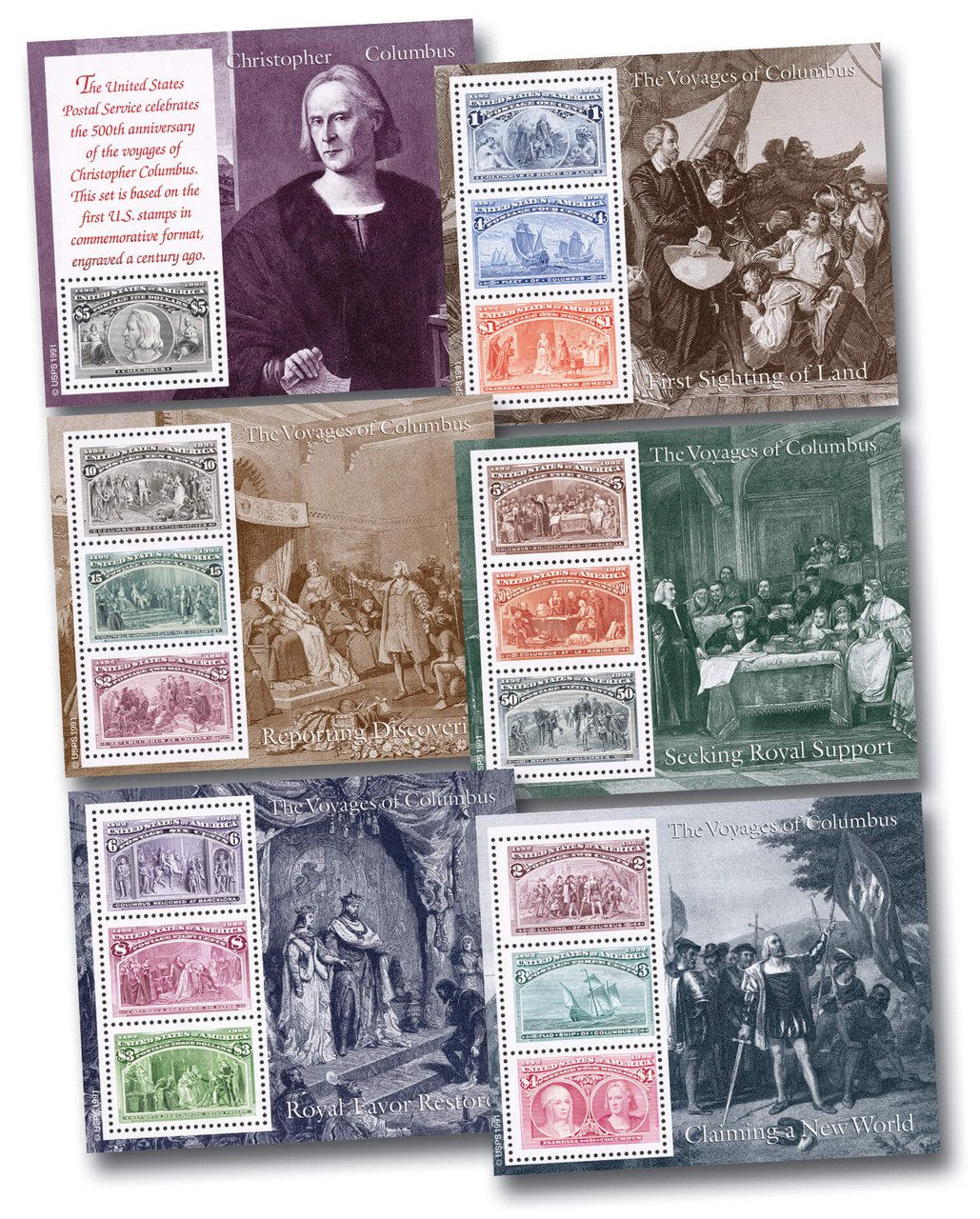
The fair also left a mark on collectors and consumers. The United States Post Office Department released its first US commemorative postage stamps, the famous Columbian Issue. The United States Mint struck the first modern US commemorative coins for the exposition. Popular foods associated with the fair included Cracker Jack, while products such as cereals and packaged foods gained wider attention.
The White City influenced future planning across the nation. Its orderly boulevards, monumental buildings, and landscaped public spaces helped inspire the City Beautiful movement, which encouraged cleaner, more attractive cities. Though most fair buildings were temporary, the exposition’s impact lasted for decades in architecture, urban design, and American memory.

Click here for more Columbian offers, stamps, covers, expo tickets, and more.
Click here to view scenes from the Columbian Expo and click here for more about the 1893 Columbians.
| FREE printable This Day in History album pages Download a PDF of today’s article. Get a binder or other supplies to create your This Day in History album. |
Discover what else happened on This Day in History.
Enjoyed the history lesson! Thanks Mystic.
I am glad that you mentioned Swami Vivekananda. He was a realized person. His teachings and writings are well recognized. People all over the world should realize that all ( religious) roads lead to one destination. The creator of our universe (GOD) is one and only one. His manifestations are innumerable. If this fact is understood by mankind true peace prevails in modern world.
Not true! Not true at all! All religions in the world do NOT lead to the same “one destination.” Only the orthodox Christian religion leads to an eternity in heavenly bliss. Why? Because only the OCR expounds the self-denying, self-sacrificing deity (the God-man Jesus Christ) who clothed Himself with the very human flesh and blood that He participated in creating holy and undefiled but rebelled against the Creator. He the sinless One thereby was able to substitutionally suffer and die–and did so–for the sinful ones (humankind) thereby appeasing the just God’s righteous anger and gaining forgiveness, salvation, and eternal life for all, something that is gained/received through faith in that Savior-Redeemer, a faith that’s also a gift given by God so that mankind can appropriate His wonderful gifts of mercy and grace. No, all other world religions tout the necessity of becoming or making oneself worthy of their deity’s love for them, of serving their deity. However, orthodox Christianity’s deity did not deign to be served but to serve mankind and thereby rescue them unto eternal glory.
Prove it.
Christianity has done it’s share of atrocities, because God willed it. Ask the victims of the Rhineland massacre in 1096, or almost every Jew or Muslim in Jerusalem during the Crusades. Nor should you forget just about anyone deemed unfit during the Inquisition. I do not believe this qualifies as “rescue them unto eternal glory”.
Amen
OK Rev. Handrick, you believe all that stuff, but many, many people don’t.
I totally agree with you, Mr. Mamidi. True peace will prevail if all religions are open to each other and are willing to listen. Like the great Mahatma Gandhi once said, I have no problem with Jesus who was a good man and advocated a closer and personal relationship with our Creator, but I do have a problem with some who claim to be his believers and who were and are still doing evil in his name! Stamp collecting supposed to bring people closer together without being judgmental on those who are different than we are.
We don’t have to prove anything. The proof is in the pudding. This is the greatest country in the world. Founded on the principles of freedom. That is why people are flocking to get in. They were in 1893 and they are today and those that can’t, collect our stamps or their countries copy the theme. That’s why stamp collect is such a great pastime. Thank you Mystic.
NO MENTION OF THE BIGGEST ATTRACTION: THE FERRIS WHEEL!!
Great historical info and photos on the Columbian Exposition. You should consider putting your many historical articles related to stamps online (YouTube or other). I really appreciate them and doing so might even result in more people taking an interest in stamps and even more customers for Mystic.
I found it interesting that the article said President Harrison was at the dedication but there was a picture of president Cleveland in the link so I looked it up and Harrison lost the 1892 election to Cleveland so there was a different president for the dedication and opening, probably something unique among World Fairs and expositions.
When I posted “Amen” I meant I was in agreement with Rev. Handrick.
Maybe read Living BUDDA, Living Christ.
The cause of religious wars. Thank you Pope John Paul III.