

Buddy Holly was born Charles Hardin Holley on September 7, 1936, in Lubbock, Texas. Buddy Holly was one of the most important figures in the early history of rock and roll. Though his career lasted less than two years, his influence shaped the future of popular music and inspired countless musicians who followed him.

Holley’s family nicknamed him “Buddy” when he was a child, and the name stuck for life. From a young age, Buddy showed an interest in music, playing the guitar, piano, and violin. He and his brothers often sang together, and by his teenage years, Buddy was already performing with friends at school events and local radio shows.
Buddy’s earliest influences came from country and gospel music, which were popular in Texas. However, as rhythm and blues gained popularity, he began blending the styles. This mix of country, rhythm and blues, and energetic performance would later form the foundation of his unique rock and roll sound. In high school, Buddy played with several bands, including a duo with his friend Bob Montgomery called “Buddy and Bob.” Their style leaned heavily on country, but Buddy’s interest in rhythm and blues kept growing.

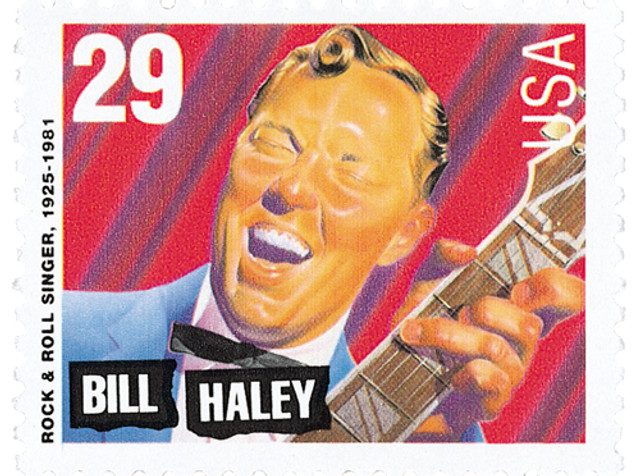
In 1955, Buddy’s life changed when he saw Elvis Presley perform live in Lubbock. Presley’s energy, stage presence, and sound convinced Buddy that rock and roll was the future of music. After that concert, he began to shift more toward rock, experimenting with faster rhythms and upbeat guitar licks. Soon after, he and his band began opening for national acts like Bill Haley and the Comets. This exposure gave Buddy confidence that he could succeed on a bigger stage.
Buddy’s first big break came in 1956 when he signed a recording contract with Decca Records. However, the sessions did not go as planned. The producers wanted him to stick to country-style music, while Buddy wanted to experiment with rock and roll. As a result, the recordings failed to capture his energy, and the singles did not sell well. Decca eventually dropped him from the label. Although this was a setback, Buddy did not give up. Instead, he returned to Lubbock, regrouped with his band, and began recording new material.

That group became known as “The Crickets,” with Buddy as the lead singer and guitarist. In 1957, they recorded “That’ll Be the Day,” a song Buddy had co-written. When the record was released, it quickly climbed to number one on the charts. It was the moment that launched Buddy Holly and the Crickets into stardom. The band followed up with other hits, including “Peggy Sue,” “Oh, Boy!,” and “Maybe Baby.” Their sound was fresh, catchy, and different from anything else at the time.

One of Buddy’s biggest contributions to rock and roll was his role as both a performer and a songwriter. Unlike many early rock artists, who sang songs written by professional writers, Buddy wrote much of his own material. This approach influenced later bands such as The Beatles and The Rolling Stones, who admired how Buddy combined creativity with performance. In fact, The Beatles took part of their name from The Crickets as a tribute to him.
Buddy Holly’s look also set him apart. With his horn-rimmed glasses, clean-cut image, and approachable personality, he seemed like an ordinary young man, not a wild celebrity. This made him relatable to teenagers across the country. His style showed that rock and roll stars did not need to fit one mold—they could come from small towns and still make it big.

In 1958, Buddy’s career continued to rise, but he also faced challenges. He split from The Crickets and began recording on his own, experimenting with new sounds. He moved to New York City and married Maria Elena Santiago, a receptionist at his music publisher’s office. They were married just two weeks after meeting. Despite his busy schedule, Buddy wanted to expand his career and even talked about producing and supporting other young musicians.

Tragically, Buddy’s life was cut short on February 3, 1959. While on a winter tour through the Midwest, he chartered a small plane after a concert in Iowa to reach the next stop more quickly. Along with fellow performers Ritchie Valens and J.P. “The Big Bopper” Richardson, Buddy boarded the plane late at night. Shortly after takeoff, the plane crashed in a snowstorm, killing everyone on board. Buddy was only 22 years old.

The news shocked the world. For many fans, it felt as if rock and roll had lost one of its brightest lights just as he was beginning to shine. The tragedy later became known as “The Day the Music Died,” a phrase made famous by Don McLean’s song “American Pie.”
Although his career was brief, Buddy Holly’s legacy has lasted for decades. His innovative songwriting, use of the electric guitar, and ability to blend musical styles helped define the rock and roll genre. Countless musicians—from The Beatles and Bob Dylan to modern rock bands—have cited him as an influence. In 1986, he was among the very first artists inducted into the Rock and Roll Hall of Fame.
Click here to watch a collection of Buddy Holly performances.
| FREE printable This Day in History album pages Download a PDF of today’s article. Get a binder or other supplies to create your This Day in History album. |
Discover what else happened on This Day in History.
Plane crashed Clear Lake , Iowa, on takeoff in snow storm. Fargo was the destination.
They were taking a plane to avoid a long ride in a bus that had a malfunctioning heater. This was in the middle of winter (February 3rd) in one of the coldest areas of our country. Such a talent who died at such a young age. J. P Richardson was known as “The Big Bopper”.
Wasn’t Patsy Cline on that same plane?
No, she was not on the plane.
The day the music died!
Thanks Mystic, I did not realize the Beatles came up with their name as a tribute to Buddy’s group the Crickets. We have lost several talented musicians to plane crashes in addition to those lost on that fateful flight on February 3, 1959. Jim Croce is one that comes to mind. How much great music the world missed out on one will never know.