
Artist Andrew Wyeth was born on July 12, 1917, in Chadds Ford, Pennsylvania. By studying weathered farms, quiet rooms, and familiar neighbors, he found mystery and emotion in places others might overlook.
Andrew Newell Wyeth was the youngest of five children born to illustrator N.C. Wyeth and Carolyn Bockius Wyeth. His father was famous for illustrating adventure books such as Treasure Island and The Last of the Mohicans. Three of the Wyeth children—Andrew, Henriette, and Carolyn—became artists.
Andrew was often sick as a child and suffered from a weak hip. He left school and was educated at home. N.C. taught him history, literature, mathematics, drawing, and watercolor painting. He also introduced Andrew to the writings of Robert Frost and Henry David Thoreau. Wyeth shared Thoreau’s birthday, exactly 100 years apart.
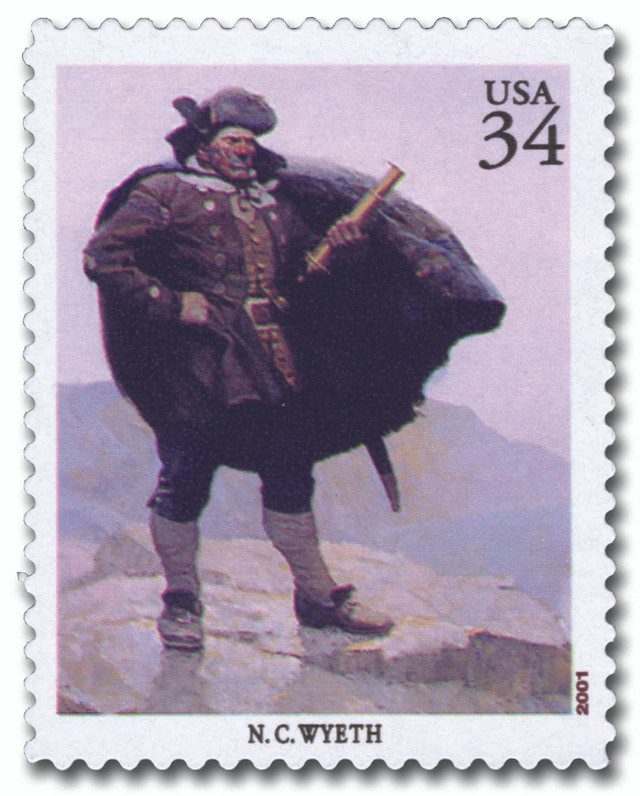
At first, Wyeth painted freely in watercolor. His first one-man exhibition opened at New York’s Macbeth Gallery in 1937, when he was 20. The paintings sold quickly. He later learned egg tempera, a demanding method that mixes powdered pigment with egg yolk. Tempera dries rapidly and requires careful layers of small brushstrokes. It allowed Wyeth to create the dry grasses, weathered wood, and fine textures that became trademarks of his work.
Wyeth spent most of his life painting around two places: Chadds Ford and coastal Maine. He rarely traveled in search of subjects. Instead, he returned to the same people, buildings, fields, and objects for decades.
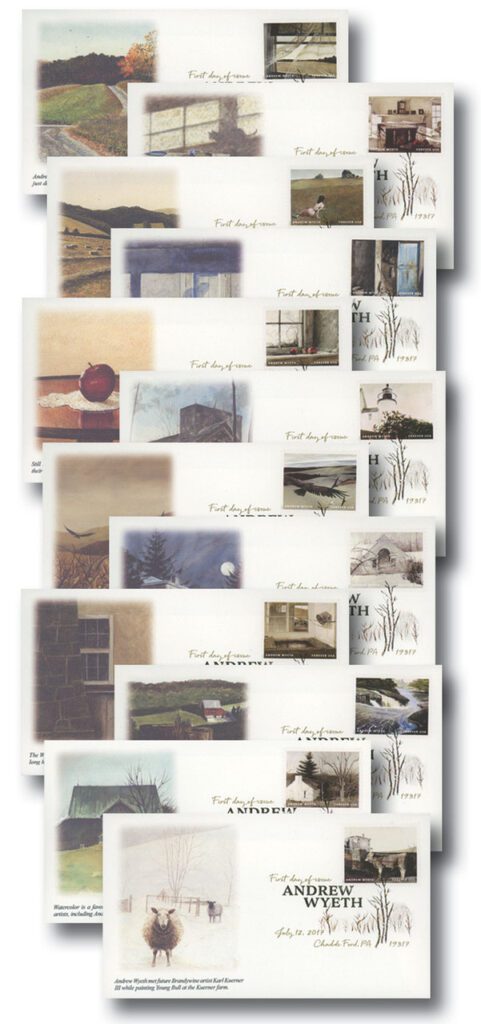
Kuerner Farm, near his Pennsylvania home, became one of his richest sources of inspiration. German immigrants Karl and Anna Kuerner had settled there in 1926. Wyeth studied their farmhouse, barn, hills, animals, and family life for more than 60 years. The property inspired nearly 1,000 paintings and drawings. He did not view it simply as a peaceful country farm. Its rooms and landscape suggested memories, tensions, and hidden stories.
Wyeth also spent summers in Cushing, Maine. There, his wife, Betsy James, introduced him to siblings Christina and Alvaro Olson in 1939. Their aging farmhouse and isolated lives fascinated him. The Olson property inspired about 300 works.
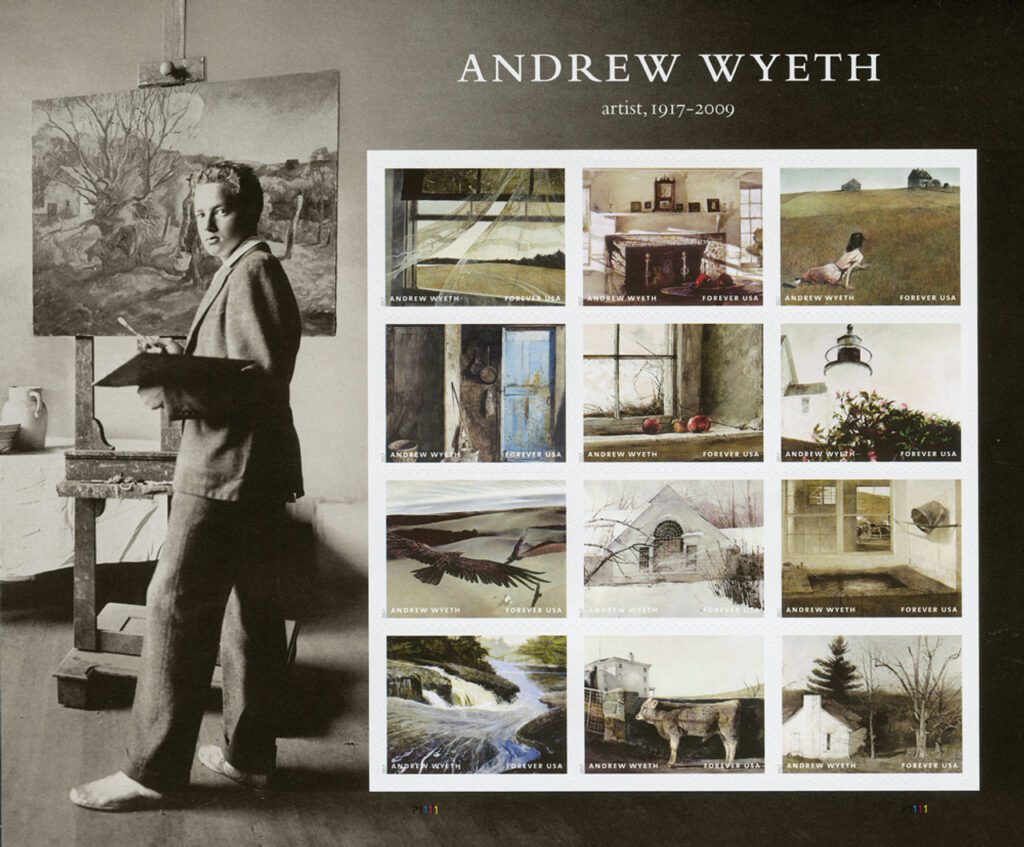
One was Wind from the Sea, painted in 1947. Wyeth opened an upstairs window in the Olson house and saw old lace curtains blowing into the room. He used tempera to capture the moving fabric, worn window frame, and distant landscape.
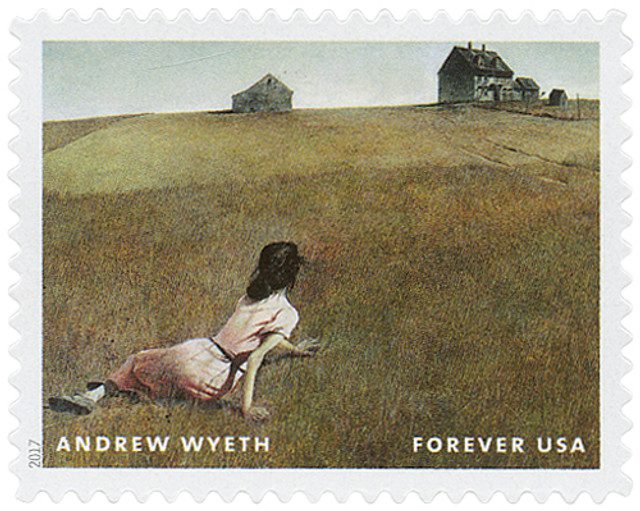
His best-known painting, Christina’s World, followed in 1948. It shows Christina Olson lying in a field and looking toward the farmhouse. A disability had greatly limited her ability to walk, but she resisted using a wheelchair and often moved by pulling herself along the ground. Wyeth used Betsy as the model for the figure’s thin arms and torso, while Christina inspired the subject and emotional character of the scene. New York’s Museum of Modern Art purchased the painting soon afterward.
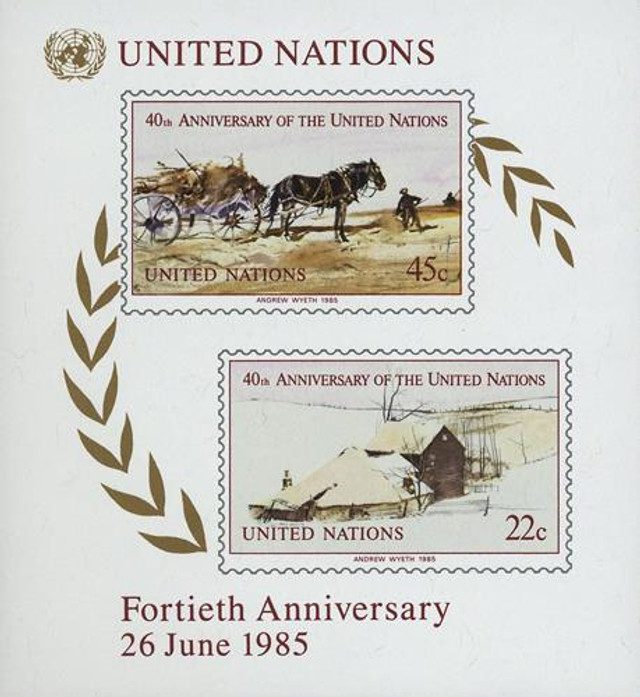
Wyeth’s work was realistic, but he did not try merely to copy what he saw. He removed unnecessary details and altered colors, distances, and arrangements to create a particular mood. His empty rooms, winter fields, and solitary figures often suggest absence, memory, or uneasiness.
Critics sharply disagreed about his work. Some dismissed it as overly traditional during an era dominated by abstract art. Others praised its technical skill and psychological depth. Museum visitors consistently responded to it, making Wyeth one of the best-known American painters of his time.
In 1963, Wyeth became the first painter to receive the Presidential Medal of Freedom. He later became the first living American artist elected to Britain’s Royal Academy. Congress authorized a Congressional Gold Medal for him in 1988, and it was presented in 1990.
Wyeth continued working into his 90s. He died at his Chadds Ford home on January 16, 2009. He was 91. Through close observation and patient technique, he showed that ordinary landscapes and familiar rooms could hold complex and deeply personal stories.
Click here to view more of Wyeth’s art.
| FREE printable This Day in History album pages Download a PDF of today’s article. Get a binder or other supplies to create your This Day in History album. |
Discover what else happened on This Day in History.
One of my favorite artists! Thank you, Mystic, for a great article.
Thank you for a well written article. I had not known the artist too well.
<Mystic Stamp should put the Farnsworth Art Museum on the mailing list for this one. There was more information about Andrew Wyeth here than is presented to patrons. The Farnsworth is noted for its collection of Wyeth paintings, and the Wyeth Center. However, I speak from ignorance of the importance of Betsy James Wyeth, and the current exhibition of her work at the Farnsworth will correct that.