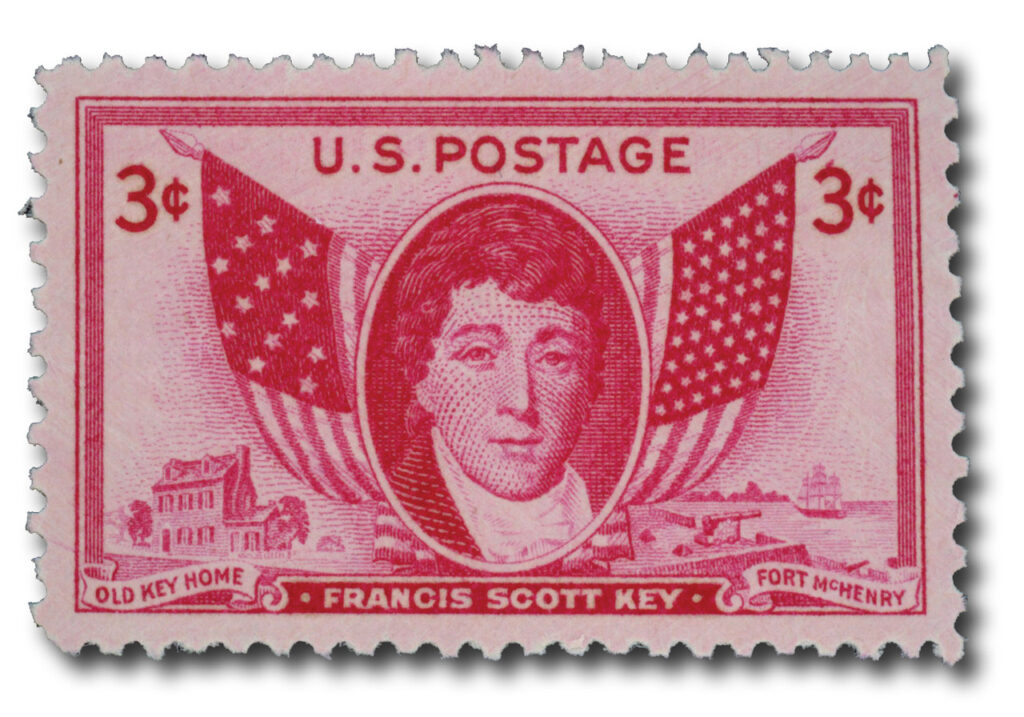
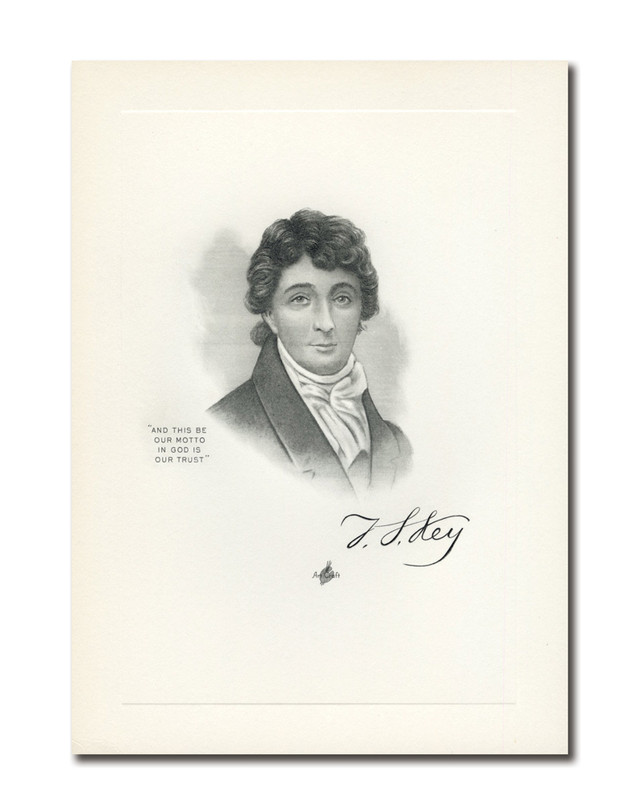
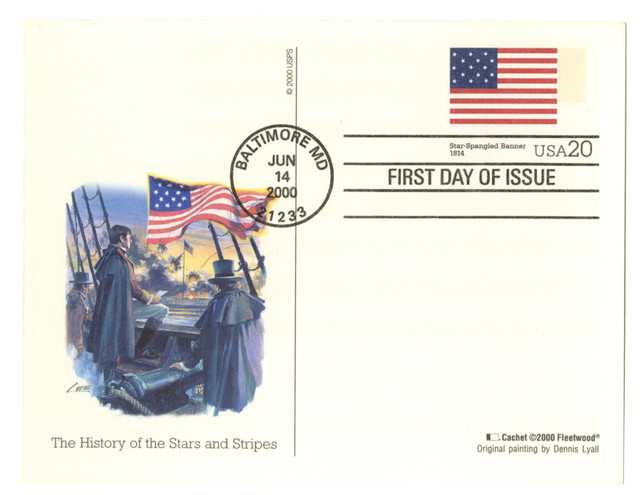
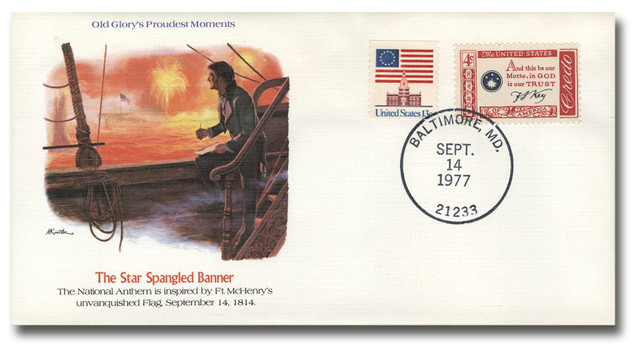
Born on August 1, 1779, in western Maryland, Francis Scott Key became forever linked to the flag he saw above Fort McHenry after a 25-hour British bombardment. That sight inspired the four-stanza poem that became “The Star-Spangled Banner,” though the song did not become the national anthem until 1931.

Key was born at Terra Rubra, his family’s plantation in Frederick County, Maryland. He studied at St. John’s College in Annapolis, trained as a lawyer, and settled in Georgetown with his wife, Mary Tayloe Lloyd. They eventually had 11 children. Key developed a successful legal practice and later served as US attorney for the District of Columbia.

A devout Episcopalian, Key opposed the War of 1812 on religious and political grounds. He objected especially to the American invasion of Canada. Yet he also felt a duty to defend his community. In 1813, he served briefly as a quartermaster with the Georgetown Light Field Artillery. During the British advance on Washington in August 1814, he acted as a volunteer aide at the Battle of Bladensburg. The American defeat allowed British troops to enter Washington and burn the Capitol, the President’s House, and other public buildings.

Soon afterward, Key was asked to help secure the release of Dr. William Beanes, a respected physician and Revolutionary War veteran from Upper Marlboro, Maryland. Beanes had helped local residents detain British stragglers accused of looting as the enemy army withdrew from Washington. British officers viewed the action as a betrayal and arrested him.
With President James Madison’s approval, Key joined American prisoner-exchange agent John Stuart Skinner. On September 5, 1814, they sailed from Baltimore aboard the American truce vessel Stephen Decatur. They found Beanes aboard HMS Tonnant, the flagship of Vice Admiral Alexander Cochrane. British commanders first refused to free the doctor. Key and Skinner then presented letters from wounded British prisoners praising the medical care they had received from Americans. General Robert Ross agreed to release Beanes.
The three Americans could not return immediately. They had learned that the British planned to attack Baltimore, so they were detained until the operation ended. They were eventually placed back aboard their truce vessel, which remained under British guard in the Patapsco River. Contrary to later legends, Key was not tied up or held aboard a British warship during the bombardment.
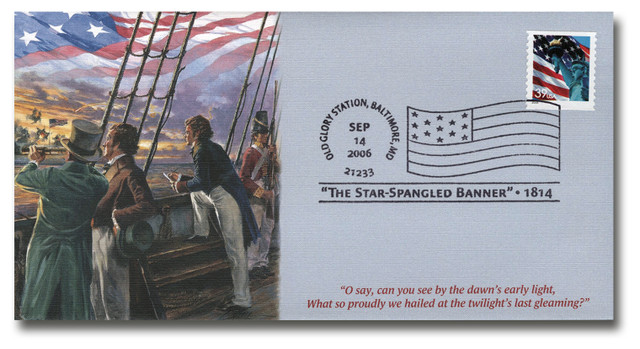
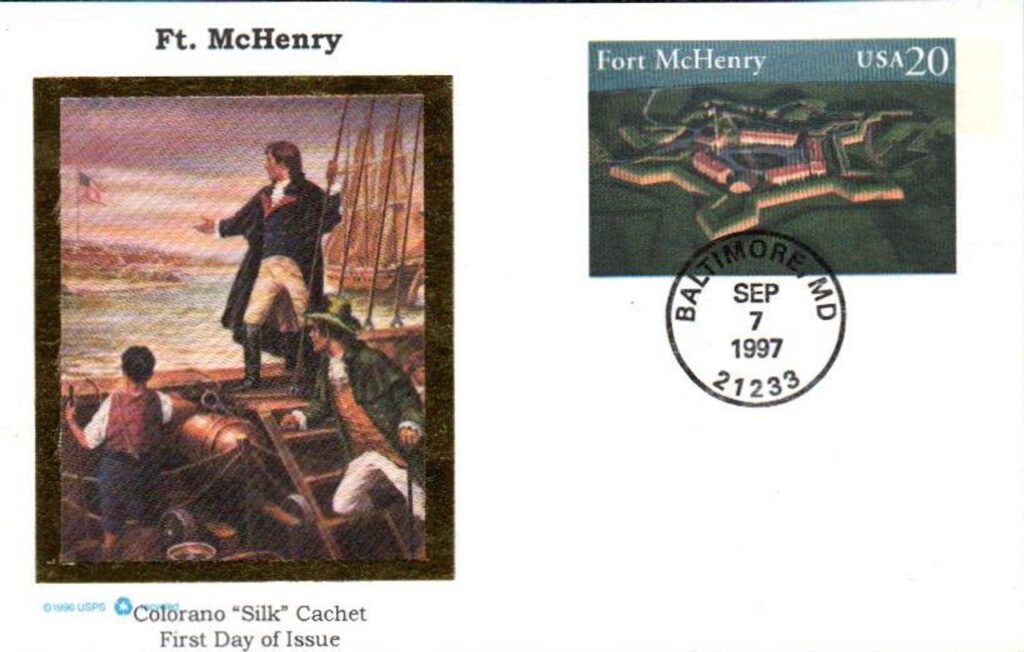
At sunrise on September 13, British bomb ships began firing on Fort McHenry, which guarded the entrance to Baltimore Harbor. The bombardment continued for about 25 hours. British forces fired an estimated 1,500 to 1,800 shells, along with Congreve rockets. Major George Armistead commanded roughly 1,000 defenders. Four Americans were killed and 24 were wounded, but the fort did not surrender. Its survival also prevented British warships from entering the harbor to support the army advancing toward Baltimore.
Through the night, exploding shells and rockets occasionally showed Key that a flag still flew above the fort. At dawn on September 14, the British attack ended. The defenders raised their enormous 30-by-42-foot garrison flag, made in Baltimore by Mary Pickersgill and her helpers. Its 15 stars and 15 stripes were large enough to be seen from Key’s distant position.
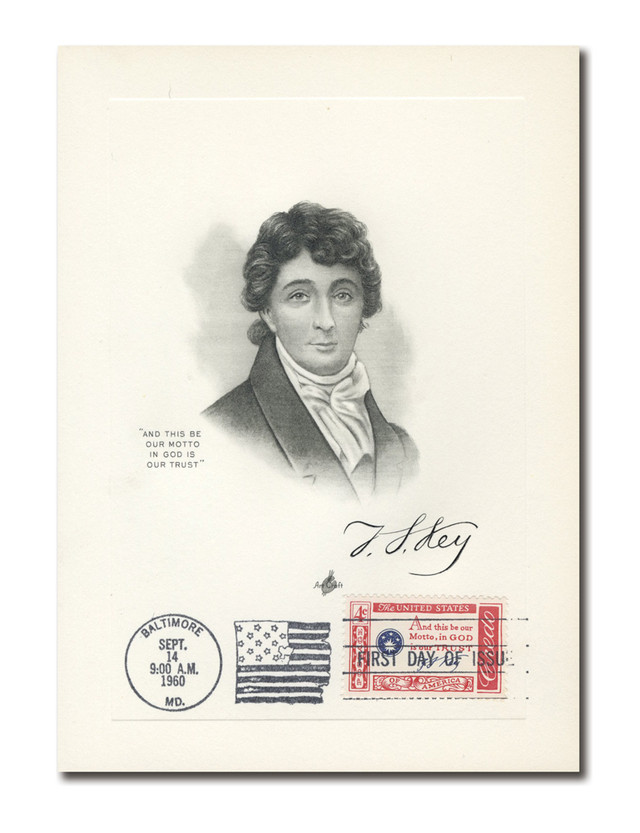
Key began drafting lines about the sight, then completed four stanzas after returning to Baltimore. The poem was printed within days under the title “Defence of Fort M’Henry.” Key intended it to be sung to “Anacreon in Heaven,” a familiar English club song composed by John Stafford Smith. The words and melody spread rapidly, and the song soon became known as “The Star-Spangled Banner.”
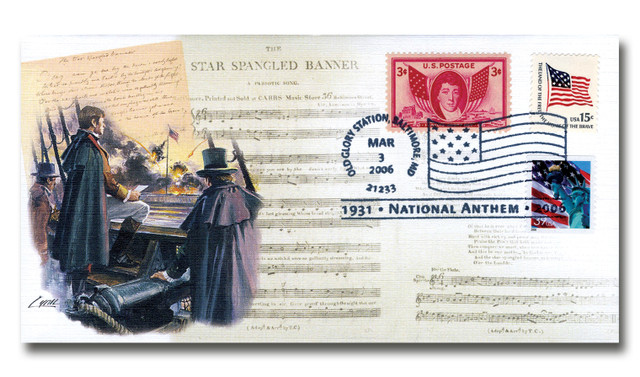
Key remained a prominent lawyer until his death in 1843. His life also reflected the contradictions of his era. He owned enslaved people, opposed immediate abolition, and supported colonization, even while sometimes representing Black clients seeking freedom. Nearly 88 years after his death, President Herbert Hoover signed a law on March 3, 1931, officially making “The Star-Spangled Banner” the national anthem of the United States.
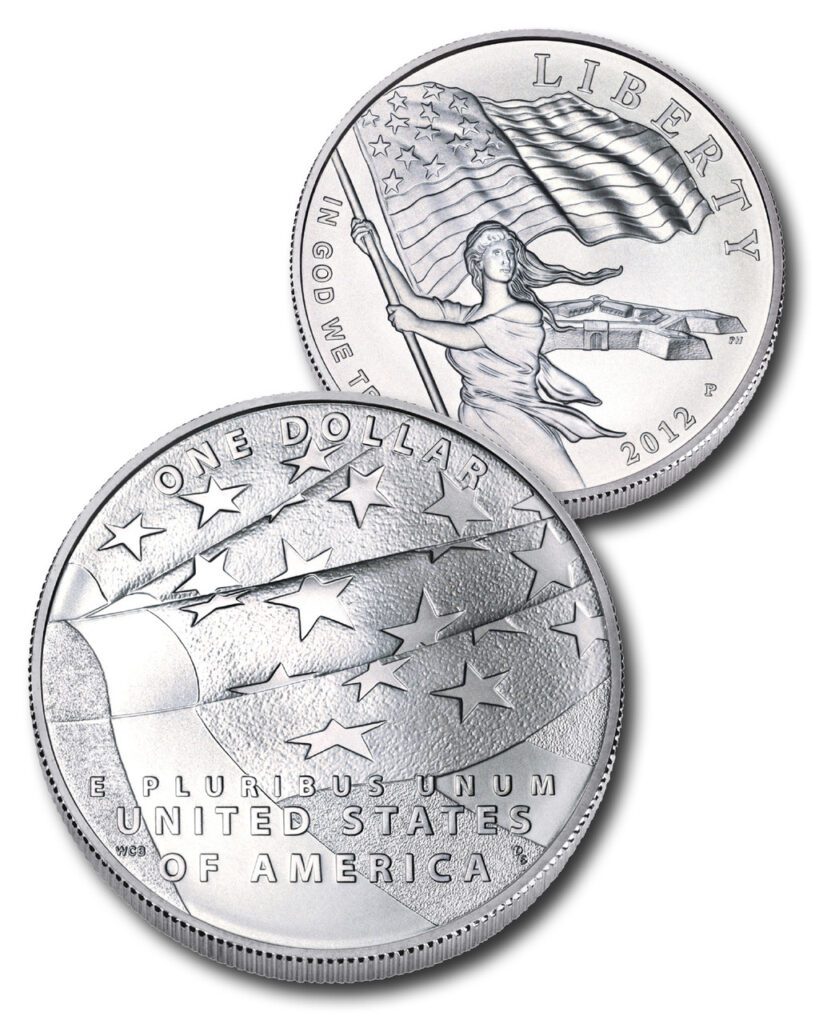
Click here for more Fort McHenry flag stamps.
| FREE printable This Day in History album pages Download a PDF of today’s article. Get a binder or other supplies to create your This Day in History album. |
Discover what else happened on This Day in History.
Daily is wonderful!
This let’s you really appreciate the history behind the stamp!
Thank you!
thank you so much Don!!! 🙂
Hi Don and Everyone at Mystic,
Thanks for making This Day in History a daily feature on your site and now by email. I will look forward to reading and enjoying each one.
Thanks for all that you do to encourage and support stamp collecting.
Best Wishes,
Jerry Hallead
APS 152888
Forest Hills, Queens, New York City, NY
Look forward to receiving more “This Day in History” stamps.
Love this feature. Since I have been a collector since 1958, I have all of these stamps and though I am elderly and keep thinking I should quit, I am enticed to keep on. Joy
I am so glad you are sending out “This Day In History” !!! I’ve been waiting.
Thank you for these articles about our stamps.
I have really enjoyed this column. The important dates coupled with the related postage stamps was quite interesting.
Love It, keep them coming.
Emails everyday!! Great idea!! Love it!!
Good idea! Nice Touch!
As a former, native Baltimorean and Marylander, I really appreciated this posting.
Thanks, again.
Great to receive these daily E-mails.
I enjoy reading daily historical events as they happened in Americas’ growth. I have a book that is titled “ON THIS DAY IN HISTORY” which I read every day.
What is a spammer?
In the digital age, spam is the equivalent of junk mail. So a spammer is someone who sends unwanted junk messages. Spam is typically distributed via automated programs. The goal of the spammer is often to get free advertisements for questionable products.
What an outstanding presentation, I am going to use this in the schools that I
will be lecturing this year.
One of my assignment for the year, will be to encourage students to build a
Historic Book of Memories with their stamps.
So look for a busy year with my Philatelic Nerds.
keep the educational and inspirational information coming. This gives a
better appreciation of our Country and it’s history.
Thank you
Enjoy
I am very much enjoying the “today in history” e-mails – fun AND educational!
WOWOW that’s great bit of American History I did Not know. Thank You for that !
Glad to see another month start out with a historical date-stamp(s). I hope you will continue this ‘without end’. This is the kind of history that we often don’t find in history books.
The title of this item is WRONG! It should be: August 1, 1779 — NOT August 1, 1971!
I have a stamp collection. Left to me it is 89. Yrs old I want to sale the whole thing hundred of stamps can you tell me what it should bring ,thank you kay
Hi Kaleen – Please fill out this form: https://www.mysticstamp.com/Selling-Stamps/Tell-Us-About-Your-Stamps/ That’s the best way to start.
I Love stamp collecting, BUT, I”m 1 year behind putting in my books! Winter job!! Farming the rest of seasons.
Do you have anything related to World War II?
Love the This Day In History. Keep up the good work.
May I add my “THIS IS GREAT” I sure hope the young as well as the old look at these each day. They sure add to my interest and will for some time to come.
Many thanks the Mystic and all the crew.
George Pastore
Your “This Day in History†articles are just incredible! Thank you for writing these and sending them to us. I look forward to reading them as well as the rest of the content. I always appreciate learning more about American history.
One mistake: the caption for the Credo stamp reads “In God we trust.” but that is not what is on the American Credo stamp or what the song says. “In God we trust” was first used on the U.S. two-cent coin during the Civil War. “in God is our trust” is the finishing line of a later stanza (not the first). One should look up the words to all four stanzas to really appreciate the story.