
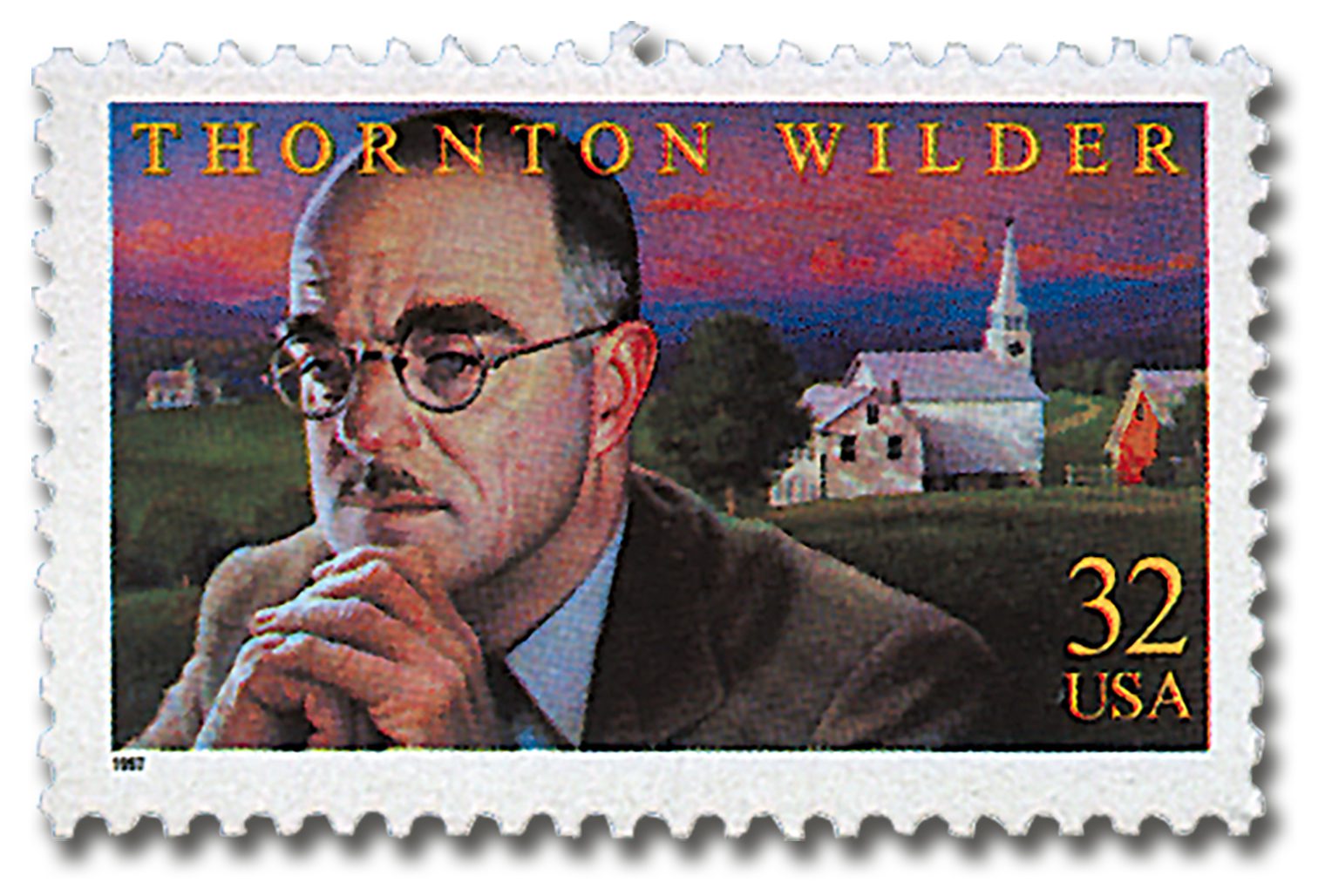
On April 17, 1897, playwright and novelist Thornton Wilder was born in Madison, Wisconsin. Over the next several decades, he would become one of America’s most respected writers, known for works that explored everyday life with unusual clarity and structure.
Thornton Niven Wilder was one of six children born to Amos Parker Wilder, a newspaper editor who later became a US diplomat, and Isabella Niven Wilder. His father’s government service shaped much of his early life. When Amos Wilder was appointed US Consul General, the family moved to China. They lived in Hong Kong and later in Shanghai. These years exposed Wilder to different cultures and languages at an early age, something that would later influence his writing.
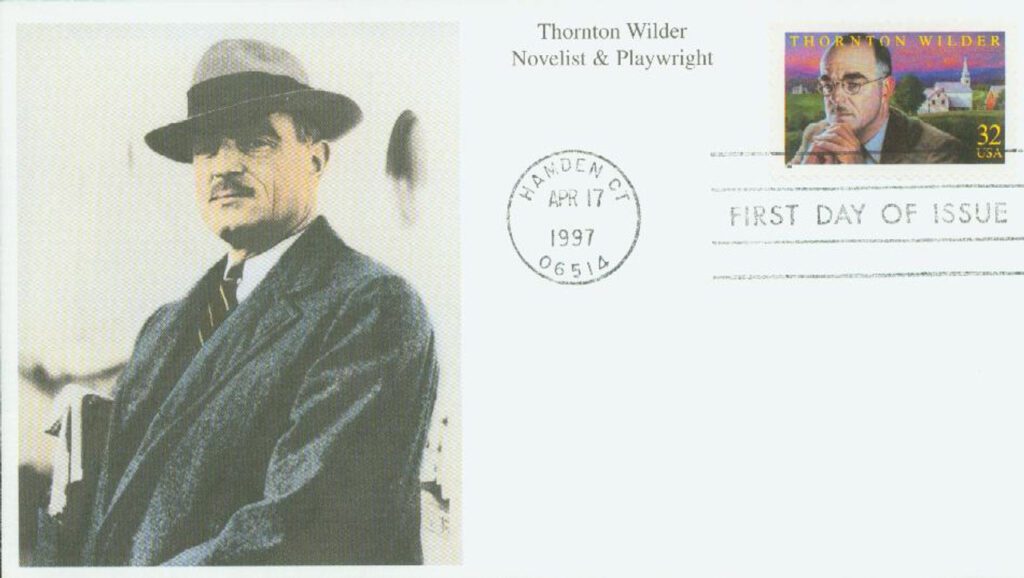
After returning to the United States, Wilder attended the Thacher School in Ojai, California. It was there that he began writing plays. Even as a student, he showed a strong interest in storytelling and structure. Following high school, he briefly served in the US Army’s Coast Artillery Corps during World War I. His service lasted about three months, as the war ended soon after.
Wilder then pursued higher education. He attended Oberlin College before transferring to Yale University, where he earned his Bachelor of Arts degree in 1920. He continued his studies at Princeton University, completing a master’s degree in French literature in 1926. During these years, Wilder also spent time abroad. He studied archaeology in Italy and took part in an extended residency at the American Academy in Rome. These experiences deepened his interest in history, language, and classical literature.

After returning to the United States, Wilder taught French at the Lawrenceville School in New Jersey. Teaching remained an important part of his identity throughout his life. He often described himself as a teacher first and a writer second, even as his literary reputation grew.
Wilder published his first novel, The Cabala, in 1926. The book drew on his experiences in Italy but received modest attention. His second novel, The Bridge of San Luis Rey, published in 1927, brought him widespread recognition. The story examines the lives of five people who die in the collapse of a bridge in Peru. It asks whether their deaths were random or part of a larger design. The novel won the Pulitzer Prize for Fiction and became a bestseller. It was later included on lists of the most important American novels of the 20th century.
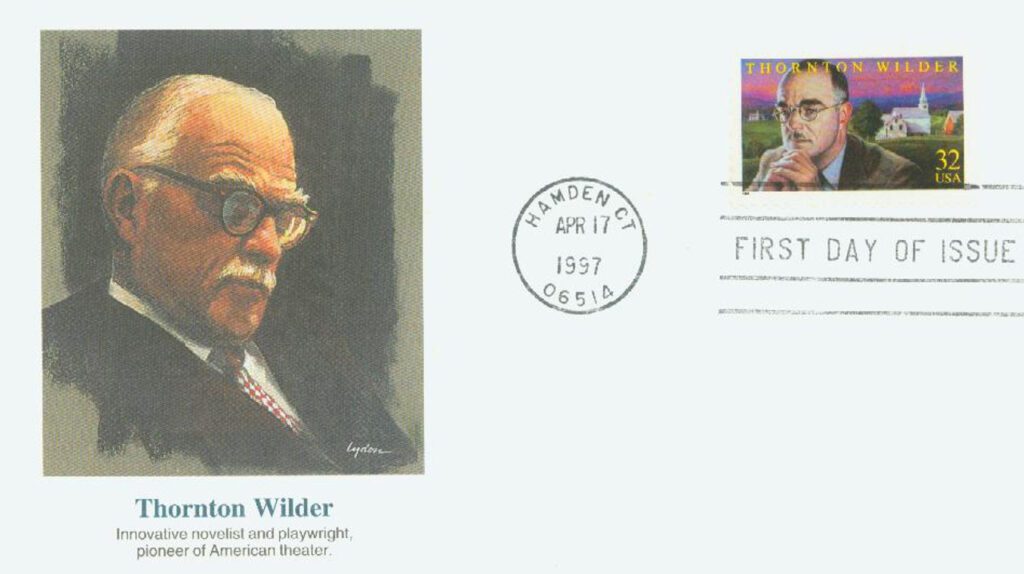
Although successful as a novelist, Wilder’s primary focus was the theater. In 1938, his play Our Town premiered and quickly gained attention for its unconventional style. The play uses minimal scenery and features a narrator, known as the Stage Manager, who speaks directly to the audience. It follows the lives of residents in the fictional town of Grover’s Corners, New Hampshire. The play won the Pulitzer Prize for Drama and remains one of the most frequently performed American plays.
Wilder continued to experiment with form in his later work. His play The Skin of Our Teeth, first performed in 1942, presents a family that survives a series of disasters representing different eras of human history. The play blends realism with symbolism and humor. It earned Wilder his second Pulitzer Prize for Drama in 1943.
During World War II, Wilder served in the US Army Air Forces. He was stationed in North Africa and Italy. His service included intelligence and communications work. He received several military honors for his contributions. After the war, he returned to academic life and served as a visiting professor at Harvard University.

Wilder was also active in translation and film. He translated several European plays into English, drawing on his knowledge of multiple languages. He also worked in Hollywood, writing the screenplay for Shadow of a Doubt, directed by Alfred Hitchcock. The film is often cited as one of Hitchcock’s strongest early works.
Earlier in his career, Wilder adapted an Austrian play into The Merchant of Yonkers. Its initial run in 1938 was unsuccessful. Years later, he revised the play, expanding its characters and structure. The revised version, titled The Matchmaker, opened in 1954 and ran for 486 performances. It later became the basis for the popular 1964 musical Hello, Dolly!.
Wilder’s later novels continued to receive attention. The Eighth Day, published in 1967, won the National Book Award. His final novel, Theophilus North, appeared in 1973 and was later adapted into the 1988 film Mr. North. Thornton Wilder died on December 7, 1975, in Hamden, Connecticut, at the age of 78.
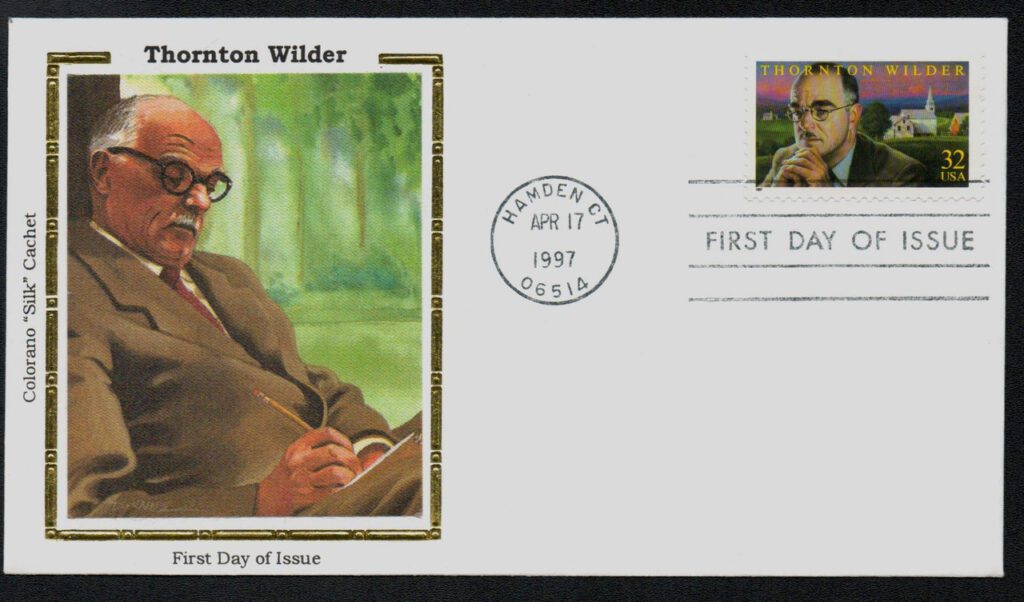
Throughout his career, Wilder explored large ideas through simple settings. He often focused on ordinary people and daily routines. At the same time, he experimented with how stories could be told on stage. His use of direct address, limited props, and flexible time structures influenced generations of playwrights.
Click here for more about Wilder’s works from his family’s official website.
| FREE printable This Day in History album pages Download a PDF of today’s article. Get a binder or other supplies to create your This Day in History album. |
Discover what else happened on This Day in History.