
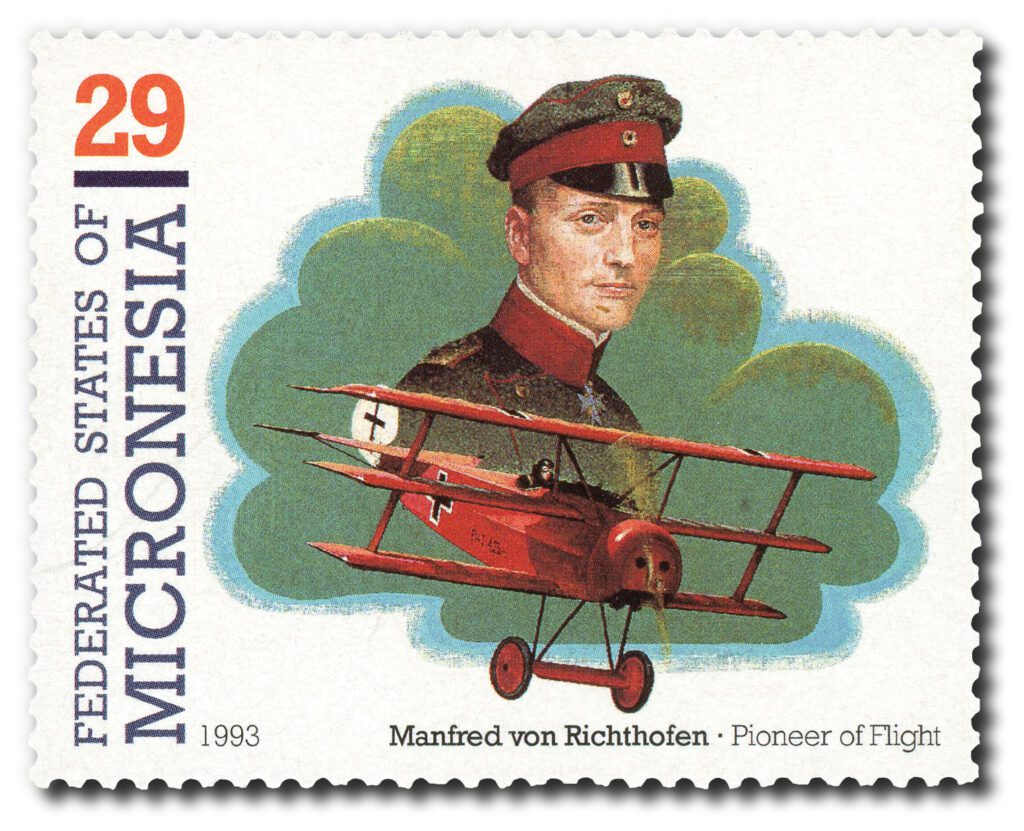
On April 20, 1918, Manfred von Richthofen—known around the world as the Red Baron—shot down his 80th enemy aircraft, setting a record for World War I. Within a day, his remarkable career would come to an abrupt end, cementing his place as the war’s most recognized flying ace.
Manfred Albrecht Freiherr von Richthofen was born on May 2, 1892, into an aristocratic Prussian family in what is now Wrocław, Poland. His upbringing followed a strict military tradition. At age 11, he entered cadet training, where discipline and physical endurance were emphasized. He later joined the 1st Uhlan Cavalry Regiment and was commissioned as a lieutenant in 1912, serving under Kaiser Wilhelm II.
When World War I began in 1914, Richthofen served as a cavalry reconnaissance officer on both the Eastern and Western Fronts. Early in the war, cavalry units still had a role in scouting and communication. However, trench warfare soon limited their usefulness. Long lines of fortified trenches made traditional cavalry movement nearly impossible. Like many cavalry officers, Richthofen found himself without a clear purpose. Seeking a more active role, he transferred to the German air service, known as the Luftstreitkräfte, in May 1915.
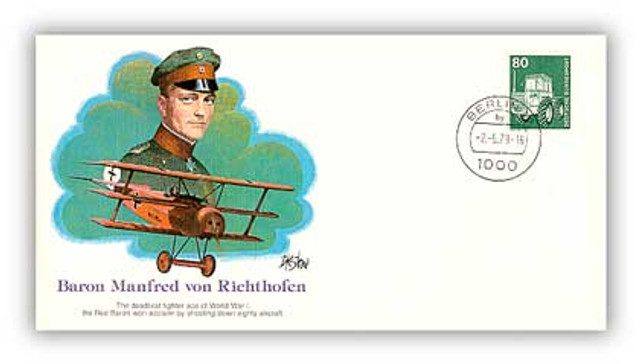
Richthofen’s early aviation training was brief but effective. He completed his first solo flight after only about 24 hours of instruction in October 1915. At first, he served as an observer, operating machine guns and recording enemy positions. He later trained as a pilot and joined a fighter squadron. On September 17, 1916, he scored his first confirmed aerial victory near Cambrai, France.
His skills improved quickly under the mentorship of Oswald Boelcke, one of Germany’s leading air tacticians. Boelcke taught disciplined attack methods, including approaching from above and behind to maintain an advantage. Richthofen applied these tactics with precision. By early 1917, he had become one of Germany’s leading aces.
That same year, Richthofen began flying aircraft painted in bright red, most famously the Fokker Dr.I triplane. The color made his aircraft easy to identify, both by allies and enemies. It also served a psychological purpose, signaling confidence and marking him as a leader. He was soon given command of Jagdgeschwader 1, a group of elite fighter squadrons. This unit became known as the “Flying Circus” because of its mobility and its brightly painted aircraft. The group could be quickly deployed to critical areas along the Western Front.
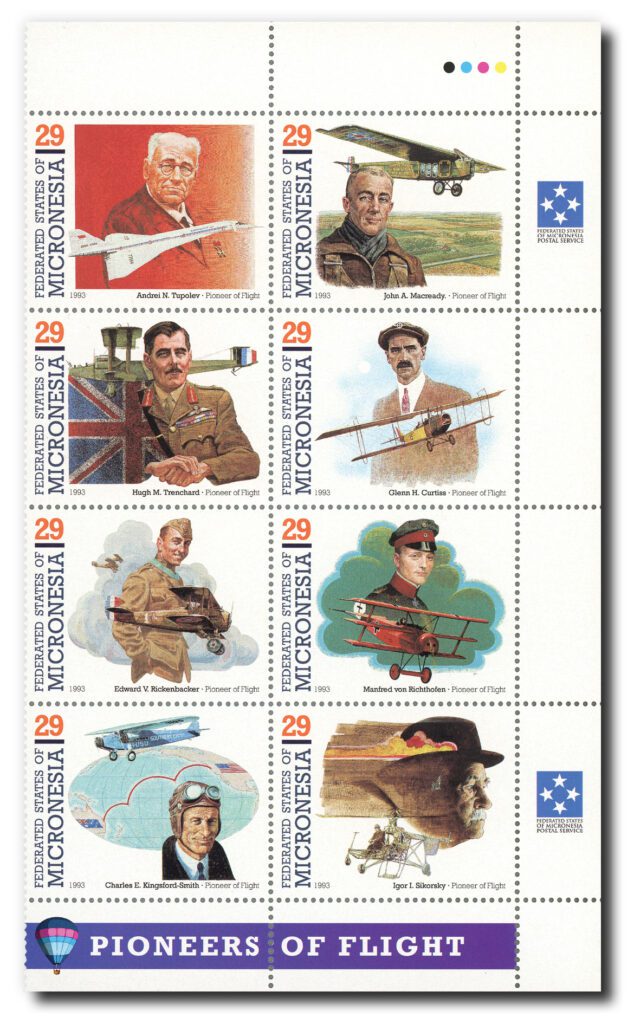
In July 1917, Richthofen was seriously wounded in combat. A bullet struck his head during an engagement, causing temporary blindness. Despite the injury, he managed to land his aircraft. He returned to flying after a period of recovery, though he continued to suffer from headaches and other effects. During his time off, he wrote an autobiography, later published as The Red Battle Flyer. In it, he described aerial combat in direct terms, noting that it was far from the heroic image often portrayed at home.
By early 1918, Richthofen had become a major figure in Germany. His victories were widely reported, and he was seen as a symbol of skill and discipline. Military leaders recognized his value for morale and suggested he take a safer position. He declined, choosing to remain in active combat.
On April 20, 1918, Richthofen achieved his 79th and 80th confirmed victories. These engagements took place during a period of heavy fighting as German forces pushed forward in their spring offensive. His total of 80 victories was the highest recorded by any pilot during the war.

The following day, April 21, Richthofen took off again near the Somme River. Around 11:00 a.m., he pursued a British aircraft at low altitude over enemy lines. During this chase, his plane was struck by a single bullet that passed through his torso. Despite the fatal wound, he managed to land his aircraft in a field. He died shortly after.
The exact source of the shot has been debated. Some credit Canadian pilot Arthur Roy Brown, who was attacking from above. Others believe the fatal bullet came from ground fire by Australian soldiers. What is clear is that Richthofen’s final moments occurred at low altitude over Allied territory.
British forces recovered his body and buried him with full military honors. Six pilots served as pallbearers, and a wreath was placed on his grave bearing the inscription “To Our Gallant and Worthy Foe.” His remains were later moved to Germany, where he was eventually buried in Wiesbaden alongside family members.
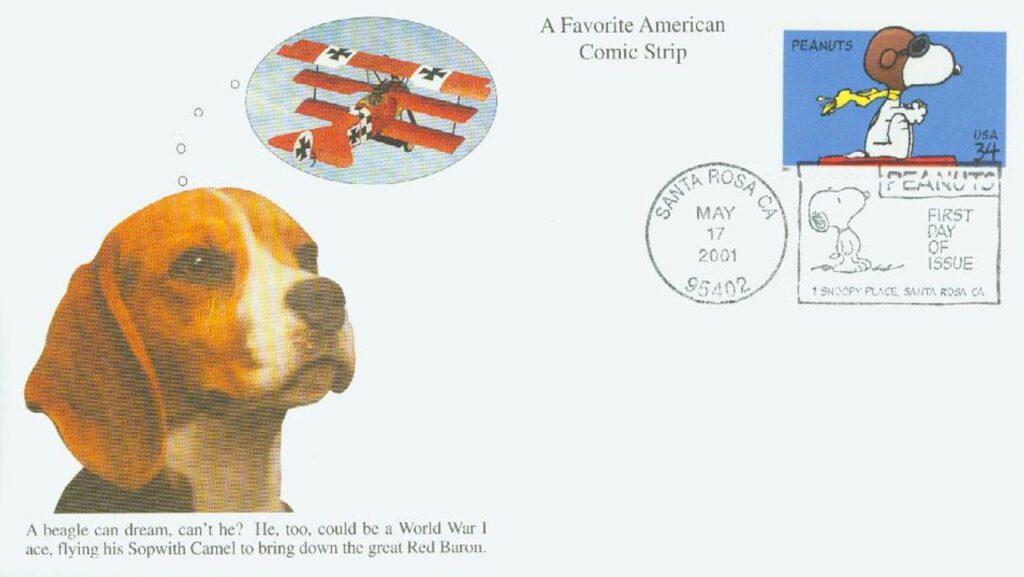
Richthofen’s record of 80 confirmed victories remained unmatched during World War I. His career reflected both the rapid development of aerial combat and the risks faced by early fighter pilots.
Click here to read excerpts from Richthofen’s autobiography.
| FREE printable This Day in History album pages Download a PDF of today’s article. Get a binder or other supplies to create your This Day in History album. |
Discover what else happened on This Day in History.
Great stories please keep it up ?
“80 men tried and 50 men died, now the’re buried together on the countryside”. kudos to Snoopy.
Correction, Wilhelm II was Kaiser in 1912, not Alexander III. Alexander III was never a Kaiser as
Wilhelm II succeeded his father Frederick who was precede by Wilhelm I. Alexander III was Czar
of all the Russias but died before 1912 and Nicholas II was Czar. Three cousins ruled the great Empires in 1912, Wilhelm II, Nicolas II and George V of England.
Great information. Please keep up the great work.
P.S. check your facts first.
Great story about Richhtoven! I wonder what he would think of today’s fighter aircraft. The Snoopy stamp is a good one, especially since he was into the “dog” fight. I believe it was a Canadian RAF pilot who shot down the Baron. Thanks for the story! For that matter thanks for all you do, Mystic.
Yes. In fact he was shot down by a Captain Brown flying a Sopwith Camel.
Check your facts, the Barron was brought down by ground fire.
Happy B Day to my Friend 🙂
Great information. Keep it up.
Amazing about the mutual respect that existed amongst Foes. Similar to Santa Ana allowing women and Children to leave the Alamo.
Much different trend that prevailed in WW2 with Civlians being targeted, and that trend continues even today.
Great article. The Original ‘Top Gun’.