
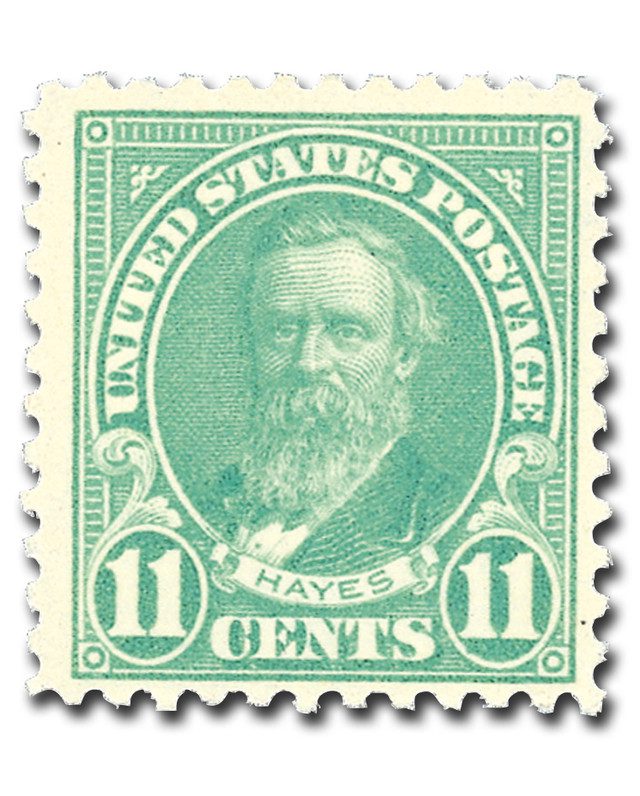
Rutherford Birchard Hayes was born on October 4, 1822, in Delaware, Ohio. He would become president after the nation’s most disputed election of the 19th century, then serve a single term shaped by Reconstruction’s end, civil-service reform, and difficult questions about money, immigration, and racial equality.
Hayes was born to Rutherford Hayes and Sophia Birchard Hayes. His father died before he was born, and his mother raised him with help from his uncle, Sardis Birchard. He attended private schools in Ohio and Connecticut before entering Kenyon College in Gambier, Ohio. He graduated first in his class in 1842.
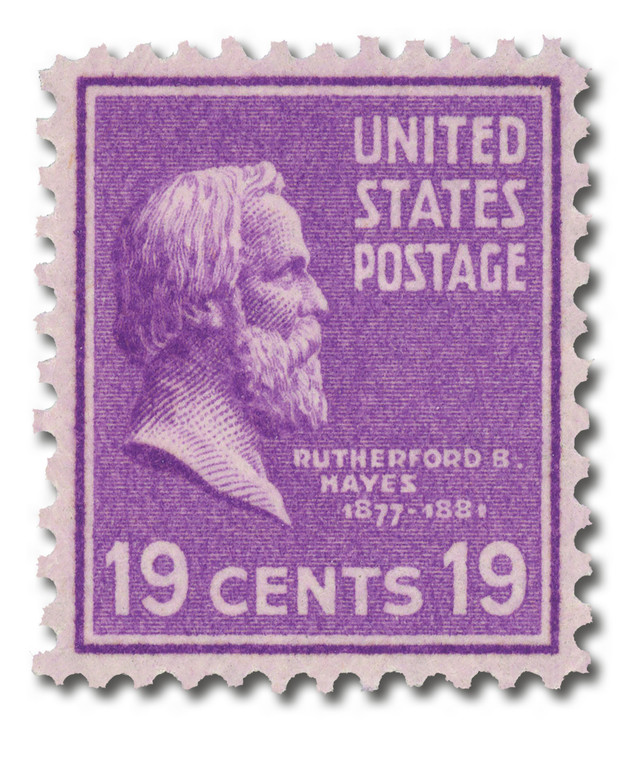
After studying law in Ohio for a year, Hayes entered Harvard Law School. He graduated in 1845 and began practicing in Lower Sandusky, now Fremont, Ohio. In 1849, he moved to Cincinnati, where he built a successful law practice. He handled criminal-defense cases and sometimes represented people accused of violating the federal Fugitive Slave Act. These cases strengthened his opposition to slavery.
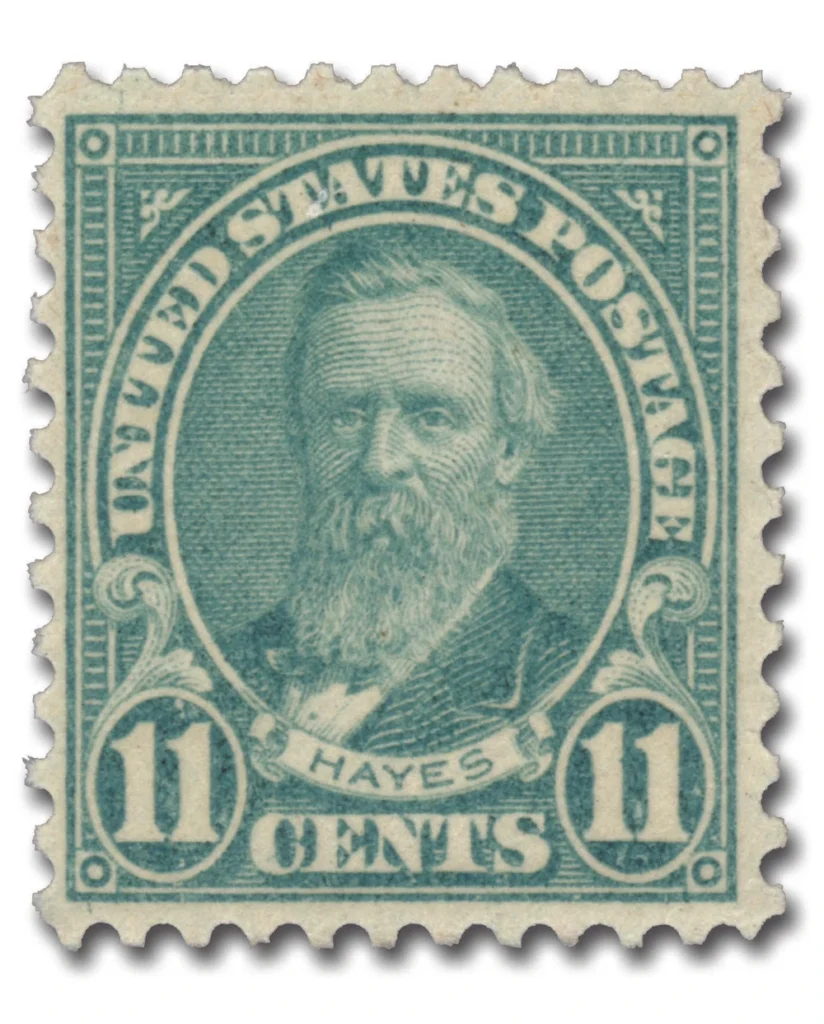
In Cincinnati, Hayes met Lucy Ware Webb. They married in 1852 and eventually had eight children, five of whom lived to adulthood. Lucy was educated at Cincinnati Wesleyan Female College and became the first first lady known to have graduated from college. During the Civil War, she visited camps and hospitals, assisted sick and wounded soldiers, and became widely known as “Mother Lucy.”
Hayes was 38 when the Civil War began in 1861. Although he had no military experience, he helped recruit a company from his Cincinnati literary club and was appointed a major in the 23rd Ohio Volunteer Infantry. The regiment later included future president William McKinley as an enlisted soldier.
Hayes proved to be a capable officer. He fought in western Virginia and was seriously wounded at the Battle of South Mountain in Maryland on September 14, 1862. He returned to service and was wounded again during the Shenandoah Valley campaigns of 1864. By war’s end, he had been promoted to brigadier general of volunteers and received the honorary rank of brevet major general. His willingness to lead from the front earned the respect of many soldiers.
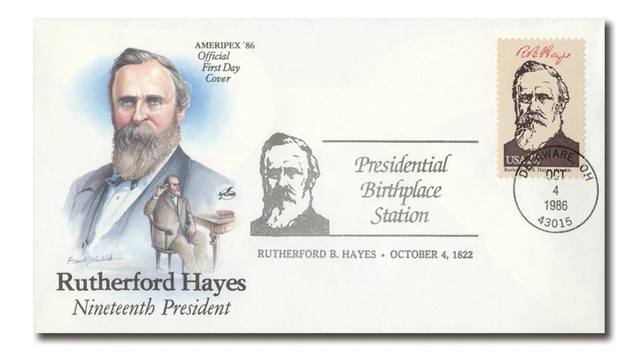
While still serving, Hayes was nominated for the US House of Representatives in 1864. He refused to leave his unit to campaign, saying that an officer fit for duty should not seek office while his men faced the enemy. Voters elected him anyway. He took his seat in December 1865 and supported congressional Reconstruction. He also served as chairman of the Joint Committee on the Library of Congress.

Hayes resigned from Congress after Republicans nominated him for governor of Ohio. He served from 1868 to 1872 and won a third, nonconsecutive term in 1875. During these years, Ohio ratified the 15th Amendment, which prohibited denying citizens the vote because of race, color, or previous condition of servitude. The Ohio State University was founded in 1870. Hayes’s electoral success made him a possible presidential candidate.
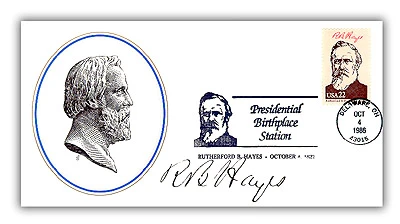
The Republican Party chose Hayes as its nominee in 1876 after seven ballots at its convention. His Democratic opponent, Samuel J. Tilden, won the popular vote. The electoral vote was disputed in Florida, Louisiana, South Carolina, and Oregon. With no agreement possible, Congress created a 15-member Electoral Commission in January 1877. By 8–7 votes along party lines, the commission awarded each disputed electoral vote to Hayes. He won 185 electoral votes to Tilden’s 184.
The result was bitterly contested. Hayes’s critics called him “Rutherfraud.” Because March 4 fell on a Sunday and the transfer of power seemed uncertain, he privately took the oath of office in the White House Red Room on March 3, 1877. He was publicly inaugurated two days later.

Hayes soon withdrew the remaining federal troops from South Carolina and Louisiana. That decision ended Reconstruction-era military support for Republican state governments in the South. Historians still debate the exact terms of the informal political settlement often called the Compromise of 1877. Its consequences are clearer: Southern white Democrats regained control, while Black citizens faced growing violence, intimidation, disfranchisement, and segregation. Hayes spoke in favor of Black voting rights, but his administration had little power or willingness to enforce them effectively in the South.
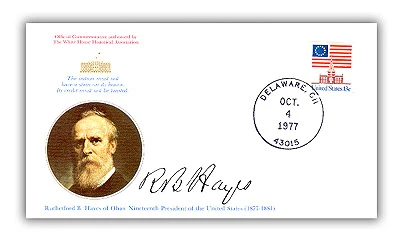
As president, Hayes also challenged the patronage system, in which political allies received government jobs. He issued an order barring federal employees from being forced to contribute to political campaigns. His most visible fight came with Senator Roscoe Conkling’s political organization in New York. Hayes suspended Chester A. Arthur, collector of the Port of New York, after charging that the customhouse had become a center of partisan management. Congress did not enact lasting reform during Hayes’s term, but his actions helped prepare the way for later civil-service legislation.

Hayes favored sound currency and a return to specie payments, meaning that paper money could again be redeemed in gold. He vetoed the Bland-Allison Act, which required the government to purchase silver for coinage, though Congress overrode him. He also vetoed a bill restricting Chinese immigration because it violated the Burlingame Treaty of 1868. Later negotiations gave the United States limited authority to regulate immigration from China.
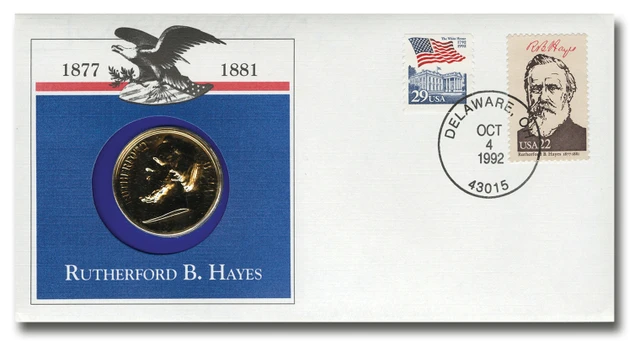
After keeping his promise to serve only one term, Hayes retired to Spiegel Grove in Fremont. He supported veterans’ pensions, prison reform, and public education. He served with the Peabody Education Fund and the Slater Fund, which supported education in the South. Hayes died at Spiegel Grove on January 17, 1893.
| FREE printable This Day in History album pages Download a PDF of today’s article. Get a binder or other supplies to create your This Day in History album. |
Discover what else happened on This Day in History.
His election was the first of three times that the Republicans have won the Presidency despite losing the popular vote. (1876, 1888, & 2000) The continued existence of the Electoral College undermines our claim of being the world’s great democracy. The so-called Compromise of 1877 was indeed the “Great Betrayal” for African-Americans, for it enabled Southern white supremacists who took control to circumvent both the 14th & 15th Amendments with Jim Crow laws, poll taxes, literacy tests, etc. that denied the former the rights guaranteed them by those amendments.
The latter being Democrats.
Well, they were Democrats until the 1960s when the Civil Rights Act of 1964 and the Voting Rights Act of 1965 were passed. The white southern Democrats quickly migrated to the Republican Party where they remain to this day.
Now the first of FOUR times, the fourth time being 2016.
Hayes is also one of only three Presidents I can think of who voluntarily committed to serving just one term of elected office before assuming office. (The other two were James K. Polk and Teddy Roosevelt). You have to wonder if Hayes ever regretted that decision as he neared the end of his term. TR certainly did, but Polk, who was never in good health and a noted presidential workaholic, probably couldn’t wait to retire.
James Buchanan voluntarily committed to serving just one term of elected office before assuming office. William Henry Harrison also did so, but he died after one month in office.