

On September 15, 1916, strange armored machines lumbered across the shell-torn ground near Flers, France, as British forces introduced tanks to combat for the first time. Their debut at the Battle of the Somme did not break the stalemate, but it revealed the potential of a weapon that would reshape warfare.
The Battle of the Somme was fought from July 1 to November 18, 1916, along the Somme River in northern France. It was a joint British and French offensive against German positions on the Western Front. Allied leaders hoped to break through the German line, relieve pressure on the French Army at Verdun, and wear down German forces.
The original plan called for British troops to attack north of the Somme while French forces attacked to the south. Before the assault, British and French artillery bombarded German positions for seven days. Commanders hoped the shells would destroy trenches, cut barbed wire, and kill or drive out the defenders.
The bombardment did not achieve all of those goals. Many British shells failed to explode. In many places, German barbed wire remained intact. German soldiers also survived in deep, reinforced dugouts. The long bombardment warned them that an attack was coming.
At 7:30 a.m. on July 1, 14 British divisions attacked. In some sectors, the advancing troops moved slowly and carried heavy equipment. They soon faced rifle, artillery, and machine-gun fire from German soldiers who had emerged from their shelters. A few British units reached German positions, but most attacks failed to gain their objectives.
The first day of the Somme was the bloodiest day in British military history. The British suffered 57,470 casualties, including 19,240 men killed. The losses struck communities across Britain especially hard. Many men had joined “Pals battalions,” units formed from friends, coworkers, neighbors, and former schoolmates who enlisted together.
The French Army made better progress south of the river, where German defenses were weaker. Yet the wider offensive did not produce the hoped-for breakthrough. Fighting continued through the summer and fall as British, French, and German forces attacked and counterattacked for villages, woods, ridges, and trench systems.
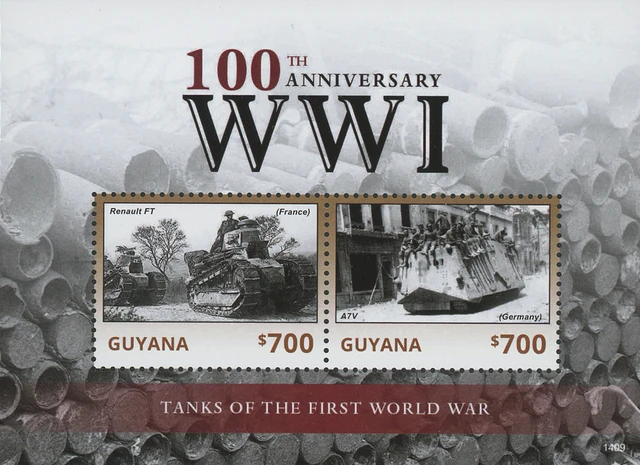
Britain had begun developing a new weapon in 1915 to help solve the problem of trench warfare. Designers wanted an armored vehicle that could cross rough ground, crush barbed wire, and pass over many trenches while protecting its crew from small-arms fire. The vehicles used caterpillar tracks and were developed in great secrecy. The name “tank” was adopted partly because it suggested harmless water containers rather than a new weapon.


The first Mark I tanks reached Britain’s new tank force for training in 1916. Each carried a crew of eight men. Conditions inside were miserable. The metal hull became intensely hot. Engines and weapons created deafening noise, while dust, smoke, and petrol fumes filled the cramped interior.
On September 15, tanks supported the British attack at Flers-Courcelette, part of the larger Somme offensive. Forty-nine Mark I tanks were assigned to take part, but only 32 reached their starting positions. Mechanical failures and shell holes stopped others before the attack even began. Of those that reached the line, only 18 eventually entered action.

The tanks startled many German troops. They could crush wire and cross many trenches, and rifle and machine-gun fire often could not stop them. One observer remembered hearing “strange throbbing noises” before seeing “three huge mechanical monsters” moving across the battlefield. (Click here for the full eyewitness account.)
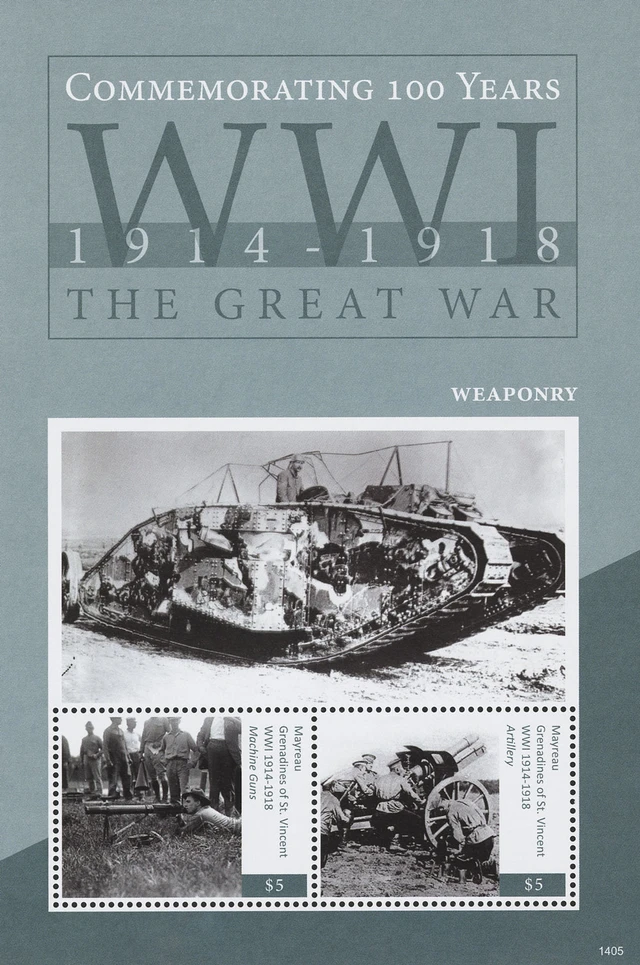
Still, the tanks were slow, unreliable, and difficult to coordinate with infantry. Several broke down, became trapped, or were damaged by German fire. Their use helped British and Canadian forces capture Flers and Courcelette, but the September 15 advance was limited to about 2,500 yards on a three-mile front. The tanks had not produced a breakthrough.
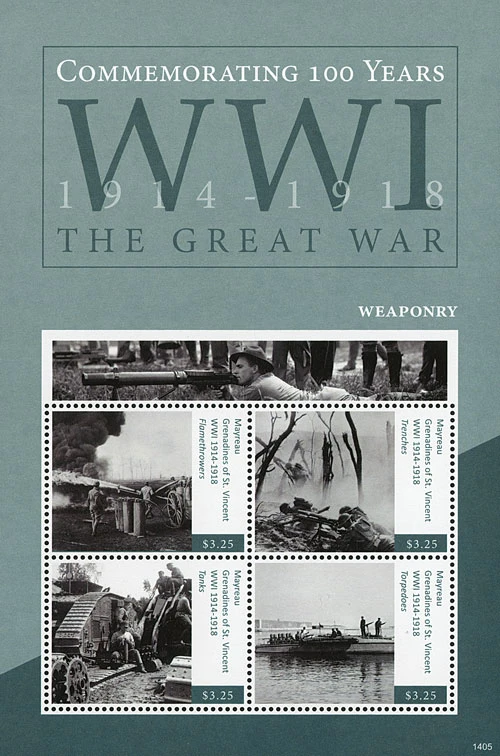
The Somme offensive ended on November 18 as cold, rain, and mud made further large attacks increasingly difficult. The Allies had advanced about seven miles at their furthest point, with far smaller gains in other sectors. British Empire forces suffered about 420,000 casualties and the French about 200,000. The battle did not decisively break the German line, but it helped ease pressure on the French at Verdun and gave British commanders enough confidence in tanks to order many more.
Click here to see what the first tanks looked like.
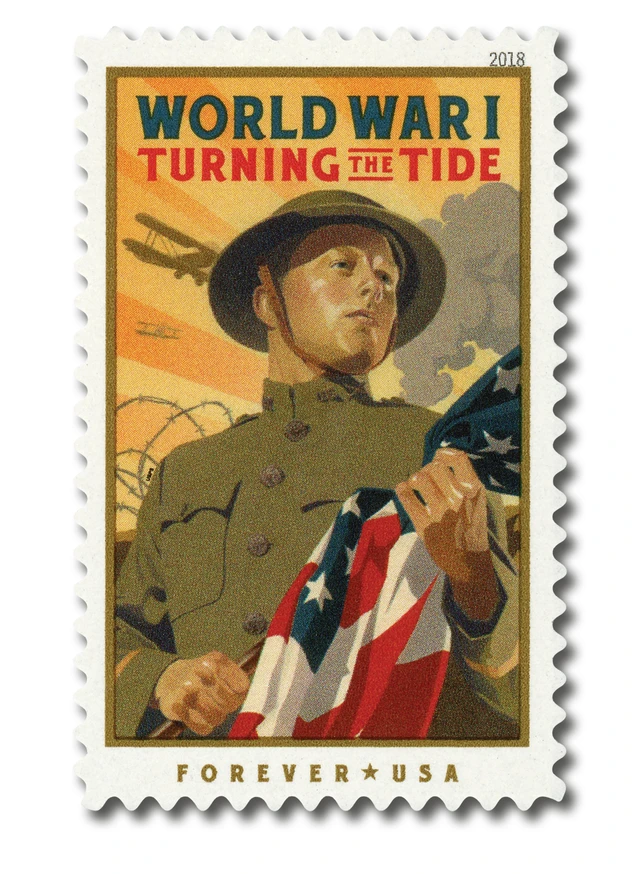
Click here for lots more WWI coins, stamps, and other items.
| FREE printable This Day in History album pages Download a PDF of today’s article. Get a binder or other supplies to create your This Day in History album. |
Discover what else happened on This Day in History.
Thanks for the history lesson. I learn something new every day by reading your column.
“Though the tanks didn’t fair that well in their first appearance, British commanders were convinced that they would be crucial to future warfare and ordered that hundreds more be produced.” It should be, “Though the tanks didn’t FARE that well . . .” Otherwise, good article.
My Uncle was drafted in W.W.11 and ended up driving an M4 Sherman tank in the Pacific, even though, as he said, he didn’t even know how to drive a car before he was inducted. His first hand accounts of his service belied the glamour of service in the armored vehicle. It was tough, dangerous, and frightening work against a determined foe.
Wow! Nice article, and I’ve read them all. Lackluster debut for the tank but the detail of the article complete with drab, bleak black and white photography give the topic its proper historical perspective.