
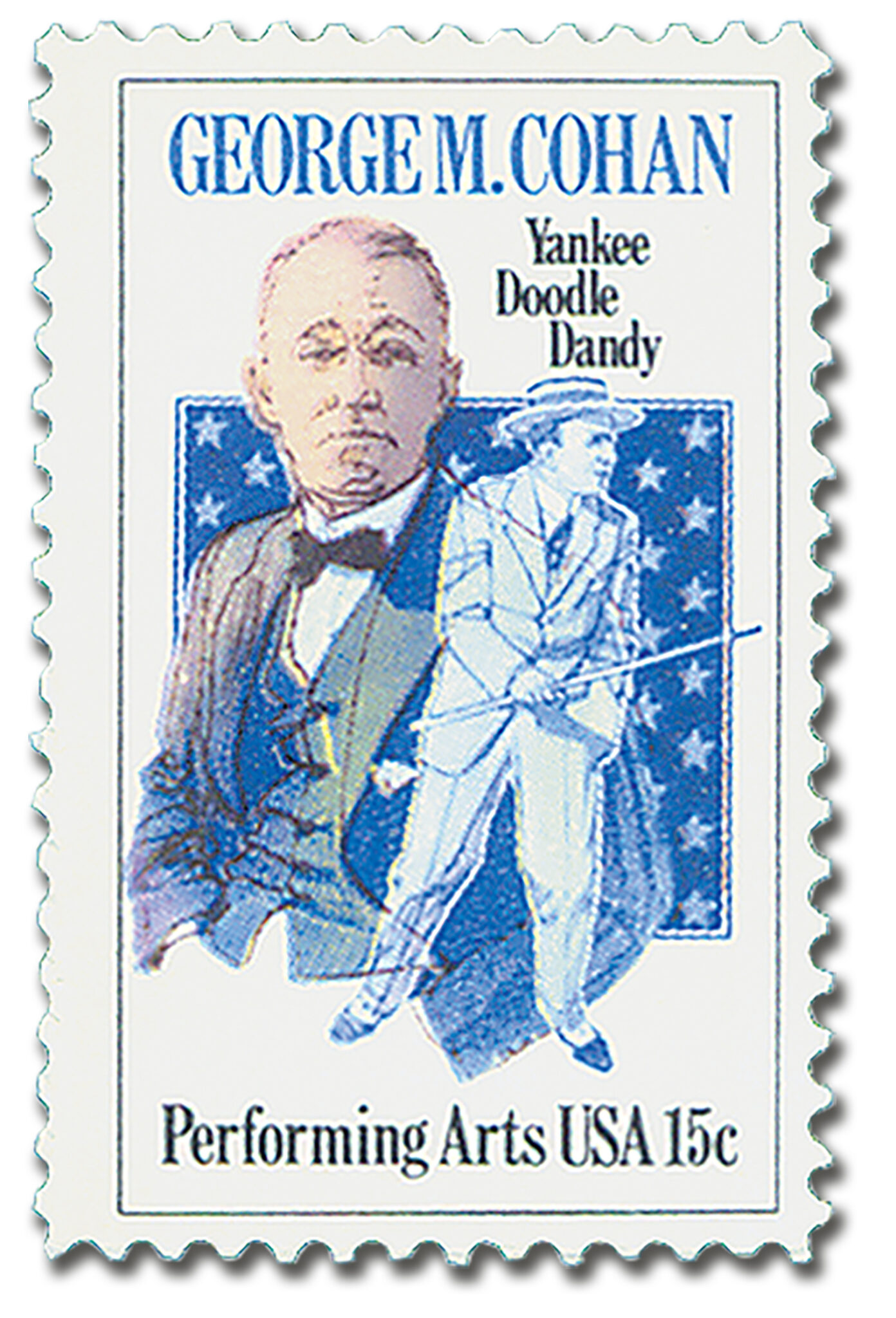
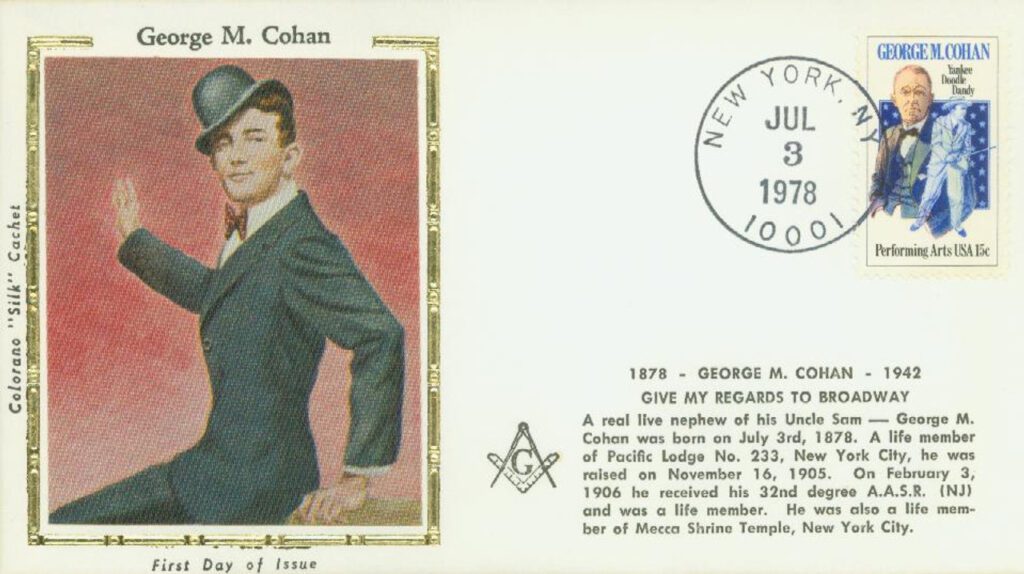
The father of American musical comedy, George Michael Cohan was born on July 3, 1878, in Providence, Rhode Island. He later became so closely associated with patriotic music that many Americans believed he had been born on the Fourth of July, a story Cohan himself enjoyed encouraging.
Cohan was born into show business. His parents, Jeremiah “Jerry” Cohan and Helen “Nellie” Costigan Cohan, were traveling vaudeville performers. Their children grew up backstage, in theaters, and on the road. George appeared on stage as an infant and learned the rhythms of performance almost as early as he learned to walk.
By childhood, Cohan was singing, dancing, and acting with his family. The act became known as The Four Cohans and included George, his parents, and his sister Josephine. They traveled from town to town, performing lively songs, comic sketches, and dance routines. The family’s success depended on discipline as much as talent. They rehearsed constantly, adjusted their act for different audiences, and learned how to hold a crowd’s attention.
Cohan began writing material while still young. As a teenager, he wrote sketches and songs for the family act. In 1893, he sold his first songs to a national publisher. That early success pointed toward the work that would make him famous. Cohan did not simply perform. He wrote, composed, produced, directed, and promoted. He became known as a man who could control nearly every part of a show.
His first major Broadway success came in 1904 with Little Johnny Jones. The musical was based loosely on the story of American jockey Tod Sloan and included two songs that became Cohan standards: “Give My Regards to Broadway” and “The Yankee Doodle Boy.” The show helped shape a new kind of American musical comedy. It was fast, direct, energetic, and filled with popular songs. It sounded less like European operetta and more like the streets, theaters, and newspapers of New York.
Cohan followed with a long string of hits. His shows included Forty-Five Minutes from Broadway, George Washington Jr., The Talk of New York, The Man Who Owns Broadway, and Seven Keys to Baldpate. He was especially skilled at writing songs that audiences could remember after one hearing. His music was simple, forceful, and built for the stage.
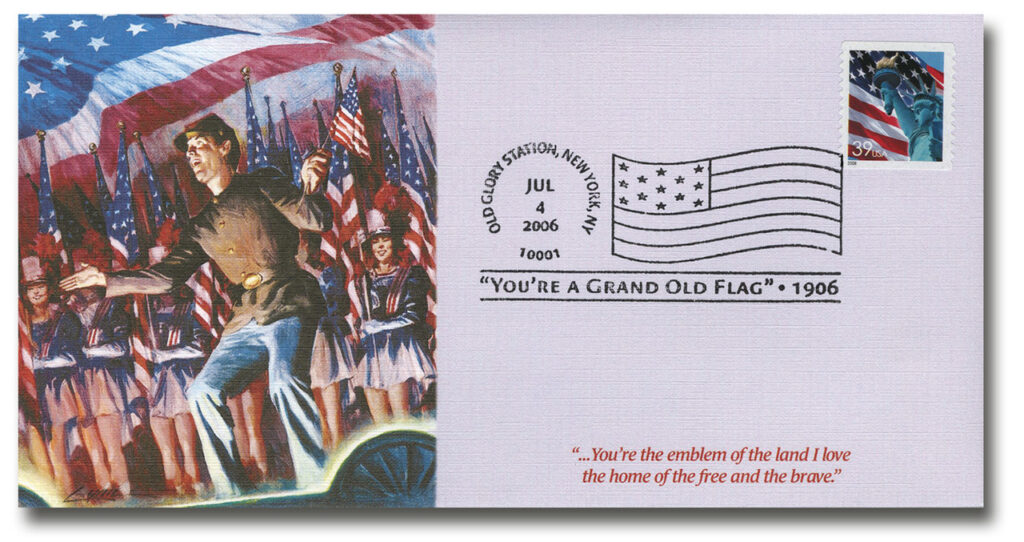
Cohan also helped define the patriotic Broadway song. In 1906, he wrote “You’re a Grand Old Flag” for George Washington Jr. During World War I, he wrote “Over There,” one of the best-known American war songs of the period. Its marching rhythm and direct lyrics made it popular with soldiers and civilians. In 1936, President Franklin D. Roosevelt presented Cohan with the Congressional Gold Medal for his patriotic songs, especially “Over There” and “You’re a Grand Old Flag.” He was the first entertainer to receive the award.

Beginning in 1906, Cohan worked with producer Sam H. Harris. Together, they became one of Broadway’s most successful teams. Over roughly two decades, they produced more than three dozen plays and musicals. At times, Cohan had several shows running in New York at once. His work helped make Broadway a center of American popular entertainment.
Cohan also appeared in films, though he never became as important to movies as he was to the stage. He acted in several silent films and later made two sound films: The Phantom President in 1932 and Gambling in 1934, based on his own play. His final Broadway appearance came in 1940 in The Return of the Vagabond.
George M. Cohan died in New York City on November 5, 1942. His reputation continued after his death. James Cagney portrayed him in the 1942 film Yankee Doodle Dandy, which introduced Cohan’s music to a new generation. Cohan was later honored with a statue in Times Square, near the heart of Broadway. It remains a fitting tribute to a performer who helped give American musical comedy its own voice.
Click here for a neat medley of Cohan songs.
| FREE printable This Day in History album pages Download a PDF of today’s article. Get a binder or other supplies to create your This Day in History album. |
Discover what else happened on This Day in History.
I always liked his music, fast-paced and catchy tunes, and especially the patriotic ones. I liked the movie about his life as well! A very gifted young man whose music has lived and will live on in the hearts of many over the years and in the future! I had not seen his statue in Times Square when visiting NYC. So, thanks for posting it.
I have been watching the movie on Turner Classic Movie Channel (ch 213/903) every year on July 4th.
George M. Cohan and Sam Harris are buried side by side in Woodlawn Cemetery Bronx New York.
Today is July 3, 2026. How fitting to read about Cohen and his patriotic music as we celebrate 250 yrs as a nation.
Thank you Mystic.