
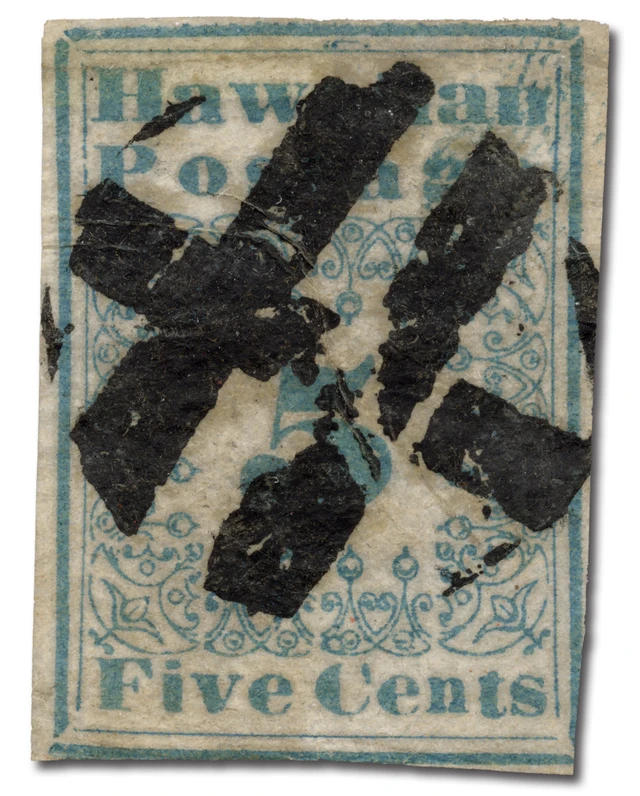
On October 1, 1851, Hawaiʻi placed its first postage stamps on sale—tiny blue labels that are now among the world’s rarest and most sought-after stamps. Called the Hawaiian Missionaries, they were created to bring dependable postage to islands whose overseas mail had long traveled by chance.
For decades, sending a letter from Hawaiʻi to the United States was uncertain. A resident of Honolulu first had to learn when a ship was leaving for the mainland. He or she then gave the letter to the vessel’s captain, hoping it would be carried safely to a US port. The captain would take the letters to a post office after arriving. In many cases, the person receiving the letter paid the postage.
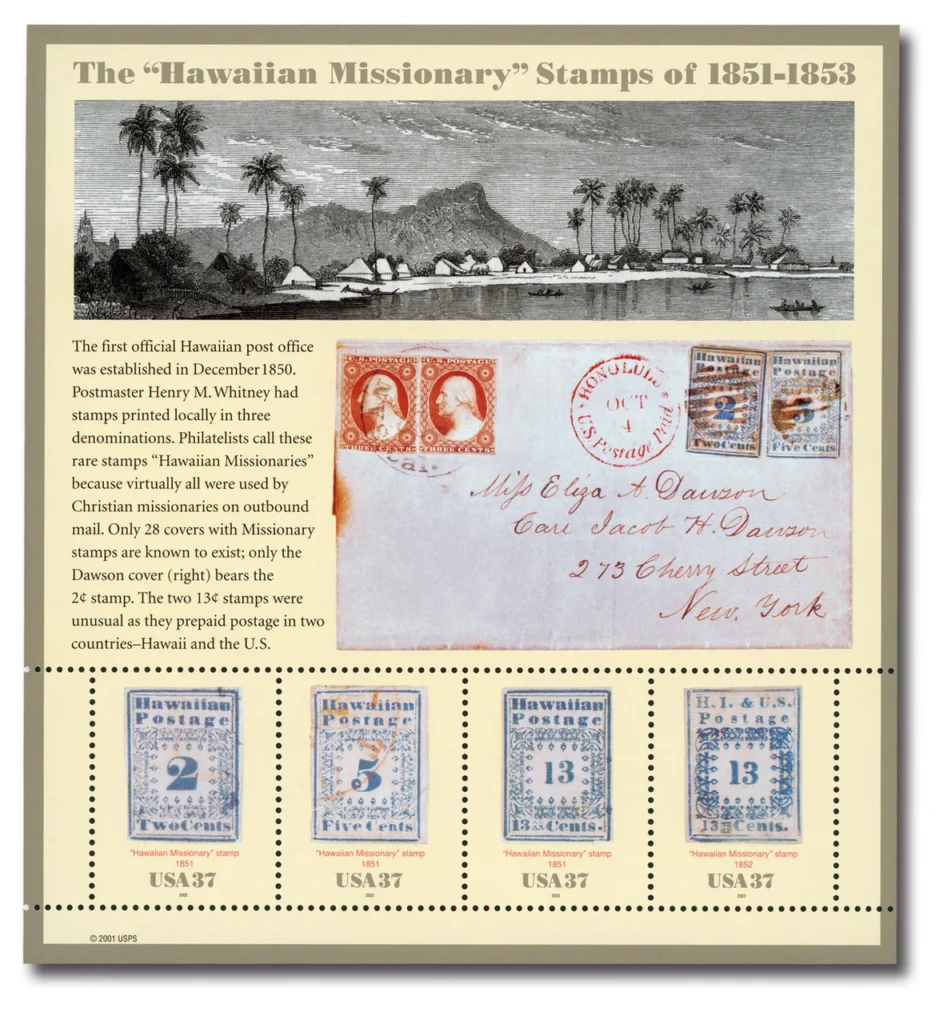
Mail arriving in Hawaiʻi could be just as informal. Mailbags were sometimes opened at a local business. Residents sorted through the letters themselves, looking for their own names. This system may have worked when correspondence was limited. It became less practical as Hawaiʻi’s connections with the United States grew.
American Protestant missionaries had begun arriving in Hawaiʻi in 1820, soon after Kamehameha II ended the traditional kapu system. Their work expanded during the following decades. They established schools, printed books and newspapers, and wrote regularly to relatives, church supporters, and fellow missionaries in the United States. Merchants, whaling interests, government officials, and other residents also added to the volume of overseas mail.
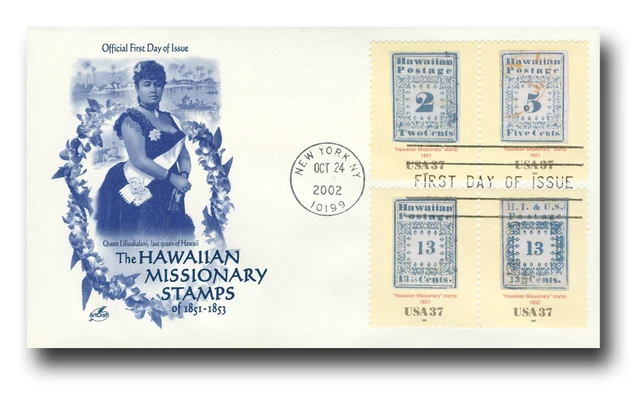
By 1850, the Hawaiian Kingdom had established a more formal postal service. Henry Martyn Whitney, a printer and the son of missionaries, became Hawaiʻi’s first postmaster. The legislature authorized postage stamps in 1851 so senders could prepay the proper rates on outgoing mail. This was a practical improvement, not merely a new government symbol. It gave customers and postal officials a clearer system for handling letters and printed matter bound for the United States.
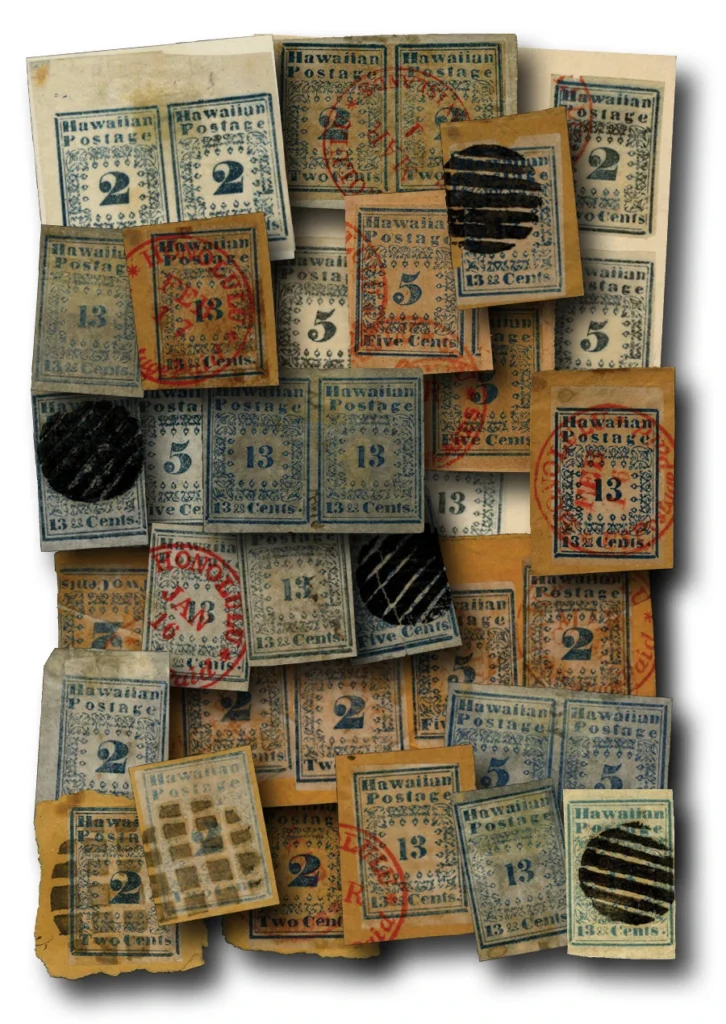
Whitney designed and printed the first three stamps. Each carried the words “Hawaiian Postage,” a large numeral, and an ornamental border. The stamps were issued in 2-cent, 5-cent, and 13-cent denominations. They were printed in blue ink with handset type on a hand-operated press at the Honolulu office of The Polynesian, the government newspaper. The paper was thin and fragile. That physical weakness helps explain why so few examples survive today.
The 2-cent stamp was intended for newspapers sent to the United States. Newspaper wrappers were usually discarded after delivery, so surviving examples are especially scarce. The 5-cent stamp paid Hawaiʻi’s postage on a letter sent abroad. The 13-cent stamp was meant to cover the full rate for a letter sent from Hawaiʻi to the East Coast of the United States by way of San Francisco. Its value included the Hawaiian charge, a fee connected with ship carriage, and US postage.
The original wording on the 13-cent stamp caused confusion because it read only “Hawaiian Postage.” In 1852, a revised 13-cent stamp was issued with the words “H.I. & U.S. Postage.” The new inscription made clear that the stamp prepaid both Hawaiian and US postage. Letters sent within the Hawaiian Islands, however, could be delivered free of charge during this early period. The first stamps were therefore mainly useful for overseas mail.
Collectors later called the stamps “Missionaries” because so many surviving examples were found on correspondence sent by Christian missionaries. The name was not printed on the stamps themselves. It reflects the people whose letters happened to survive, rather than an official title used by the Kingdom of Hawaiʻi.
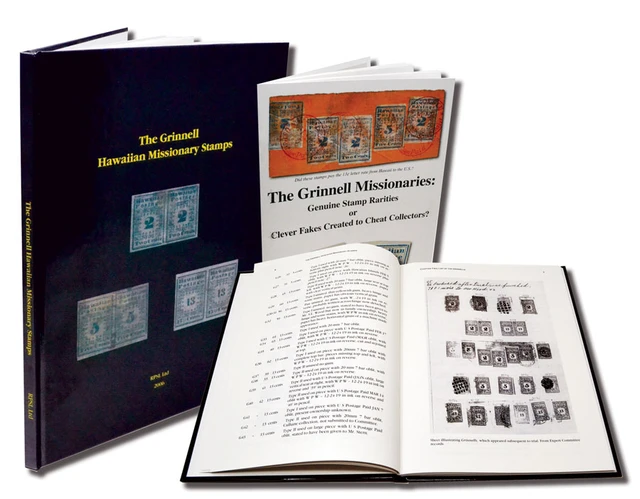
Their rarity also made the Missionaries a target for forgeries. In 1920, Los Angeles collector George H. Grinnell sold 43 alleged Missionaries to stamp dealer John Klemann for $65,000. Klemann resold 16 of them to collector Alfred H. Caspary. Caspary soon questioned their authenticity, and Klemann sued Grinnell. In 1922, a court ruled the stamps were fakes. Grinnell spent the rest of his life arguing that the decision was wrong.
Later examinations reopened parts of the debate. Researchers found evidence that the Grinnell stamps had been printed with movable type, as genuine Missionaries had been. Yet major differences in design, paper, ink, cancellations, and documented ownership continued to trouble experts. The controversy remains a notable chapter in philately. The authentic Hawaiian Missionaries, meanwhile, remain important evidence of how a Pacific kingdom created a working postal system for an increasingly connected world.
Click here to read more about the Grinnell Missionaries.
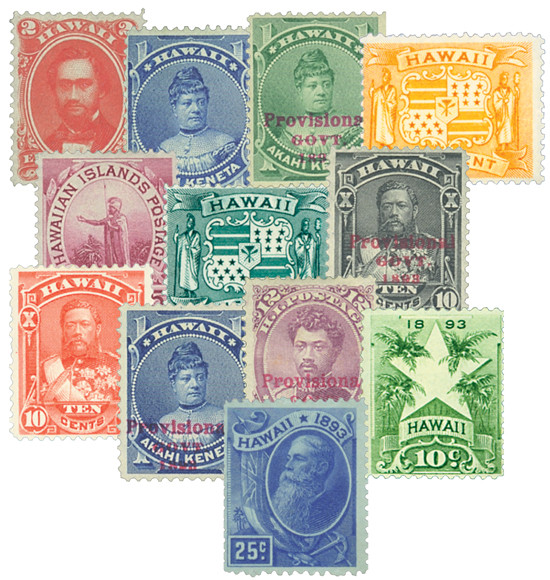
Click here to view more Hawaii stamps.
| FREE printable This Day in History album pages Download a PDF of today’s article. Get a binder or other supplies to create your This Day in History album. |
Discover what else happened on This Day in History.
Fascinating history of these stamps. Always learning something new through these articles.
Very interesting. Thank you.
How much are the stamps worth? Where is it possible to buy one?
Just click on the images of the stamps in the article. 🙂