

On October 31, 1940, the Battle of Britain came to an end. For nearly four months, RAF pilots and ground crews had fought to prevent Germany from gaining the air superiority needed to invade.

The battle followed the collapse of France in June 1940. German forces had driven the British and French armies back to the Channel coast. In late May and early June, more than 338,000 Allied troops were evacuated from Dunkirk, but much of their equipment was left behind. Britain now faced Germany across the Channel. Prime Minister Winston Churchill rejected the idea of negotiating peace. On June 18, he told Parliament, “What General Weygand called the ‘Battle of France’ is over. I expect that the Battle of Britain is about to begin.”
Hitler ordered preparations for an invasion on July 16. His Directive No. 16 named the proposed landing operation “Sea Lion.” It called for Britain to be removed as a base for continuing the war against Germany and, if necessary, occupied. The invasion depended on air superiority. German aircraft had to weaken Fighter Command and protect the crossing from RAF attacks. German air commanders believed sustained attacks could destroy Fighter Command before the invasion began. Plans envisioned the main landings on England’s south coast, between Folkestone and Worthing. German commanders debated the risks and the shipping available. They also argued over how the army could cross the Channel under RAF and Navy attack.

The RAF’s defense relied on more than fighter pilots. Britain’s Chain Home radar stations detected approaching aircraft. The Observer Corps tracked them over land. Their reports flowed through the “Dowding System.” It linked telephone lines, plotting rooms, and command centers. Fighter Command used this information to send squadrons toward incoming raids. Hurricanes and Spitfires met German bombers and their fighter escorts. Ground crews refueled and rearmed aircraft, repaired damage, and returned fighters to service. When airfields were hit, repair teams filled craters and restored runways. Dispersal fields and reserve airfields helped keep aircraft operating.
On August 13, the German High Command began its main assault, known as “Eagle Day.” Poor weather disrupted the attacks, and the Luftwaffe did not achieve the results it expected. Through August, German raids struck RAF airfields, radar stations, aircraft factories, and ports across southern England. The pressure was severe, especially on fighter stations in southeast England. Still, the RAF continued to intercept raids and repair damaged bases. The radar network also remained in operation, despite attacks on some stations.

On September 7, the Luftwaffe shifted its main daytime attacks toward London’s docks and the city. The change gave some RAF airfields time to recover, though British cities and civilians now faced heavy bombing. On the night of August 24–25, German bombs fell on London by mistake during a raid aimed at other targets. The RAF later bombed Berlin. From September 7, attacks on London intensified, redirecting German effort away from the immediate air campaign to destroy Fighter Command.
By September 17, Hitler had postponed Sea Lion indefinitely because Germany had not gained air superiority. On October 12, the invasion was called off until the spring, though it was never formally canceled. October 31 marks the accepted end of the Battle of Britain, not the end of German air raids on Britain. The Blitz continued into 1941.
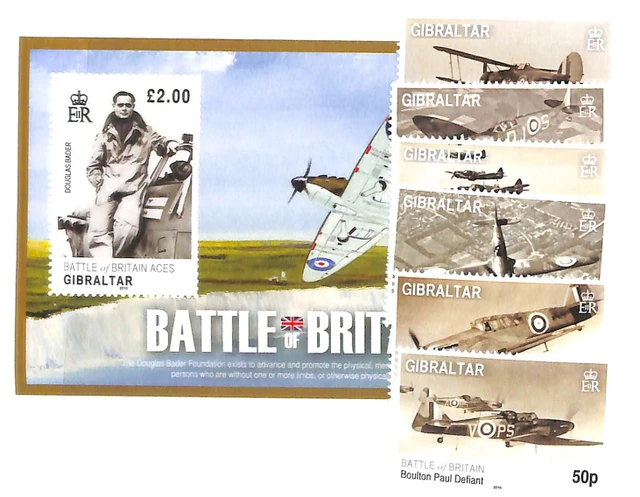
The RAF’s success prevented Germany from securing the conditions Hitler considered necessary for invasion. The battle also showed how radar, communication, command decisions, pilots, and ground crews worked together in Britain’s air defense. Churchill later praised the airmen who fought, but the defense depended on the entire system behind them.
| FREE printable This Day in History album pages Download a PDF of today’s article. Get a binder or other supplies to create your This Day in History album. |
Discover what else happened on This Day in History.
We don’t realize how perilously close Hitler came to invading and conquering England. The Royal Air Force won the Battle of Britain. What if the other way around? We sat over here in America with many people saying, “It’s their war, not for us to get involved.” We learned otherwise. Let us not forget!
I look forward every morning to read these historical facts. Just love it
In the mix of Eisenhower, MacArthur, Patton, Nimitz, Halsey, Doolittle, et al, standing head and shoulder above them all was Winston Churchill.
While Prime Minister Winston Churchill was one of my WWII heroes, to say he stood “head and shoulder above them all” is way off the mark. Eisenhower, MacArthur, Patton Nimitz, Doolittle and whom ever you included in you et, al, were men of action and fought in the trenches, in the sky and in the tanks. These men were men of action and not just words. Churchill was a great man and helped the British and even the Americans by standing tall in their “Finest hour”, but he never fought a single battle. Even Churchill gave Allied Supreme Commander General Dwight Eisenhower a bow for the Normandy evasion, (Overlord). There wasn’t a greater Tank Commander in the world than General Patton. You even left out Sir Hon. Bernard Montgomery, one of Britain’s finest leaders and a great Tank commander also. MacArthur in the Pacific was untouched in his dogged determination to rid the Pacific of the Japanese. So, while I agree that Winston Churchill was a great leader, he stood shoulder to shoulder with the greatest, not above!
Thanks for the link to Churchill’s speech
Sir Winston Curchill,was a grear Prime Minseter of Engkland.
He did a lot of good things for England during WW2.
Good historical update and thanks for the link to the speech, Mystic.
A must read. Interesting information.
Truly a great leader at the right time.
Very informative history is the reason I started collecting 60 years ago thanks.
Another inspiring history lesson. Keep up the good work at Mystic!
This is a great story that many are yet unaware of. Great information.
As Churchill remarked about the Battle of Britain, “Never in the field of human conflict was so much owed by so many to so few.” Re. Gene McKight’s comment, if you try to list the all of the heroes of World War II, you will have a long list. But I have to add one that has not been mentioned: President Franklin D. Roosevelt.